
Transport protests hit Kenya over rising fuel prices
One of many African countries dependent on fuel imports from the Gulf, Kenya has been heavily hit by Iran's effective closure of the Strait of Hormuz, through which a fifth of the world's oil normally passes.
Kenyan police officers attempt to restore traffic flow and remove barricades blocking a main highway during a nationwide transport strike over rising fuel prices in Nairobi on May 18, 2026. (Photo by Luis TATO / AFP)
_______________
NAIROBI — Kenya's public transport system was paralysed on Monday, when protesters barricaded roads over fuel price hikes triggered by the Middle East war.
One of many African countries dependent on fuel imports from the Gulf, Kenya has been heavily hit by Iran's effective closure of the Strait of Hormuz, through which a fifth of the world's oil normally passes.
Last week, the Kenyan government announced price hikes in response to rising global oil prices, including a 23.5-percent increase for diesel, triggering a call for the strike by transport workers.
Protesters barricaded roads and lit bonfires on the outskirts of the capital, Nairobi, early on Monday and tried to stop cars and "boda boda" motorbikes, an AFP journalist saw.
The usual congestion in Nairobi's central business district was missing, with schools closed and events cancelled.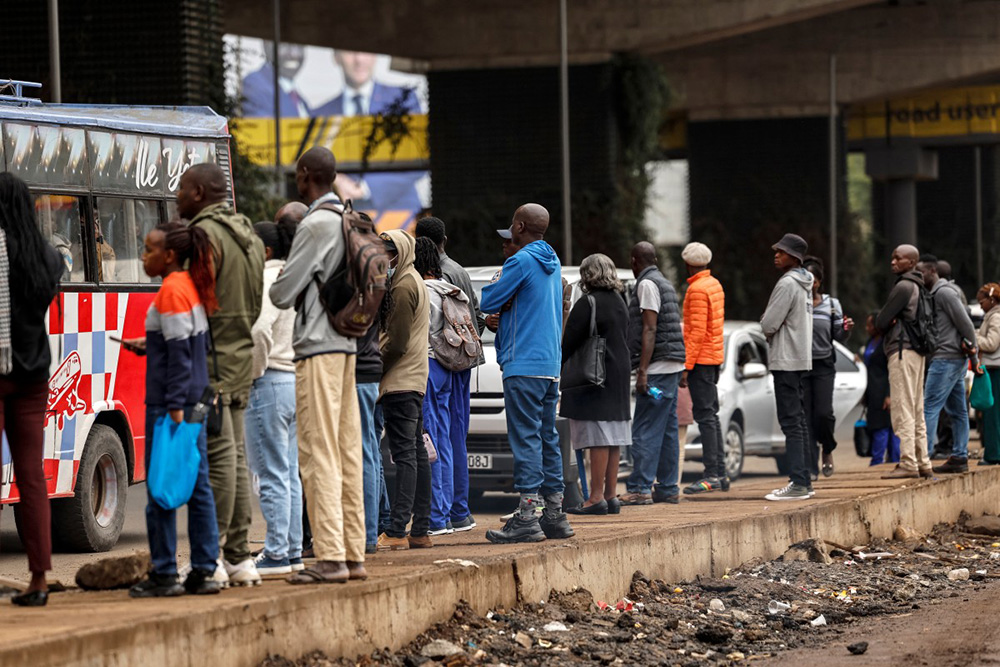
Kenyans wait for public tranpsort during a nationwide transport strike over rising fuel prices in Nairobi on May 18, 2026. Public transport was largely shut down and protesters barricaded roads in Kenya on May 18, 2026 as a strike was called over a fuel price hike triggered by the Middle East war. (Photo by SIMON MAINA / AFP)
"They do not want to listen to the citizens when we say the prices are too high," Alex Koome Mwenda, 22, told AFP.
Thousands of commuters across the country were stranded after privately owned "matatu" minibuses, Kenya's main form of public transport, went on strike.
The protests spread to other major towns, including Mombasa, Nakuru, Eldoret and Nyeri.
"The strike is completely uncalled for, even though the prices of petroleum products have risen," said treasury and economic planning minister John Mbadi. "This is a war that we have not caused."
Critics argue that Kenya has high taxes on fuel that could be reduced, although it is also reliant on them to service high levels of debt and a strained budget.
Ripple effect
A day of protests, such as Monday's, can cost Kenya's economy around 50 billion shillings ($390 million) a day, said economist XN Iraki.
"The price of fuel has gone up to an unsustainable level, (with) a ripple effect on the economy," he told AFP, calling on the government to cushion the blow.
Since the start of the Middle East conflict, Kenya has raised petrol prices by 20 percent, while diesel has increased by up to 45.8 percent.
"The government is responsible because it determines the price... It takes a lot of money from fuel for tax," Iraki said.
The energy regulator said the government had spent $38.5 million to cushion consumers from soaring diesel and kerosene prices in its latest review.
Last month, Kenyan authorities also suspended fuel quality standards to maintain supply in the face of shortages.
While Kenya is among East Africa's most dynamic economies, around a third of its 50 million citizens still live in poverty.