
Saving revenue without killing industry: A path forward for steel
The resulting foregone revenue has contributed significantly to the growth of Uganda’s tax expenditure, which rose by 46% between 2019 and last year.
A truck loaded with hot-rolled coils. (Courtesy photos)
________________
Uganda’s steel industry sits at a difficult crossroads. While it remains one of the top contributors to tax revenue within the manufacturing sector, it also suffers trade misinvoicing, covering both raw materials and finished iron and steel products.
This practice undercuts government incentives extended to the sector, particularly the stay of application of the East African Community Common External Tariff (EAC-CET) and duty remission schemes, where applicable import duties are waived.
The resulting foregone revenue has contributed significantly to the growth of Uganda’s tax expenditure, which rose by 46% between 2019 and last year. In the 2023/24 financial year alone, sh3.609 trillion was foregone through various exemptions.
Last year, 21 steel companies benefited from the stay of application of the EAC-CET and duty remission. This follows a pattern dating back to at least 2022, when 15 companies received similar incentives. These exemptions primarily offset import duties on bars and rods, hot-rolled in irregularly wound coils of iron or non-alloy steel, critical raw materials for wire products.
The Uganda Manufacturers Association (UMA) defends the exemptions as necessary protection for infant industries.
“It’s a protection tool. You must have something to protect; otherwise, it doesn’t matter,” says Allan Ssenyondwa, UMA’s policy and advocacy manager. “A poor country with infant industries in sensitive sectors can choose to stay with the application of certain duties.”
While the rationale is sound, available data points to significant leakage. By February this year, Uganda had forfeited sh202.6 billion to duty remission within the steel industry alone. Separately, trade misinvoicing is estimated to cost the country Shs99.7 billion annually.
Why steel?
Steel is the most widely used metal globally. About 52% goes into building and infrastructure, 16% into mechanical equipment, 12% into automobiles, 10% into metal products, 5% into transport equipment such as vehicles and ferries, three percent into electrical equipment, and two percent into domestic appliances, underscoring its strong and diverse market.
Wire rods being unloaded from a bulk vessel at the Port of Mombasa.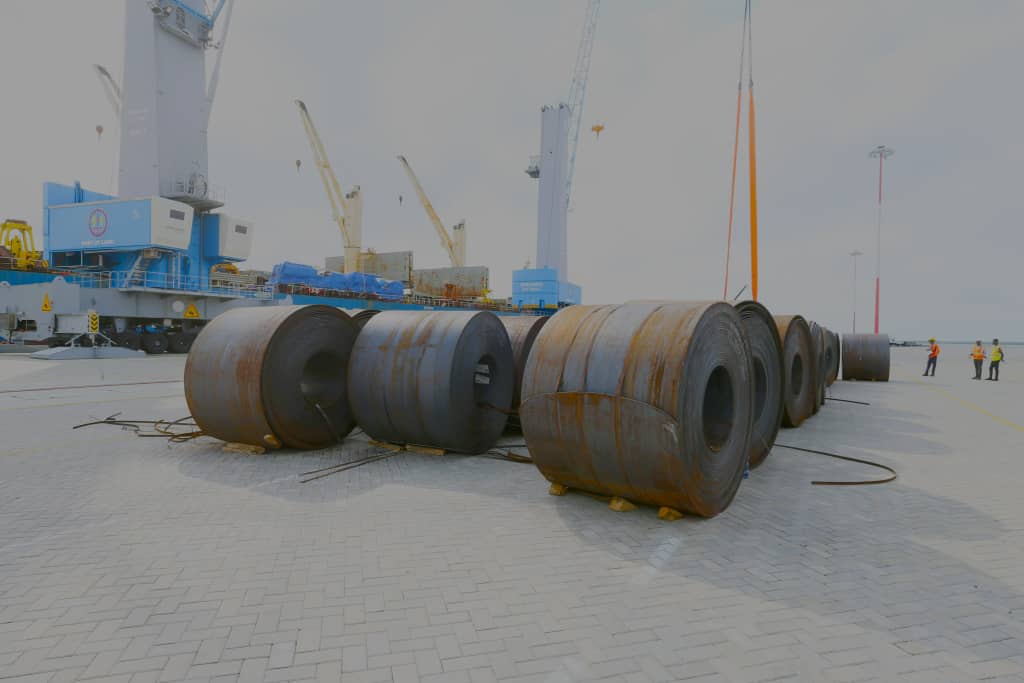
According to the World Steel Association, wire rods ranked as the sixth most exported steel product in both 2023 and 2024. They trail hot-rolled sheets and coils, which local manufacturers say the government plans to tax at five percent, alongside ingots, semi-finished materials, galvanised sheets, steel tubes and fittings, and cold-rolled sheets and coils. Global steel consumption stood at 214.7kg per person last year.
In 2017, trade-based illicit financial flows in developing countries amounted to $817.6 billion, with trade misinvoicing accounting for 18 percent. For Uganda, trade misinvoicing in iron and steel products between 2006 and 2015 totalled $279 million (Shs997.1 billion), translating to an annual loss of about Shs99.7 billion. Global Financial Integrity (GFI) estimates that trade misinvoicing contributes more than 80% of illicit financial flows worldwide.
For steel companies benefiting from exemptions, the incentives are intended to facilitate production of wire products used in construction, the automotive sector, and general manufacturing. These include reinforcement bars, wire mesh, nails and fasteners, tying wire, ground wires, welding electrodes, and vehicle seat frames.
Regional demand remains strong. In 2023, Uganda exported steel products worth $51 million to South Sudan, $33 million to Kenya, $30 million to Tanzania, $29 million to the Democratic Republic of Congo, $4.66 million to Rwanda, and smaller volumes to Burundi, Sudan, and the Central African Republic, according to TrendEconomy.
Schemes and tax expenditure collide
Mark Mutumba, a trade policy analyst, notes that the EAC Industrialisation Policy (2012–2032) identifies iron and steel as strategic sectors for economic growth. This has driven aggressive incentive-based industrial policies.
“Governments eager to accelerate industrial output may tolerate, inadequately supervise, or loosely apply duty remission or tariff stays in the belief that short-term revenue losses will yield long-term industrial dividends,” Mutumba says. However, he warns that existing regulatory gaps have widened, creating opportunities for customs manipulation.
Between 2022 and last year, at least sh521.26b was foregone through duty remission. Under their umbrella body, the Uganda Iron and Steel Manufacturers Association (UGISMA), several companies were permitted to import wire rods at a zero percent duty rate.
These exemptions form part of Uganda’s growing tax expenditure. URA data shows that tax expenditure rose from Shs2.467 trillion (1.76 percent of GDP) in FY2019/20 to Shs3.665 trillion (two percent of GDP) in FY2022/23. In FY2023/24, foregone revenue amounted to Shs3.609 trillion, equivalent to 13 percent of total tax collections.
Foregone customs duty alone increased between FY2019/20 and FY2023/24, from sh549.43 billion to sh1.137 trillion, the highest among five major tax categories.
URA maintains that exemptions can be justified if offset by benefits such as employment creation and corporate social responsibility.
“The foregone revenue, if compensated with benefits from the operations of exempted companies, would balance the equation,” the authority says.
Rationale and risks
In August, UMA raised concerns over the continued misclassification of steel products. In December, MMI Steel warned of excessive inflows of underpriced Kenyan steel products, particularly iron sheets, estimating imports of 5,000 metric tonnes per month, distorting the local market.
MMI Steel urged the government to apply minimum customs valuation benchmarks to curb under-invoicing. GFI categorises this practice under import-export manipulation, involving both under- and over-invoicing.
“On the import side, traders often under-report to bypass tariffs and VAT,” GFI explains.
“Over-reporting, meanwhile, is used to legitimise capital flight under the guise of trade payments.”
Local manufacturers also cite high transport costs. Shipping from Mombasa to Kampala averages $100 per metric tonne. For MMI Steel’s 8,000MT wire rod imports under the February 2024 duty remission, transport costs alone would total Shs2.861 billion—about half the duty that would otherwise apply.
Regional tensions
Regionally, tensions are also emerging. Tanzania recently imposed a five percent industrial development levy on imported steel raw materials and finished products from neighbouring countries, including Uganda. This has prompted calls for reciprocal measures.
“Implement a reciprocal five percent import duty until Tanzania removes its discriminatory levy or a harmonised EAC position is enforced,” one manufacturer demanded.
Trade misinvoicing and tax exemptions continue to undermine Uganda’s revenue mobilisation efforts at a time of rising fiscal pressure. The national budget deficit is partly financed through domestic borrowing and external loans, contributing to a growing public debt burden.
By the end of September, Uganda’s public debt stood at Shs119.4 trillion, up from Shs116.19 trillion in June, according to the finance ministry.
The estimated annual loss of Shs99.7 billion in the steel sector alone could finance key public expenditures—such as laboratory and immunisation supplies (Shs52.3 billion), vaccines (Shs17.8 billion), anti-malaria drugs (Shs2.9 billion), anti-TB medication (sh2.1 billion), or part of the country’s antiretroviral requirements.
While tools such as the Electronic Fiscal Receipting and Invoicing System (EFRIS) and planned transfer pricing audits aim to curb leakage, experts argue that incentive frameworks themselves require reform.
Mutumba proposes revising the one-year approval cycle for duty remission and tariff stays. “Introduce multi-year timeframes of two to three years tied to clear performance indicators, with mandatory mid-term and end-term evaluations,” he says.
Renewals, he adds, should depend on demonstrated progress in value addition, job creation, and export growth, ensuring incentives deliver tangible economic returns rather than becoming open-ended concessions.