
Metro Cement increases output to 1 million tonnes
The company pre-launched three new products, Farasi, Njovu Branda and muFundi, adding to its existing Emirate Brand, as it seeks a larger share of a market long dominated by a handful of regional producers.
Milly Babalanda, minister for the presidency [4th left] Mohamed Ameer Nazar Ali, CEO Metro Cement [1st right] and other officials during the pre launch event at Kampala Serena Hotel. (Courtesy)
________________
Metro Cement has lifted its production capacity in eastern Uganda to one million metric tonnes a year, a move that could intensify competition in the local cement market and ease supply pressures as construction demand picks up.
The expansion, centred on a new plant in Kamonkoli, Mbale, marks a sharp increase from the company’s initial 300,000-tonne capacity when it entered Uganda’s cement sector in 2019.
Speaking at a pre-launch event at the Kampala Serena Hotel, officials said the plant uses German-made technology adapted to local conditions and is fully automated.
“In the next couple of months, it should be ready for launch. The new plant will push our capacity to one million tonnes a year. This achievement would not have been possible without the support of stakeholders, government, investors and customers,” Mohamed Ameer Nazar Ali, CEO at Metro Cement, said.
The company pre-launched three new products, Farasi, Njovu Branda and muFundi, adding to its existing Emirate Brand, as it seeks a larger share of a market long dominated by a handful of regional producers.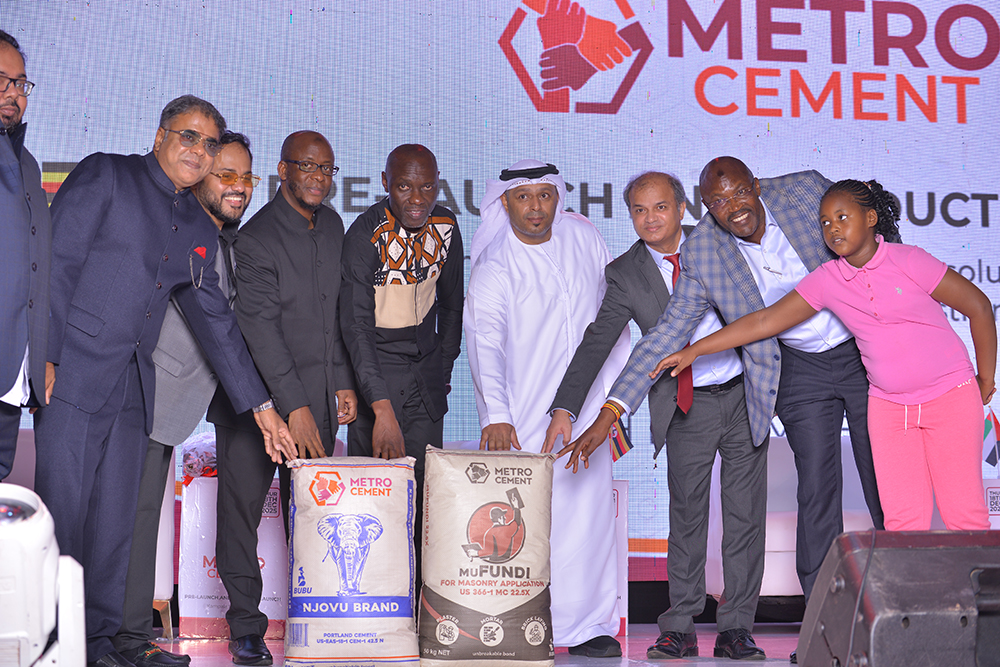
(Courtesy)
The event was attended by suppliers, contractors, and customers. Others included officials from the Uganda Investment Authority and the National Environment Management Authority.
The capacity increase lands at a moment when Uganda is courting fresh foreign capital, particularly from the United Arab Emirates, and pushing manufacturing as part of its broader industrialisation drive.
The company, which is led by UAE-based investors, injected about $30m in the expansion. Foreign direct investment from the UAE to Uganda has climbed sharply over the past seven years, rising from about $300b in 2018 to an estimated $3.5b today, according to Uganda’s ambassador to the UAE, Zaake Wanume Kibedi.
Kibedi said UAE-linked investments could rise to as much as $7b once Uganda’s oil refinery is completed.
“Setting up such a factory here will help make the cost of building cheaper. The factor has been expanded three times. This investment would not have been possible without good working relations with UAE and aggressively promoting these investments, which have created jobs,” he said.
The UAE has also become Uganda’s leading export destination since September, with trade valued at around $1.3b last year. Roughly half of that came from agriculture, according to Kibedi.
Shamil Razak, group director at Metro Cement, said Uganda’s political stability and clearer investment rules supported the company’s decision to scale up.
“We are ready to employ more Ugandans, pay more taxes, and supply a greater variety and quantity of cement to the local market,” Razak said.
The company says the Kamonkoli plant fulfils commitments it made in 2022 and positions it to expand into other industrial sectors over time.
Milly Babalanda, minister for the presidency and chief guest at the launch, said the expansion and product rollout show the confidence that investors have about the economy.