
Gulu city clears over 100 kiosks in crackdown on illegal trade
Kiosks and containers erected in ungazetted or unauthorised locations such as sanitary lanes, back spaces, road reserves and verandas are being removed as part of the exercise.
One of the kiosks being removed by Gulu City Bulldozer on Monday, March 17, 2026. (Photo by Rosemary Anena)
_____________
Businesses within the urban centre of Gulu city were disrupted on March 16, 2026, as the Gulu city authorities began implementing the national trade order aimed at regulating trade and clearing illegal structures from public spaces.
The operation, which started as early as 5:00 am, is being spearheaded by the Gulu city council in conjunction with the Uganda Police Force and the Uganda People’s Defence Force from the 4th Division.
By 4:00 pm, the enforcement team had cleared more than 100 kiosks from Gulu Main Street, from Gulu High Court to Cereleno Market.
Kiosks and containers erected in ungazetted or unauthorised locations such as sanitary lanes, back spaces, road reserves and verandas are being removed as part of the exercise.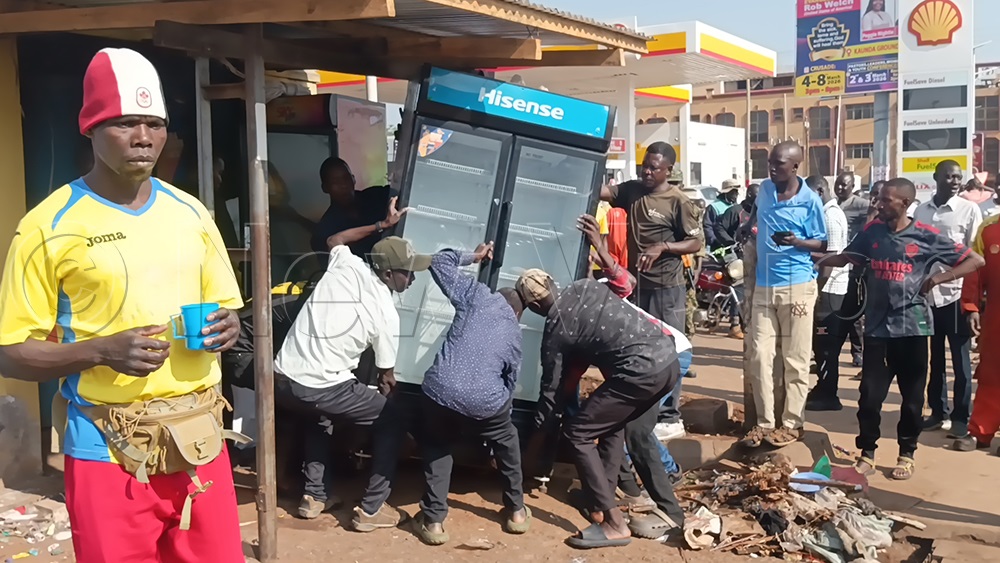
Some people helping a trader to remove her fridge from Lamogi Ber Bus Terminal. This is one of the kiosks marked last month for eviction. (Photo by Rosemary Anena)
Gulu city town clerk, Innocent Ahimbisibwe, said the first day progressed smoothly without confrontation since traders had been given ample time to vacate the affected areas.
He said the trade order is intended to streamline business operations and support property owners, who contribute about 75% of the city’s locally generated revenue.
Ahimbisibwe added that enforcement of the directive will encourage traders operating on the streets to relocate to designated shops and markets, which will in turn support property owners.
On the sustainability of the operation, the town clerk said the council is in the process of recruiting 20 additional enforcement officers to strengthen the existing team and ensure the measures are maintained.
Peter Banya, the deputy resident city commissioner in charge of Laroo-Pece Division, said the removal of temporary structures is not meant to victimise traders but to create space for better urban development.
“We are not trying to victimise people or push them out of business, but to create more space that will eventually make rent cheaper,” Banya said. “Removing these temporary structures will allow developers to construct better buildings that can accommodate more businesses.”
Banya added that for Gulu to reflect its city status, it must gradually replace temporary kiosks with permanent commercial buildings.
The nationwide operation follows a directive issued on March 10, 2026, by the permanent secretary in the Ministry of Local Government, Ben Kumamanya, instructing urban authorities to enforce licensing laws and remove illegal trading from public spaces.
The circular was addressed to all chief administrative officers, city town clerks and municipal town clerks to ensure order and proper use of urban spaces across the country.