
Govt is stepping up import substitution – Minister
The strategy targets an expansion of the economy to $500b in the medium term. The government has revised the National Trade Policy and the National Export Development Strategy to align them with regional and global shifts.
Francis Mwebesa, Trade Minister. (Courtesy)
______________
The government has stepped up its import substitution drive to replace imported goods in the market, Trade Minister Francis Mwebesa has said.
Speaking during the National Trade Review Conference at Speak Resort Munyonyo on Wednesday, Mwebesa said total exports have more than doubled over five years to hit $13.4b in 2025.
“Uganda has intensified its import substitution agenda as a strategic pillar for industrialisation, focusing on strengthening domestic production to competitively replace imported goods while creating jobs and retaining foreign exchange,” he said.
“Under the leadership of the Ministry of Trade, Industry and Cooperatives, deliberate interventions in industrial parks, quality assurance, standards enforcement, and access to affordable finance have enabled local manufacturers to expand capacity and improve product quality to regional and international standards.”
Mwebesa said total export earnings rose from about $5b in 2020 to $13.4b in 2025, an increase of more than 160%. The surge was driven largely by gold exports of $6.4b and coffee shipments worth $2.2b.
Manufactured exports now exceed $1b annually, including cement, steel, pharmaceuticals and processed foods, while services such as tourism and transport brought in more than $2.5b, he said.
The conference brought together policy makers, civil society organisations, and development partners, among others, to discuss interventions needed to drive Uganda’s ten-fold growth strategy.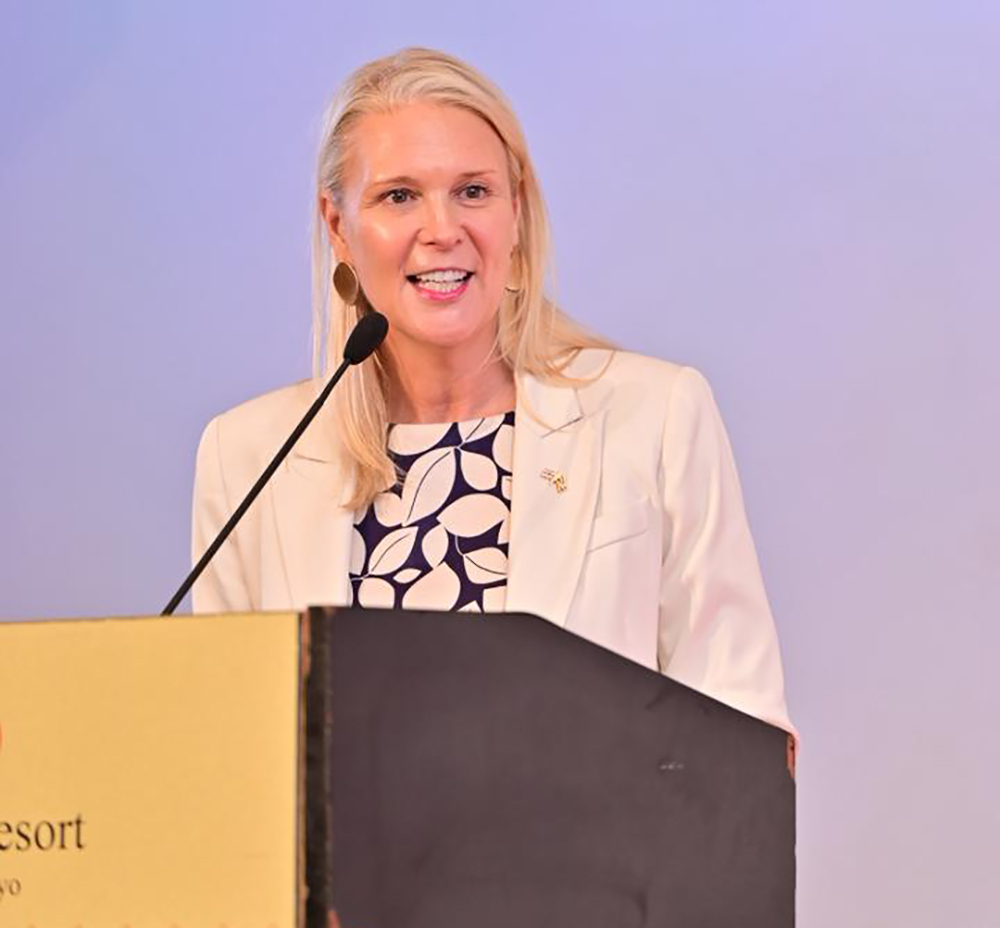
Lisa Chesney, British High Commissioner to Uganda. (Courtesy)
The strategy targets an expansion of the economy to $500b in the medium term. The government has revised the National Trade Policy and the National Export Development Strategy to align them with regional and global shifts.
“We need to know the values we want to export to those external markets. The world trade landscape has significantly changed. We need to know what we want exactly,” Jane Nalunga, the executive director at SEATINI.
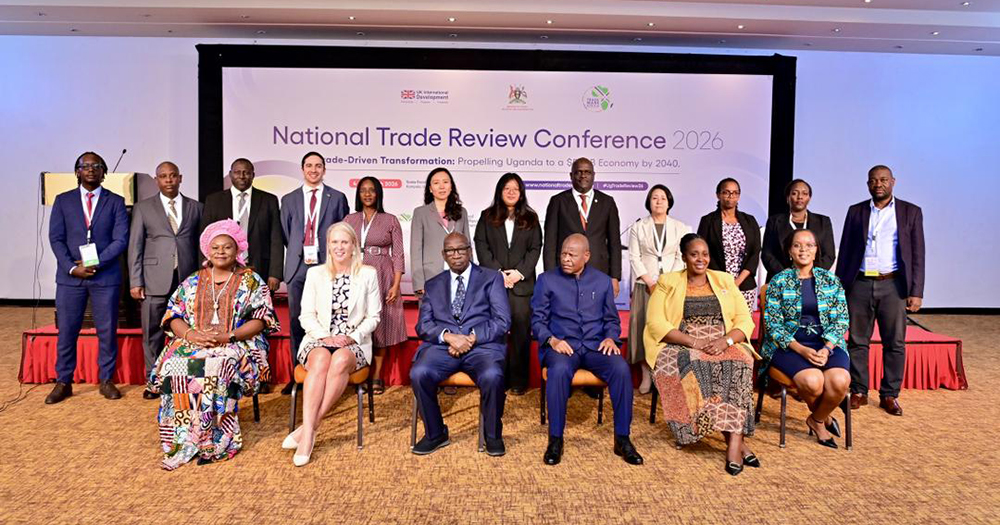
Lisa Chesney, British High Commissioner to Uganda (2nd left), Francis Mwebesa, Trade minister, Wilson Mbadi, state minister for trade, Lynette Bagonza, permanent secretary trade, and Anna Nambooze, country director Trade Mark Africa. (Courtesy)
Anne Nambooze, country director at Trade Mark Africa, said there is need to improve the standard of goods in order to penetrate new markets.
"We must be keen on standards because they are synonymous with trade. Together with the Ministry of Trade, we are setting up a non-tariff barrier monitoring system to have real-time information on how they affect trade,” she said.