
Finance ministry unveils plan to build $500b economy by 2040
The February 18, 2026, launch at the ministry headquarters in Kampala city saw Minister Matia Kasaija say the client charter and service delivery standards demonstrate the ministry’s commitment to professionalism, integrity, and accountability.
Finance Minister Matia Kasaija (Third Right), guests, officials during the launch of the Ministry of Finance, Planning and Economic Development’s Strategic Plan for 2025/26–2029/30, Client Charter and Service Delivery Standards. (Courtesy Photo)
__________________
The finance ministry has launched its strategic plan for financial years 2025/26–2029/30, along with a client charter and service delivery standards, charting a bold path toward building a $500b economy by 2040.
The February 18, 2026, launch at the ministry headquarters in Kampala city saw Minister Matia Kasaija say the client charter and service delivery standards demonstrate the ministry’s commitment to professionalism, integrity, and accountability.
“They are an invitation for all of us to work together, uphold the highest standards, and ensure every Ugandan benefits from our progress,” Kasaija said.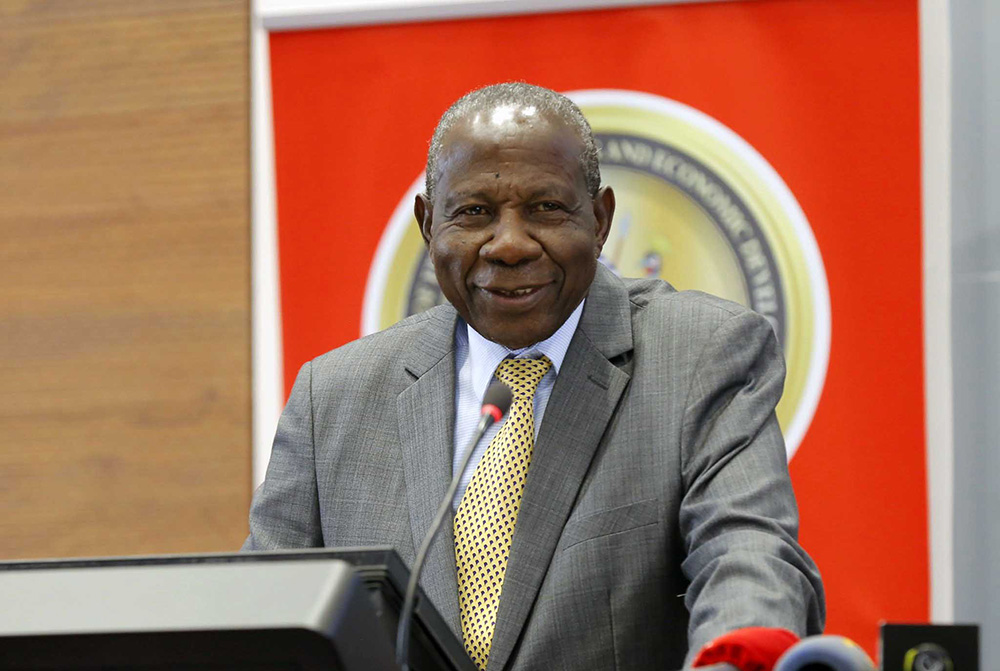
Finance Minister Matia Kasaija speaking during the launch of the Ministry of Finance, Planning and Economic Development’s Strategic Plan for 2025/26–2029/30, Client Charter and Service Delivery Standards. (Courtesy Photo)
“At the heart of this transformation agenda is fiscal credibility. By maintaining disciplined fiscal management, strengthening domestic revenue mobilisation, and ensuring our public investments deliver measurable returns,” he said.
“We lay the foundation for the tenfold economic growth ambition. Fiscal credibility is not just a technical goal; it is the bedrock of investor confidence, macroeconomic stability, and public trust,” Kasaija added.
He emphasised the importance of co-ordinated financing.
“Our plan prioritises mobilising resources from diverse channels, including domestic, external, public-private partnerships, climate, and blended finance, while aligning every shilling with our national priorities. Through robust coordination, we will crowd in private investment, reduce the cost of capital, and ensure every intervention supports our shared vision for prosperity.”
As the steward of Uganda’s fiscal policy and development planning, Kasaija said the ministry is the anchor for economic governance.
“We are committed to transparency, accountability, and results-driven management. I call upon all staff, affiliated institutions, and partners to join hands in implementing this plan.”
The minister thanked all contributors to the plan, including ministers, ministry staff, and affiliated institutions. “Your collective effort has produced a Plan that is visionary, actionable, and aligned with the Fourth National Development Plan and global commitments”.
He urged directors, commissioners, staff and partners to embrace professionalism, teamwork, integrity, and innovation as we implement this Plan with discipline, transparency, and a relentless focus on results.”
Ministry permanent secretary Ramathan Ggoobi described the plan as 'a bold statement of intent and a practical roadmap for the next five years'.
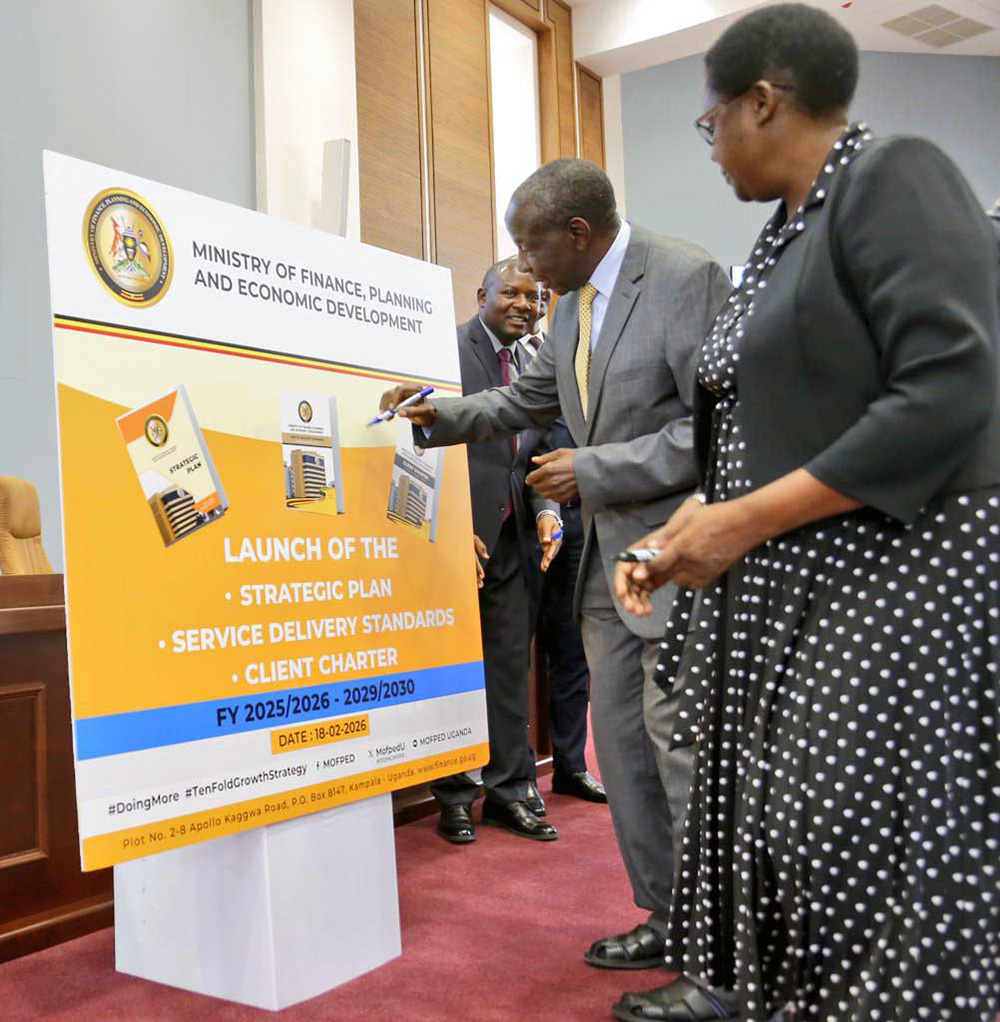
Finance Minister Matia Kasaija signing the dummy signaling the launch of the Ministry of Finance, Planning and Economic Development’s Strategic Plan for 2025/26–2029/30, Client Charter and Service Delivery Standards. (Courtesy Photo)
"Our vision is ‘A Competitive Economy for National Development.’ Over the next five years, our goal is to establish and sustain fiscal policy credibility, efficient public investment, and coordinated development financing as the foundation for tenfold economic growth,” Ggoobi said.
The plan’s theme is: Fostering Strategic Investments for Rapid and Inclusive Economic Growth.
Built on six pillars, the plan focuses on:
- Strengthening macroeconomic and fiscal policy credibility;
- Mobilising and coordinating financing instruments to reduce the cost of capital and attract private sector investment;
- Expanding and diversifying sustainable development financing while preserving debt sustainability;
- Strengthening public investment management for structural transformation;
- Improving efficiency, credibility, and development impact of public expenditure;
- Building institutional capacity, systems, and data infrastructure for effective governance and delivery.
Ggoobi outlined the plan’s ambitious targets: “We aim to achieve at least 8% economic growth, reduce poverty, create new jobs, and sustain macroeconomic stability”.
He cited the key interventions that include: financing oil and gas commercialisation, capitalising government development banks, supporting industrial transformation, empowering women entrepreneurs, and making the PDM more efficient to transition households into the money economy and profitable enterprises.
He stressed that success will depend on timely execution, robust monitoring, and collaboration across all levels of the Ministry and with stakeholders.
“We are committed to bold reforms, strengthening institutional capacity, and improving coordination to deliver on our mandate.”