
Faras to Enhance E-Commerce, Jobs and E-Mobility in Uganda
FarasUganda
Sponsored Article
Faras is strengthening its presence in Uganda ride hailing positioning as the leader through investments in e-commerce, digital transport systems, job creation and electric mobility as the country’s digital economy continues to expand.
The digital transport platform, which operates in several African countries, says it is focused on transforming urban mobility while creating income opportunities for young people and promoting environmentally friendly transport solutions.

Mudhafar Hamad General Manager
According to Mudhafar Hamad General Manager , the company aims to build a fully digital transport ecosystem that simplifies mobility and improves access to affordable transport services.
“Our goal is to ensure that Africa gets a sustainable and affordable transport network while embracing digital solutions that make services easier for people,” Katende said.
Faras started operations in Ethiopia before expanding to Kenya, Uganda and Tanzania as part of efforts to provide affordable digital transport services across Africa.
Mudhafar, says one of the company’s key contributions in Uganda has been promoting e-commerce and cashless transactions through the Faras Wallet, which allows users to pay electronically for rides and related services.
“We have introduced in-app payments where customers can use the Faras Wallet instead of carrying cash. This is helping many Ugandans embrace digital payments and online transactions,” Mudhafar explained.
The company is also preparing to introduce an e-Bus Booking service that will enable passengers to reserve long-distance bus tickets digitally through the Faras application.
“We are onboarding bus companies and integrating them into the system so that customers can easily book long-distance travel using the app,” he said.
Mudhafar noted that the initiative is intended to modernize Uganda’s transport sector and expand digital commerce within the mobility industry.
Faras
“People are shifting from traditional transport systems to digital platforms because they are faster, transparent and easier to use,” he added.
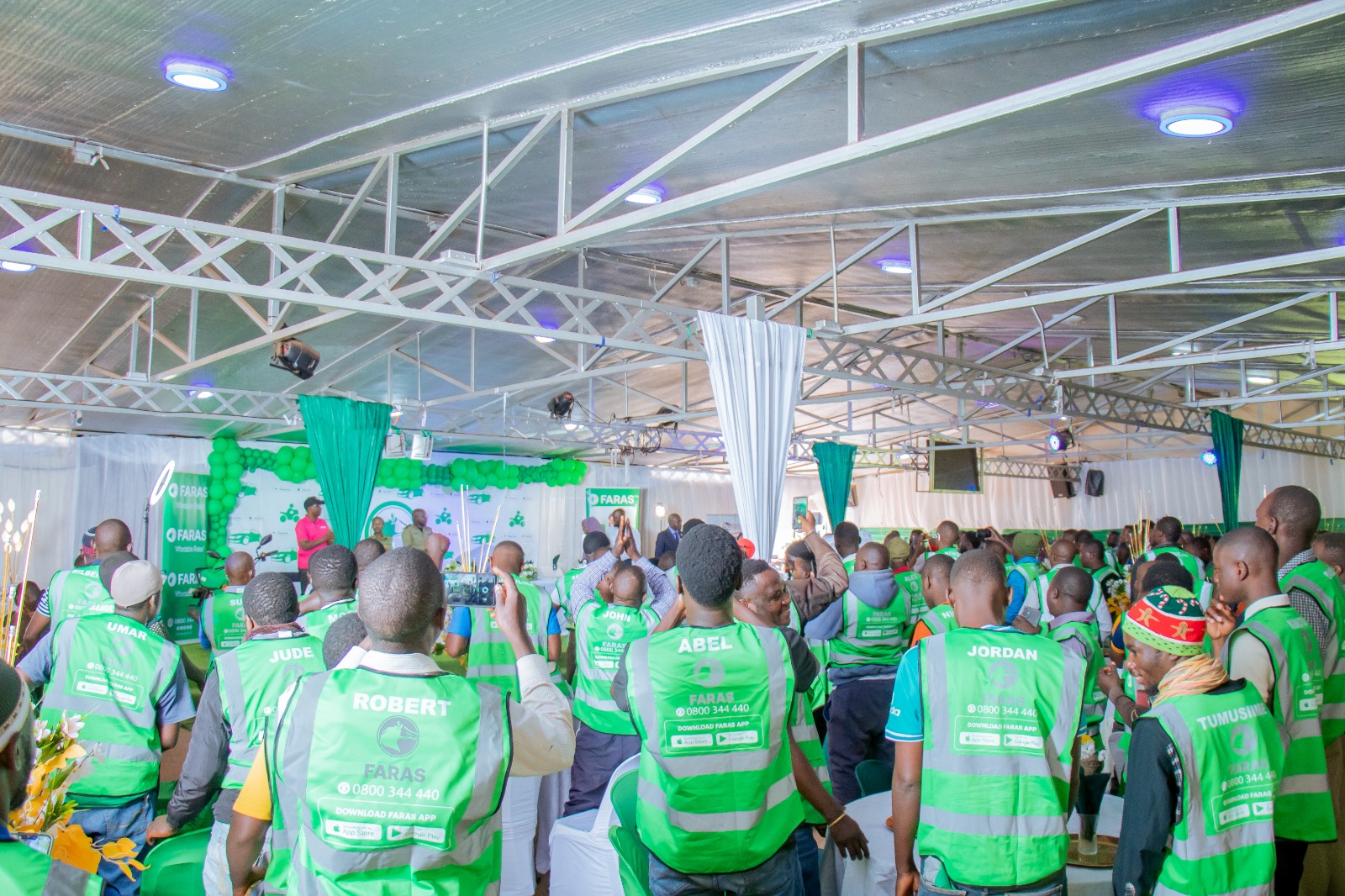
Beyond digital commerce, Faras says it is creating employment opportunities for boda boda riders and drivers operating on the platform across different parts of the country.
Mudhafar revealed that the company has already created opportunities for drivers in areas such as Kampala, Mukono, Wakiso, Mbarara and Entebbe, with many riders averaging more than 30 trips daily.
“For many riders, this has become a full-time source of income because they operate throughout the week and are able to consistently earn from the platform,” he said.
Mudhafar added that the application is helping riders improve accountability by providing a clear breakdown of their daily earnings and expenditures.

Karim Katende marketing manager
On sustainability, the company is promoting e-mobility through electric boda bodas integrated into the application as a standalone service.
“We understand that the future of transport is shifting toward clean energy, which is why we introduced electric bikes on the platform,” Karim Katende marketing manager.
He added that Faras is partnering with electric motorcycle companies to encourage riders to adopt electric mobility through incentives such as battery swap support.
“Different people are now trying electric bikes and realizing they are efficient, affordable and reliable,” Katende said.

Faras
Meanwhile, experts from Intergovernmental Authority on Development (IGAD) and East African Community (EAC)have warned that digital transformation and e-commerce expansion must be accompanied by strong environmental safeguards to minimize unintended environmental impacts.
Speaking at the recent media training in Nairobi, Hilda Pius Luoga Safeguards Expert-IGAD & EAC said Environmental and Social (E&S) safeguards are critical in digital investments because technology infrastructure still carries environmental risks despite being viewed as clean.
“Digital development is not pollution-free. Technology has real environmental impacts that require proactive management and responsible investment,” Luoga said.
She noted that digital infrastructure projects can contribute to air pollution through energy use and emissions, water pollution from poor waste handling, soil contamination from hazardous materials and increasing electronic waste from ICT equipment and batteries.
Luoga called for green digital development approaches that integrate sustainable technologies with responsible e-waste management, recycling and safe disposal systems under the “Do No Harm” principle.
Faras says, it is intentional on mobilizing e-mobility in Uganda because it is in line with the Government policy and the country’s vision of 2040.
According to the Minister Hon. Dr. Monica Musenero Masanza Minister for Science, Technology and Innovation and Chairperson Interministerial Committee on e-Mobility, the transport sector today is responsible for around 25% of carbon dioxide emissions and its share of global emissions is on the rise.
“In Uganda, Road Transport accounts for 95% of passenger traffic and 96.5% of the freight cargo and contributes over 10% on the greenhouse carbon emissions. The sector is characterized by an inefficient public transport system utilizing imported end-of-life vehicles with an average age of over 16 years at first registration.
Uganda’s heavy reliance on imported obsolete petrol & diesel engine powered vehicles is not only a huge drain to the economy but poses significant risk to our socioeconomic transformation, public health, and the environment with Kampala being ranked 2nd most polluted city in Africa,” she said recently.

Faras