
'EAC member states reaping big from common market protocol'
The Common Market is the second regional integration milestone of the East African Community (EAC), which has been in force since 2010, in line with the provisions of the EAC Treaty. It follows the Customs Union, which became fully-fledged in January 2010.
Godfrey Kaima in the middle poses for a photo with other stake holders in trade on matters of EAC common market. (Photo by John Musenze)
_________________
East Africa’s common market is transforming trade, travel and investment across the region, officials say, with visa-free travel, one-stop border posts, and harmonised standards among the key achievements driving community integration.
The Protocol on the Establishment of the East African Community Common Market (CMP) was signed in 2010 and entered into force. It was projected that by December 2015, the common market would be fully implemented. However, the deadline was not met, but there have been progressive steps towards the implementation of the single market.
The Common Market is the second regional integration milestone of the East African Community (EAC), which has been in force since 2010, in line with the provisions of the EAC Treaty. It follows the Customs Union, which became fully-fledged in January 2010.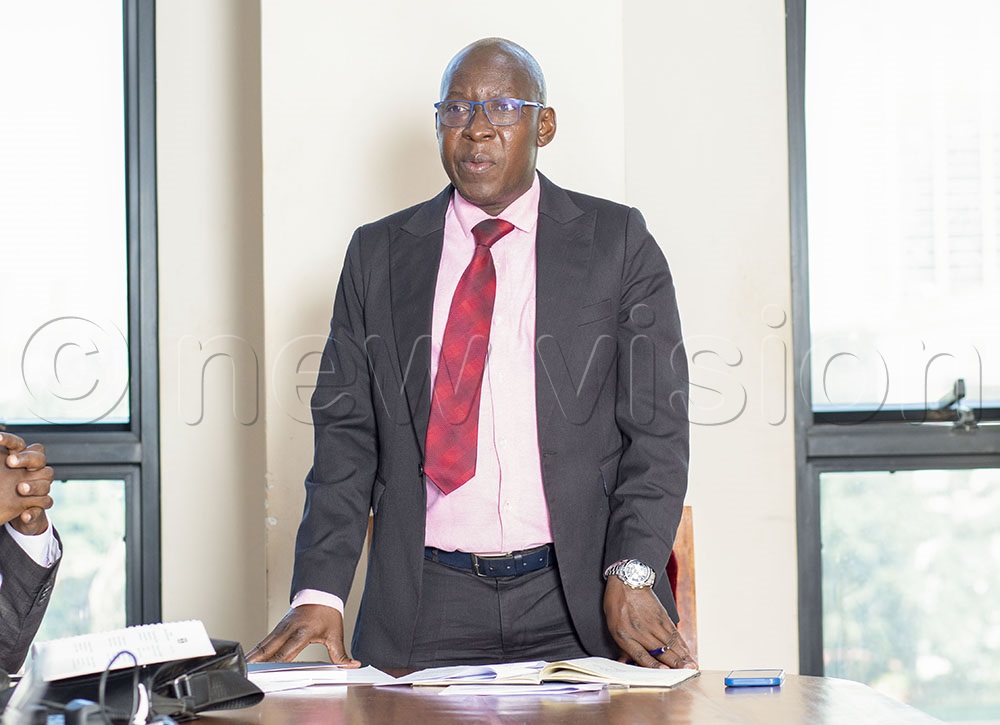
Godfrey Kaima, the Acting Permanent Secretary at Uganda’s Ministry of East African Community Affairs. (Photo by John Musenze)
Since EAC revived CMP, regional integration is producing tangible results, easing cross-border trade and movement of people while strengthening the region’s economic competitiveness.
“Regional integration is not an option but a necessity. The Common Market Protocol allows our businesses, professionals, and investors to move goods, capital, and services freely across borders, creating real economic opportunities,” Kaima said.
Since EAC’s revival in 2010, membership has grown from the three founding states of Uganda, Kenya and Tanzania to eight, including Rwanda, Burundi, South Sudan, the Democratic Republic of Congo and Somalia. Kaima said this expansion has widened markets and boosted the region’s bargaining power on the global stage.
He added that key milestones in CMP, include visa-free travel and the use of national ID cards at partner-state borders, the introduction of the East African passport and a single tourist visa to ease regional tourism, the establishment of one-stop border posts that reduce customs delays and streamline cross-border trade, and the harmonisation of standards to ensure that goods cleared in one country are not subjected to repeated inspections elsewhere.
Elimination of non-tariff barriers
Richard Okot Okello, a commissioner at the trade ministry, said Uganda last year identified and exchanged 22 non-tariff barriers (NTBs) with Kenya, all of which were resolved in principle and are pending implementation.
He added that Uganda plans similar bilateral engagements with Tanzania to tackle institutional bottlenecks that slow the implementation of Common Market directives.
Shared infrastructure projects are also underway, including the Standard Gauge Railway, which is expected to reduce transport costs and delivery times. Regional institutions such as the East African Legislative Assembly and the East African Court of Justice provide the legal and political backbone for these achievements.
Florence Alarango, the assistant commissioner representing the Ministry of East African Community Affairs, said while NTBs continue to appear, mechanisms for their reporting and resolution remain vital.
“Non-tariff barriers still undermine the free movement of goods and services. Strengthened inter-agency co-ordination is essential to ensure timely notification, resolution, and prevention of NTBs,” she said.
Officials also stressed the importance of sustained financing to support integration initiatives, particularly as the Community advances plans for a monetary union and a possible single currency by 2031.
“Regional integration cannot be sustained on goodwill alone; it requires predictable and adequate financing,” Alarango said.