
British Chamber of Commerce Uganda members commit to responsible business
At the centre of these efforts are the British Chamber of Commerce Uganda (BCCU), with member enterprises like Solterra Agri, Kua Solar, Atacama Consulting, Volcanoes Safaris, and Menzies Aviation working with local communities, investors, and partners, to turn climate-smart ideas into solutions.
Kymabura Gorge Lodge tree Planting campaigns. (Courtesy)
___________________
From the sunbaked fields of Agago, across Uganda’s lakes, into the country’s skies, and deep into its forests and gorges, a story of sustainability is taking shape.
At the centre of these efforts are the British Chamber of Commerce Uganda (BCCU), with member enterprises like Solterra Agri, Kua Solar, Atacama Consulting, Volcanoes Safaris, and Menzies Aviation working with local communities, investors, and partners, to turn climate-smart ideas into solutions.
According to Sanjay Rughani, the chairperson of the BCCU, scaling up ambitions in sustainability requires learning from peers and seeing how others have successfully embedded ESG into the core of their business. He notes that sustainability should go beyond compliance or regulatory obligations and should also be approached from a responsibility perspective.
“The Chamber facilitates cross-border opportunities and provides networking spaces where climate-smart ideas can make a real impact. Businesses that are committed to sustainability are often the fastest-growing,” he noted.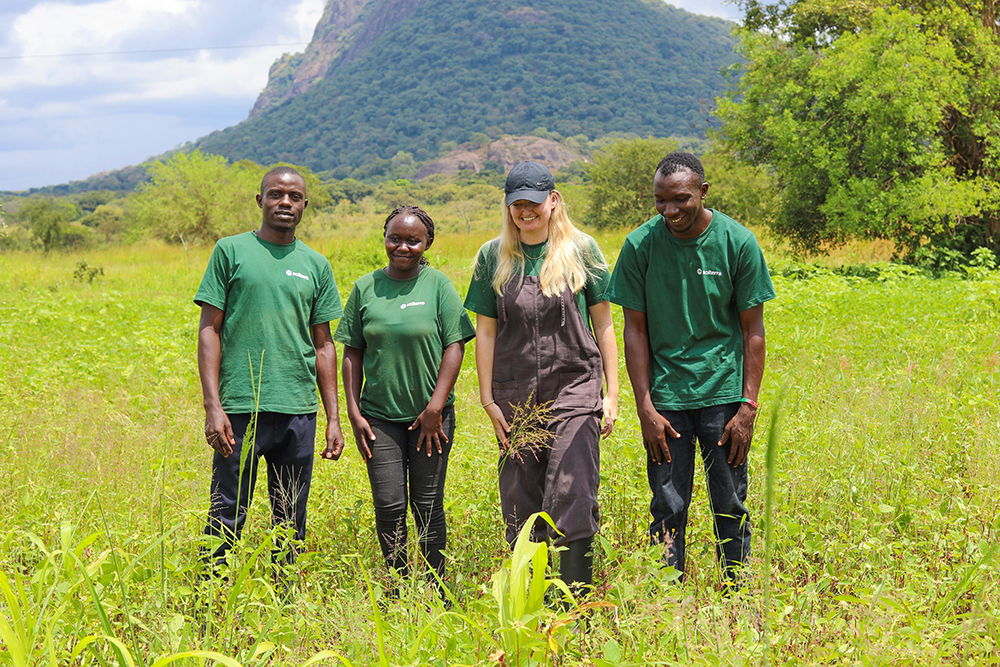
Solterra Agri. (Courtesy)
Through this support, these British companies are working together to build a green economy in Uganda where profit and caring for the environment go hand in hand.
Solterra Agri and the promise of regenerative agriculture.
At Solterra Agri model farm in Agago, is where young chia plants hum and sway alongside shea trees can be found. At first glance, the scene is nothing out of the ordinary. But every detail is deliberate. Solterra Agri, a UK company based in Uganda, combines chia with shea trees to enrich soil, prevent erosion, and improve water retention in the semi-arid district.
Uganda’s Tenfold Growth Strategy targets economic expansion through four anchor areas, collectively known as ATMS: agro-industrial development, tourism development, mineral-based development, and science, technology and innovation.
Agriculture remains central to this vision, supporting 70% of livelihoods and contributing nearly a quarter of GDP, yet it faces pressures from climate variability, soil degradation, and high input costs.
Through regenerative farming, Solterra Agri demonstrates how innovation and responsible British investment can align with Uganda’s development agenda, restoring ecosystems, improving rural incomes, and promoting sustainable, inclusive growth.
The company works with smallholder farmers to improve soil health, reduce emissions, and increase yields. Its practices, including crop rotation, minimal tillage, organic composting, and efficient irrigation boost productivity while sequestering carbon, contributing to climate mitigation efforts.
“Regenerative agriculture is the future,” says Maisie Bruffell, Director at Solterra Agri. “It’s about restoring ecosystems and building resilience for farmers.”
Solterra also helps farmers access premium markets through sustainability certifications and carbon credit programs. By quantifying the environmental benefits of improved practices, farmers can earn additional income for carbon sequestration, combining profitability with environmental stewardship.
“Being British myself and having been a produce buyer in the UK has given me exposure to global sustainable agriculture practices and market standards, while I am also able to learn from and work closely with Ugandan farmers. This allows me to combine international insights with local knowledge to support practical, climate-smart, and long-term solutions.”
Reflecting on her membership of the BCCU, Bruffell says being a part of the Chamber has given her more networking opportunities, more support from like-minded people, and practical guidance to support her business’s operations.
Across Uganda’s lakes, Kua Solar, an affiliate of UK-based Africa Power, is transforming fishing with solar-powered lights that boost productivity, provide life-saving safety equipment, and cut carbon emissions.
One of the company’s most innovative successes is its solar-powered fishing light for Uganda’s Rift Valley lakes. Fishermen are four times more likely to drown than die from malaria, TB, and HIV combined.
Traditionally, night fishing for silverfish relies on kerosene lanterns on wooden floats. This method is both dangerous and environmentally harmful. Africa Power UK developed a solar-rechargeable, fully waterproof fishing light that also functions as a lifebuoy.
Four lights per boat ensure safety equipment for everyone on board, and an emergency mode flashes the light to signal for help. Use of this solar light compared to traditional methods has increased the average fisherman’s catch by 20 per cent.
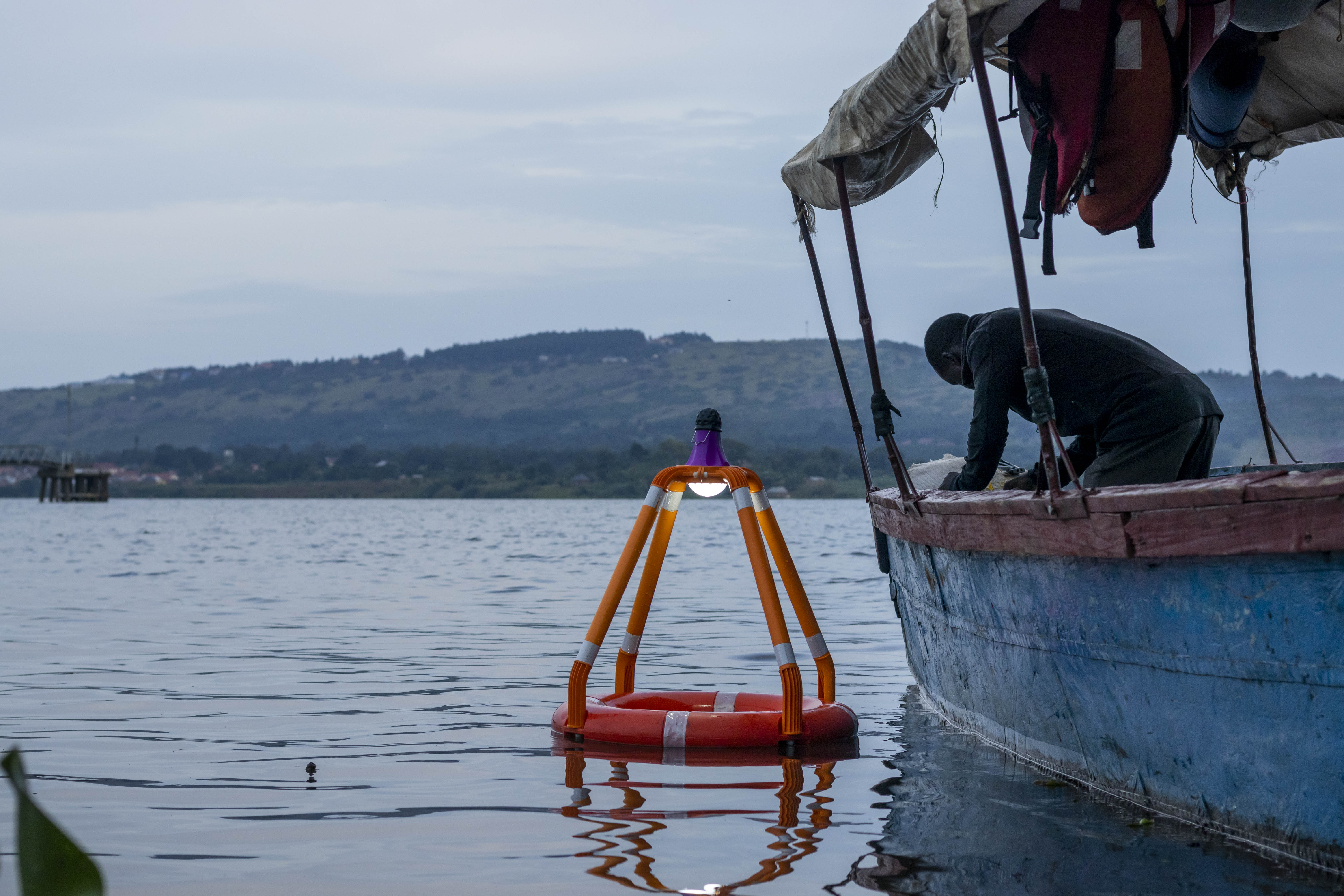
Beneficiary of the Kua Solar project on the lake. (Courtesy)
Kua Solar’s initiatives also extend beyond energy. In partnership with The Malaria Consortium, Arctech Innovation, and Uganda’s Vector Control Division, the company is piloting Mossie-Go, a solar-powered mosquito-control system that reduces mosquito populations around households without using chemical sprays, helping to prevent malaria.
“Our focus is not just on energy, but impact. We see renewable energy as the backbone of climate resilience, powering schools, clinics, and farms while reducing emissions,” Peter Ojangole, Kua Solar’s Business Development Manager explains.
Climate and environmental risk are notoriously complex, shaped by evolving science, shifting regulations, and global market pressures. For many businesses, understanding and applying these concepts is a challenge in itself.
This is where Atacama Consulting comes in. For nearly two decades, Atacama has been a cornerstone in Uganda’s environmental and sustainability advisory space, guiding corporations through the complex terrain of compliance, risk, and opportunity.
The consultant's expertise spans Environmental and Social Impact Assessments (ESIAs), carbon accounting, ESG reporting, and climate risk analysis - services increasingly sought after by companies eager to align with international standards and attract green financing.
In Uganda, where the government is rolling out climate-sensitive policies and investors demand transparency, Atacama’s work bridges regulation and innovation. “We’re seeing a real shift,” says Julian Keirungi, partner at the firm.
“Businesses now recognize that environmental governance isn’t just a regulatory requirement, it’s a strategic asset. Investors, customers, and communities all value sustainability, and those who adopt it early will lead.”
Atacama’s projects cut across industries from energy and infrastructure to manufacturing and agriculture, offering customized ESG frameworks that help clients measure and improve their performance. Beyond compliance, the firm runs capacity-building programs to equip local managers with the tools to integrate sustainability into everyday decision-making.
Volcanoes Safaris has spent over two decades redefining the relationship between tourism and conservation. A pioneer of eco-luxury tourism in Uganda and Rwanda, the British-owned company has built lodges that blend elegance with environmental consciousness.
Each property, from Bwindi to Mount Gahinga, is powered by renewable energy, built with locally sourced materials, and designed to integrate rather than intrude upon its surroundings.
Volcanoes Safaris’ work aligns with the tourism component of Uganda’s ATMS, demonstrating how sustainable tourism can drive economic growth, support local communities, and protect the environment.
The company’s business model ensures that tourism directly benefits conservation. Through its Volcanoes Safaris Partnership Trust, a share of lodge revenue supports local communities in conservation education, skills development, and small enterprise creation. The Trust has helped restore forests, provide clean water systems, and sponsor cultural preservation initiatives.
“The health of tourism depends on the health of the environment. When communities see the benefits of conservation, they become its strongest advocates,” Simon Kaweesi, the company’s Uganda Manager, expounds.
Menzies Aviation, based in Entebbe, is a leading international aviation services company, delivering ground handling, cargo management, and fueling solutions to airlines and airports worldwide. The company has set ambitious targets to achieve net-zero greenhouse gas (GHG) emissions by 2045.
To reach this goal, it is electrifying its fleet of ground support equipment (GSE), improving operational efficiency, and minimising waste across its operations. Its initiatives go beyond compliance, focusing on solutions that protect ecosystems while enhancing safety and operational performance.
One of the company’s most forward-thinking projects is the transition of its motorised GSE to electric power. Traditionally, diesel-powered GSE contributed significantly to local emissions and operational noise.
Menzies Aviation’s electrification programme has cut emissions, reduced fuel costs, and improved air quality on the tarmac, all while maintaining the reliability and speed required for modern aviation operations.
According to Mary Efata, the company’s General Manager, sustainability is steeped deep in Menzies Aviation’s culture. They are also ensuring equity within ranks, working with refugee communities, and giving different communities dignity through employment.
Together, these British enterprises create jobs, transfer technology, and build local capacity, supporting Uganda’s inclusive green growth agenda. They also offer practical examples for local entrepreneurs and policymakers seeking development aligned with environmental stewardship.
According to Monica Salirwe, Technical Director at Atacama Consulting, puts it, “the green economy is not an alternative market, it is the market.
Uganda’s strategic location, growing global demand for environmentally sustainable products, and fertile investment climate are a great opportunity for businesses.
Good business should not be in conflict with sound environmental principles. British businesses in Uganda are helping Uganda’s growth, UK growth and protecting the environment. It’s a win-win-win.
Through the BCCU, businesses, investors, and partners can connect with pioneering enterprises, seize emerging green opportunities, and help shape a climate-smart economy that drives innovation, empowers communities, and delivers lasting impact. The future of sustainable growth in Uganda is here.