
Why we should save local language newspapers
In a country with so much media diversity, the local language newspapers do play a key role in transforming societies, socially, economically and politically.
Why we should save local language newspapers
________________________
✍️ OPINION
Language is the deepest expression of the human emotion and soul. When a language dies, it dies with a culture and the soul of a people.
Future generations lose direction and they can never connect to who they really are. Language evolves and changes form, especially the spoken language. When a language is not preserved in written and recorded form, it keeps changing until it eventually dies.
So, what happens when a language dies?
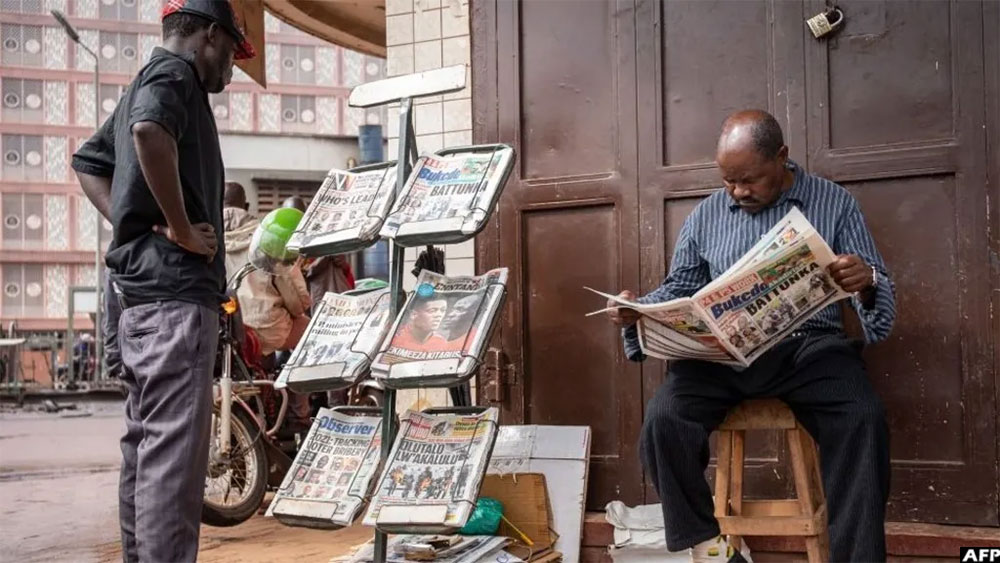
Preserving four of Uganda’s largest languages — Runyankore/Rukiga, Luo, Ateso and Luganda — is one major role that the Vision Group’s local language newspapers have played for almost three decades.
In April 2020, when we took the painful decision to close three of the four local newspapers; Orumuri, Etop and Rupiny, the decision hurt deep, it was like killing your own precious baby simply because you could not fend for it.
For several years, management and the board had grappled with the decision to shut down the heavily subsidised local language newspapers, but in the good times it was a burden the company could grudgingly carry for the value it brought to the communities and to Uganda.
Then, the first COVID-19 lockdown hit in March 2020 and the three newspapers could not survive the economic upheaval occasioned by the COVID-19 restrictions. The local language newspapers were no longer sustainable as a business, though they were essential for national service.
The company required support funding to continue producing them. Strategically, Vision Group had in the previous 10 years invested in broadcast media in the regions, the audiences would, therefore, be partly served through that media, but the citizenry was losing out on the benefits of literacy in their local languages.
From one English newspaper at its inception in 1986, The New Vision has over the years grown into a multi-media company. In the early years, the company diversified into publication of regional papers targeting specific indigenous sections of the country.
As part of the national media strategy, the local language regional newspapers were established to facilitate national development. This saw the birth of Orumuri, the Runyankore/Rukiga newspaper in 1989, Etop, the Ateso newspaper in 1990, Rupiny, the Luo newspaper in 1993 and Bukedde, the Luganda newspaper in 1994.
Thanks to the higher buyership occasioned by higher literacy levels and higher income levels in the central region, Bukedde continued to serve Uganda even through the COVID-19 lockdown.
In fact, according to the South African Audit Bureau of Circulation (ABC), it was one of the few African newspapers that remained steady through the storm. The objective of the local language newspapers was to mobilise, educate and inform people in their respective regions through a language they understood better.
This would consequently empower them to fully participate and contribute to national development. This was also a way of preserving indigenous languages and promoting cultural values and norms. 
In the last three decades, the local language newspapers have made a huge contribution to national development. Below, we list some of the achievements:
Informing and educating large communities
The three local language newspapers have enabled the development message reach and impact far-flung communities in over 100 districts.
Etop served the Iteso people in the core 11 districts of Teso, Tororo, western Kenya and some parts of Karamoja. Orumuri served over 30 districts in Ankole, Kigezi, Toro and Bunyoro.
Rupiny newspaper covered 20 districts in northern Uganda, some parts of Masindi and Kiryandongo targeting the Acholi and Lango ethnic groups and also the Luo of Sudan. It was the only newspaper published in the Luo language, so it was a repository of knowledge.
The Luo culture is one of the oldest cultures in the Nile region and Rupiny newspaper is arguably the only consistent publication that has documented the history of this region in the local language.

Peace, security, reconciliation and conflict management
Some of the areas covered by the local language newspapers had been through a prolonged period of civil strife. The newspapers, especially Etop and Rupiny played a key role in rallying the people of eastern and northern Uganda to embrace unity and reconciliation.
Also, the newspapers continued to play a pivotal role in rallying the population to embrace unity and development. These regions have very many radio stations, but due to their ephemeral and fragmented nature, the newspapers set the agenda and tone for peace that the broadcast media picked on and amplified.
The local language newspapers have for many years also been the reference point and repository for the region. Every big event in the region was documented in the local language newspapers.
So, the story of the devastating Kony war in the northern and eastern Uganda is well captured in Luo and Ateso languages for posterity. Scholars can look back centuries after and capture the history with all its intricacies and effects on the people and the nation.
The details are not lost because the interviews and the writing are in the local language. In contrast, the big story of the time: The coronavirus and its effects on those communities, will be lost.
It has not been indelibly documented in those local languages, so the devastating effects of the coronavirus on the community will never be remembered in the same way by the local people and scholars.
There will be no repository or reference point. That is what happens when a local language newspaper dies.
Promoting mother tongue language policy
The Government’s mother tongue policy stipulates that mother tongue should be used as the medium of instruction in lower primary school, as a remedy for the current poor learning outcomes.
The policy is rooted in the idea that children pick up foreign languages more easily, if they are first grounded in their mother tongue.
The policy dictates that during the first three years of primary education, pupils must be taught using the mother tongue as the medium of instruction, with English taught as a separate subject, before switching to English as a medium of instruction in year four.
The local language newspapers are critical in supporting the implementation of this policy. Since the regional newspapers are published in local languages, they can be used as teaching aids in schools.
Research shows that newspapers play a key role in improving academic performance. The newspaper is a living textbook and with shortage of local language literature, local newspapers would go a long way to ensure that schools access enough local material.
Education
All the four local languages: Ateso, Luo, Runyankore/Rukiga and Luganda are used for instruction under the thematic curriculum at primary school and also the languages are examinable subjects at O’level, A’level and at university.
The four local language newspapers are at the centre of transforming rural areas through education. Etop, Rupiny, Orumuri and Bukedde are a reference point for teachers who teach the local languages or in the local language.
For example, the contribution of Rupiny to the teaching of Luo, Acholi and Langi is enormous. Some 89 schools teach Luo at O’level while eight schools teach it at A’level. For them, Rupiny was the living textbook for Luo grammar, comprehension, composition, poetry, culture and traditions.
Research shows that using newspapers as a teaching guide promotes performance and efficiency in schools.
The newspaper is a living textbook with real communities, real people and real lessons. This contribution to education goes beyond the local languages.

For many years, the regional newspapers have been publishing education pullouts like Pass PLE aimed at improving academic performance at Primary Seven.
This contribution was huge and it can be illustrated with an experiment that we did. Eight years ago, in 2013, we decided to adopt four underperforming rural schools, one for each local language newspaper and the results were amazing.
All the schools we took on had not had a single pupil pass in first grade for 10 years. In 2013, Etop newspaper adopted Osokotoit Primary School in Serere.
The results of introducing the newspaper in the classroom were tremendous. Every year we saw incremental improvement and by 2018, they had eight candidates pass in Division 1 and 33 in Division II, emerging the best UPE school in the whole of Serere district. This success was replicated in Punuoluru Primary School, which was adopted by Rupiny newspaper.
It is a UPE school in a remote village in Lira and they hardly had any children pass even in Division 2. From no single pass in 2013, by 2019 they had an over 70% pass rate in Division 2 and a few in Grade 1.
Transforming communities through agriculture
The backbone of Uganda’s economy is agriculture. Vision Group has been at the forefront of rallying people to embrace modern agriculture as one of the avenues to realise national transformation.
Through the regional papers, the company has dedicated a lot of resources to sensitise people on how to engage in agriculture profitably. For more than a decade, all the regional papers have published special sections focusing on agriculture by giving tips and profiling successful farmers as a way of inspiring people to embrace agriculture.
The newspapers published a weekly pullout dubbed ‘How to do it’ which provided information on how to do business or agriculture. These special sections featured model farmers and businesspeople and expert advice. This developmental journalism was gradually birthing a productive generation.

Mobilising communities to promote health in communities
Health is one of the major challenges in most communities, especially primary health care. The regional newspapers published relevant health information in a compelling, conversational style and language that is native to the communities.
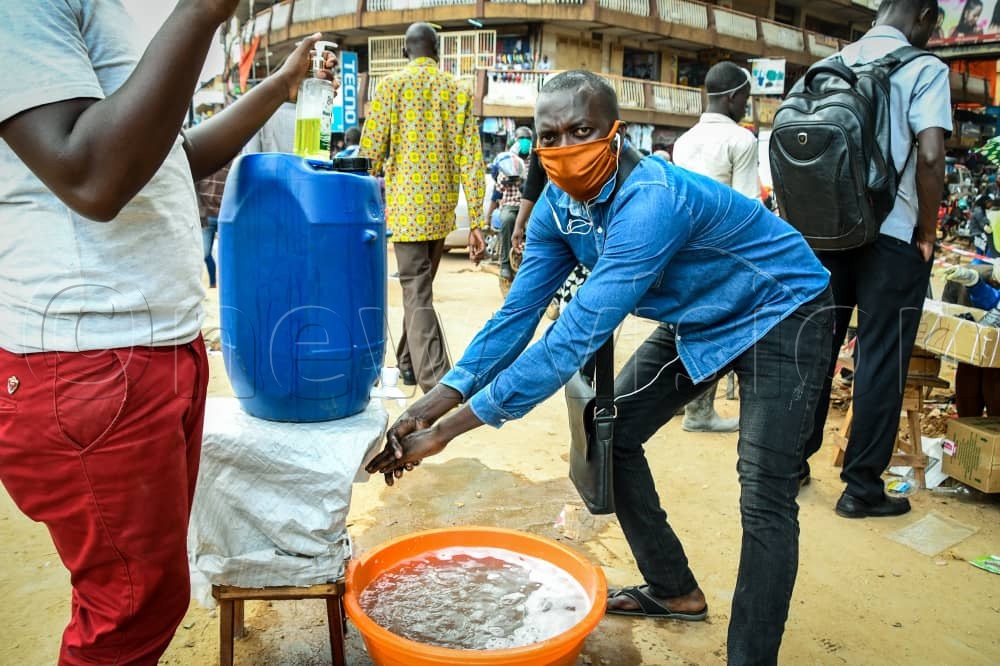
Both Rupiny and Etop were major platforms for educating the public about Ebola and the necessary basic hygiene practices. The numerous FM radio stations would then pick this information and amplify it.
Driving innovation for Gen X
In this Digital era, the citizenry will need to use services like Google search in Luganda, or Luo or Ateso or Runyankore/Rukiga, but to do this they need a large repository of words in the local language.
The local language newspapers are the most efficient media to build and preserve an archive of the much-needed word-bank which language translation services use to build the search engines.
In this era, the local language translation services will be a big driver for innovation and development.
Conclusion
In a country with so much media diversity, the local language newspapers do play a key role in transforming societies, socially, economically and politically. They have demonstrated capacity as key partners of the Government in promoting the development agenda. They are also key in preserving culture and local literature.
Closing off the regional newspapers was a setback.
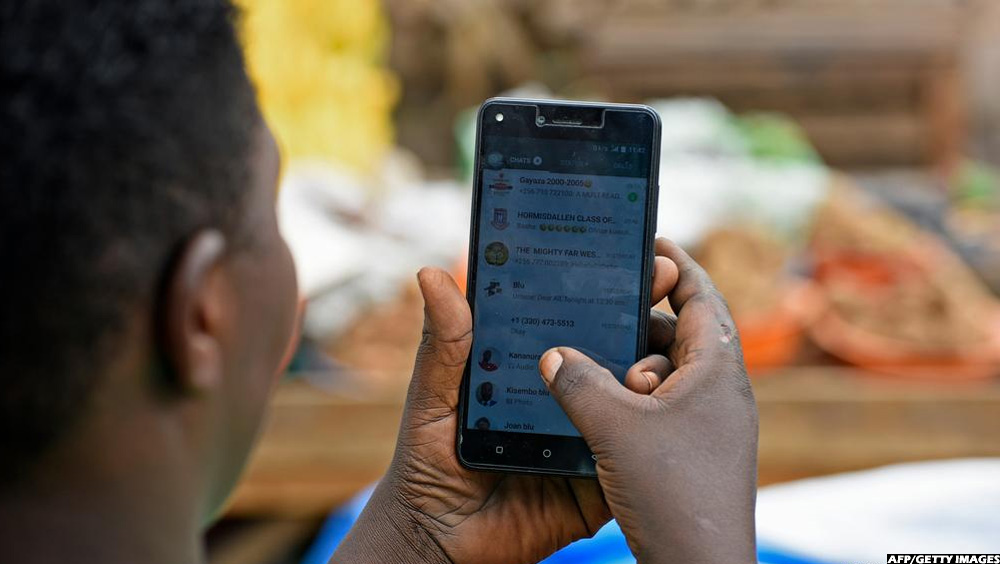
For the media ecosystem, for Government and other development partners, the benefits of supporting these newspapers far outweigh the cost. Even with 300 radio stations, the mushrooming TVs, WhatsApp and the other social media platforms, the Government media strategy is incomplete without print media as a repository.
Many of our local government councillors and leaders are illiterate in the English language, so the local language newspapers will always act as their point of an adulterated reference.
For the case of Uganda, where over 70% of the population lives in rural areas, regional newspapers are a critical tool that the Government and development partners can effectively use to mobilise people.
It is evidenced that most of the radio stations depend on print media to cross check facts and to amplify messages.
Perchance, none of the above arguments convinces you, this one should; an estimated 500 Ugandans directly or indirectly earned a living from the three local language regional newspapers as journalists, distributors, vendors and salespeople.
(The writer is the Editor-In-Chief of Vision Group)