
Kobebe dam crisis highlights Karamoja’s urgent water security resilience gaps
For pastoral communities in Karamoja and neighbouring Turkana County in Kenya, the dam has long served as a critical source of water for livestock and domestic use, supporting livelihoods and stabilising seasonal migration patterns.
Kobebe dam crisis highlights Karamoja’s urgent water security resilience gaps
_______________
OPINION
By Emmanuel Tebanyang
Not so long ago, as a country, we were commemorating the 9th Uganda Water and Environment Week (UWEWK 2026), hosted by the Ministry of Water and Environment, with the 560km Walk for Water, Environment and Climate Change officially flagged off in Moroto District on March 2, 2026.
This event, which is marked annually, focuses on water and environmental sustainability. The Water and Environment Week should always offer an opportunity to reflect on what is going well and what is not. And for that matter, I wish to draw urgent national attention to the alarming situation at Kobebe Dam in Moroto District, which has now completely dried up.
This development has left pastoralist communities and their livestock in an extremely precarious situation, threatening livelihoods and heightening the risk of resource-based conflict that could escalate within the region and across borders. This highlights the growing vulnerability of water resources in Uganda’s semi-arid regions and the urgent need for strengthened climate resilience. For pastoral communities in Karamoja and neighbouring Turkana County in Kenya, the dam has long served as a critical source of water for livestock and domestic use, supporting livelihoods and stabilising seasonal migration patterns.
Constructed by the Government of Uganda between 2010 and 2011 as a strategic investment in pastoral infrastructure, the dam was designed to support hundreds of thousands of livestock belonging to pastoral communities, including the Matheniko, Jie, Bokora, and the Turkana of Kenya. However, prolonged drought, heavy siltation, and increasing livestock pressure have now led to its complete depletion, triggering a humanitarian, environmental, and security concern that requires immediate attention.
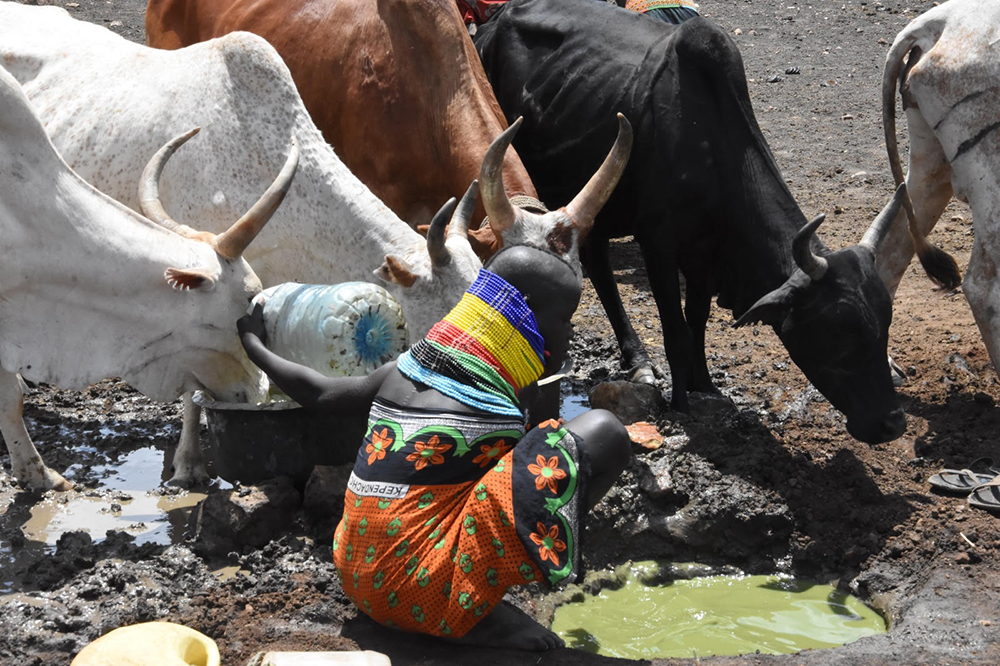
Since 2023, livestock herds exceeding half a million animals have converged around Kobebe in search of water. With the dam now dry, pastoralists have resorted to digging shallow pits in the reservoir bed to collect muddy water for both livestock and domestic use. Before complete depletion, the remaining water had become heavily contaminated with algae and unsuitable for human and animal consumption. Fish stocks in the dam have also perished.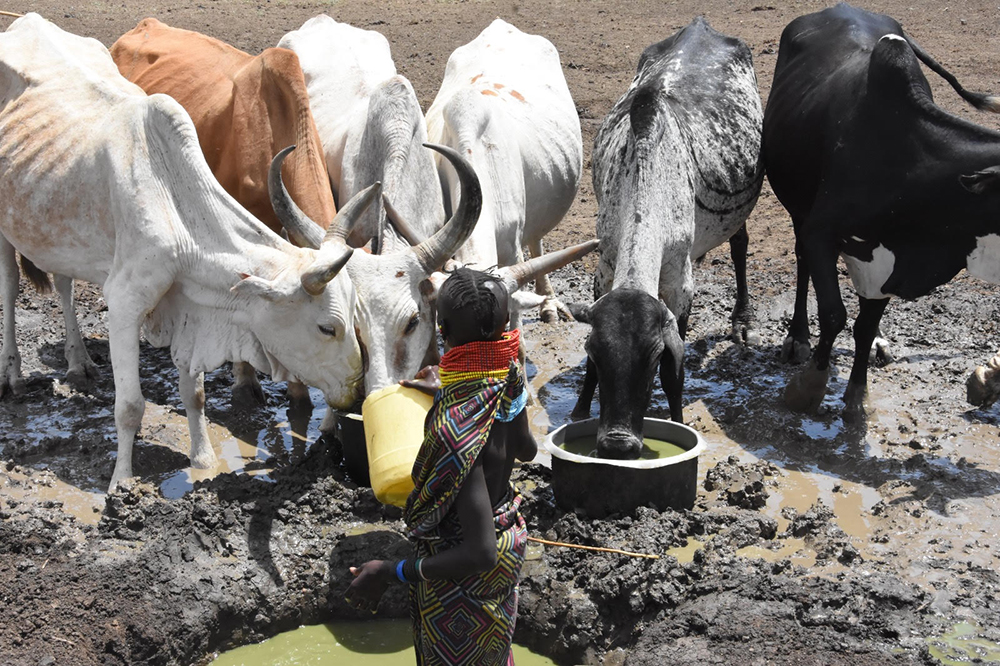
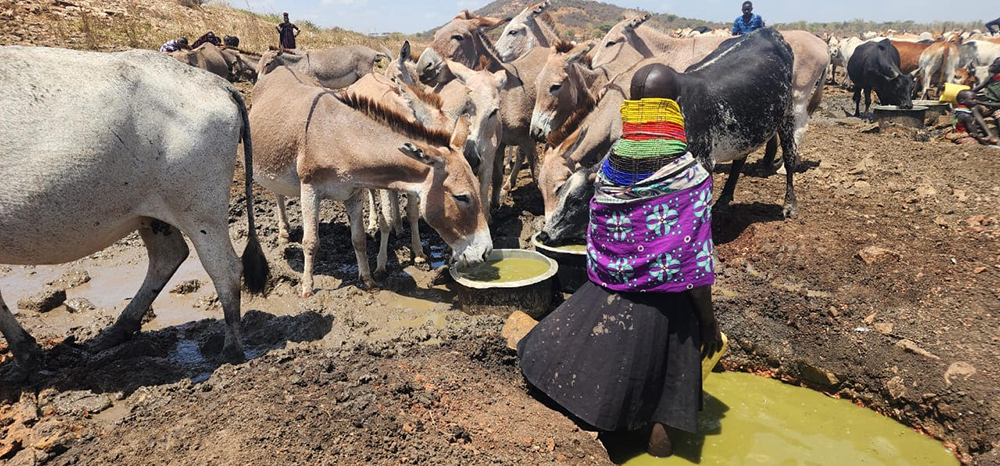
The consequences of this crisis extend far beyond Moroto District. The absence of water is forcing large-scale livestock migration into districts such as Kotido, Napak, and Abim, while some herders are moving across regional boundaries into Lango, Acholi, and Teso in search of water and pasture. These movements are increasing pressure on already fragile rangelands, heightening tensions between communities, and exposing livestock to disease outbreaks.
Livestock: The backbone of pastoral livelihoods and rangeland health
For pastoralist communities in Karamoja and Turkana, livestock are far more than economic assets; they are the foundation of food security, household income, social status, and cultural identity. The drying of Kobebe Dam therefore poses an existential threat to pastoral livelihoods and risks reversing years of progress in peacebuilding and regional stability.
Livestock also play a central role in the ecological, economic, and social functioning of rangelands. In the Kobebe ecosystem, properly managed grazing converts natural vegetation, which is unsuitable for direct human consumption, into valuable products such as milk, meat, hides, and income. Livestock mobility stimulates grass regeneration, recycles nutrients through manure, and helps maintain vegetation balance, preventing bush encroachment and land degradation.
A call for urgent and coordinated action
Government of Uganda and development partners have made significant efforts to in invest in water infrastructure in Karamoja. However, the current situation highlights critical gaps in operation, maintenance, water resource management, and long-term climate resilience planning. Without urgent intervention, the continued deterioration of Kobebe Dam is very likely to deepen humanitarian suffering and increase insecurity in the region. In light of this, I would like to call upon the Government of Uganda, development partners, humanitarian actors, and civil society organisations to take immediate and coordinated action to enhance resilience.
Priority should be given to rehabilitation of existing dams through technical assessments, desilting, and restoration to improve water-holding capacity; development of supplementary water sources through drilling and equipping boreholes, motorizing existing facilities, and constructing additional valley tanks; improved operation and maintenance systems through establishing functional water user committees and strengthening community management structures; catchment protection measures such as tree planting, soil and water conservation, and sustainable rangeland management; and drought preparedness interventions focusing on livestock health services, water trucking where necessary, and early warning systems.
Ensuring long-term water security in Karamoja requires a coordinated approach that combines infrastructure development, environmental conservation, and community engagement. Investments in climate-resilient water systems not only safeguard pastoral livelihoods but also contribute to national food security, peace, and sustainable development.
The situation at Kobebe Dam serves as a powerful reminder of the urgent need to protect vulnerable ecosystems and communities from the impacts of climate change. Proactive action today will help secure water resources for future generations.
The writer is a policy analyst at Karamoja Herders of the Horn (KHH).
tebaemma09@gmail.com