
Wetland Restoration: Makerere University, Karolinska roll out sh9.7b study
At the launch, on 30th January, Prof. Rhoda Wanyenze, Dean MakSPH, said wetlands play a critical role in climate change mitigation through carbon sequestration, flood control and environmental protection, all of which have direct and indirect effects on human health.
(L-R): Bob Natifu, the Acting commissioner Climate Change Ministry of Water and Environment, Dr Rawlance Ndejjo Lecturer Makerere University School of Public Health and Prof Stefan Swartling Peterson from Karolinska Institute interacting after the launch of the project at Fairway hotel. (Credit: Violet Nabatanzi)
__________________
Makerere University School of Public Health (MakSPH), in collaboration with Sweden’s Karolinska Institute, has launched a four-year research project worth £2 million (about sh9.7 billion) aimed at deepening understanding of the health, social, economic and climate benefits of wetland conservation and restoration.
The project titled: WIN-WIN in the Wetlands for Climate Resilience: Consolidating and Scaling the Health, Social and Economic Impacts of Wetlands Conservation and Restoration in Rural and Urban Uganda, will evaluate wetland restoration efforts in rural areas while piloting and implementing similar initiatives in urban settings.
It will also focus on capacity development and policy influence, working closely with Tree Adoption Uganda, several government ministries, and other national and international partners.
At the launch, on 30th January, Prof. Rhoda Wanyenze, Dean MakSPH, said wetlands play a critical role in climate change mitigation through carbon sequestration, flood control and environmental protection, all of which have direct and indirect effects on human health.
“This project is among the first to deliberately link wetland conservation and restoration to health outcomes, expanding our understanding beyond environmental and economic benefits,” Wanyenze said.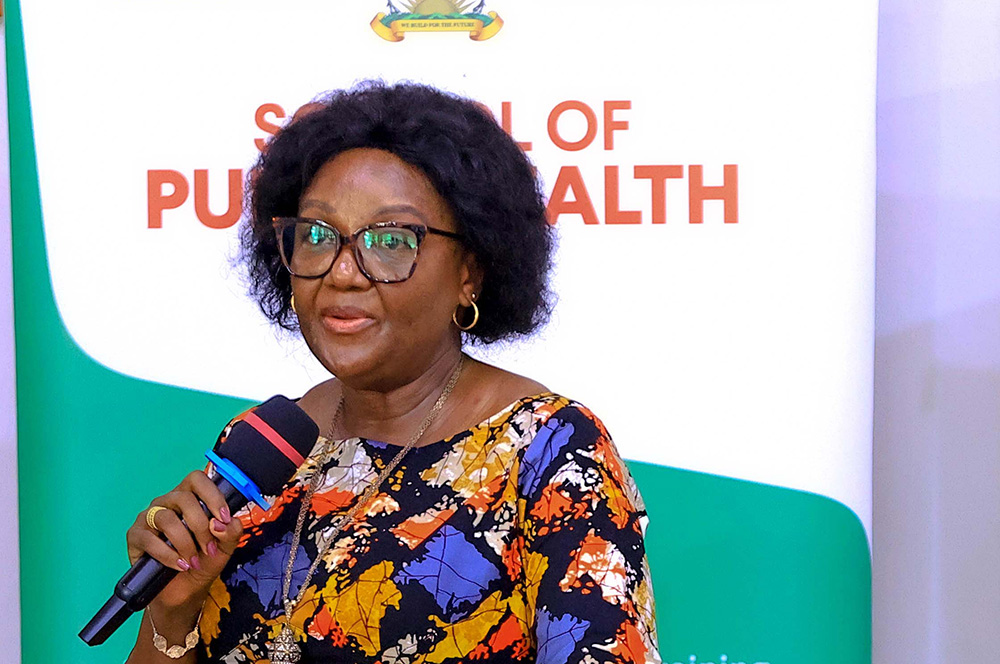
Dr Rhoda Wanyenze, the Dean Makerere Uinversity School of Public Health speaking during the launch of the project at Fairway Hotel. (Credit: Violet Nabatanzi)
She noted that wetland conservation influences public health challenges such as diarrhoea diseases, infections, schistosomiasis and increasingly, nutrition outcomes.
“Protecting wetlands improves health and well-being. It is an investment not only in the environment and the economy, but also in public health,” she added.
As part of the research, the team will study a government-led project that has been implemented since 2017 to build community resilience. The researchers aim to document not only the health outcomes, but also the social and economic impacts of wetland restoration, alongside its contribution to climate change mitigation.
“We want to generate clear evidence on how much these wetlands absorb carbon and how much they help us mitigate climate change,” Ndejjo said, adding that the project takes a holistic approach to understanding the broader contribution of wetland conservation to society and sustainable development.
During the same events at Fairway Hotel, Dr Rawlance Ndejjo, lecturer at MakSPH, said the project comes at a critical time when there is growing interest in advancing climate mitigation strategies beyond their environmental value to include tangible benefits for human health and wellbeing.
He revealed that while Uganda has implemented several wetland conservation and restoration projects over the years, little effort has been made to systematically assess their health impacts.
Wetland restoration is expected to improve water quality and reduce harmful contact with contaminated water.
Indicators to be studied include: the prevalence of diarrhoea among children under five, comparing restored wetland areas with those that have not been restored. The team will also examine cases of fever and bilharzia, particularly among children.
In addition, the project will assess respiratory health, mental health and overall wellbeing, recognising that wetlands contribute to cleaner air and healthier living environments.
The findings from the project are expected to provide strong evidence to guide policy, strengthen conservation efforts, and promote collaborative action to preserve wetlands for the benefit of both people and the environment.
Bob Natifu, Acting Commissioner for Climate Change at the Ministry of Water and Environment, said wetland conservation is central to development, livelihoods and overall well-being.
Natifu noted that communities living in wetlands and floodplains face heightened climate-related risks.
He added that increasingly unpredictable rainfall characterised by excessive rain, drought or prolonged dry spells has intensified vulnerability, underscoring the urgency of protecting and restoring wetlands.
Dr Didacus Namanya, the focal person for Climate Change and Health, Ministry of Health, Environmental Health Department, said wetland restoration research and evidence-based programming are essential for sustaining health and well-being.
He urged the project to expand its research scope to assess wetlands’ contributions to nutrition, livelihoods, ecotourism, and water, sanitation and hygiene (WASH), drawing lessons from ecosystem-based adaptation initiatives such as wetland restoration along River Manafwa in the Mount Elgon region.