
Uganda launches forensic laboratory to combat illegal timber trade, forest crime
The lab, which was commissioned on Wednesday at the Uganda Wildlife Conservation Education Centre (UWEC), marks a turning point in the fight against forest crime in Uganda.
Officials who attended the inauguration of the new laboratory at the Uganda Wildlife Conservation Education Centre (UWEC), pose for a photo. (Photo by Julius Luwemba)
_________________
The Uganda Wildlife Authority (UWA) has launched a new forensic laboratory that will assist in combating illegal timber trade, among other forest crimes.
The lab, which was commissioned on Wednesday at the Uganda Wildlife Conservation Education Centre (UWEC), marks a turning point in the fight against forest crime in Uganda.
The facility is envisaged to uncover the truth through wildlife deoxyribonucleic acid (DNA) and scientific evidence in the service of justice, thereby combating the illegal wildlife trade, as well as illegal logging and timber trafficking.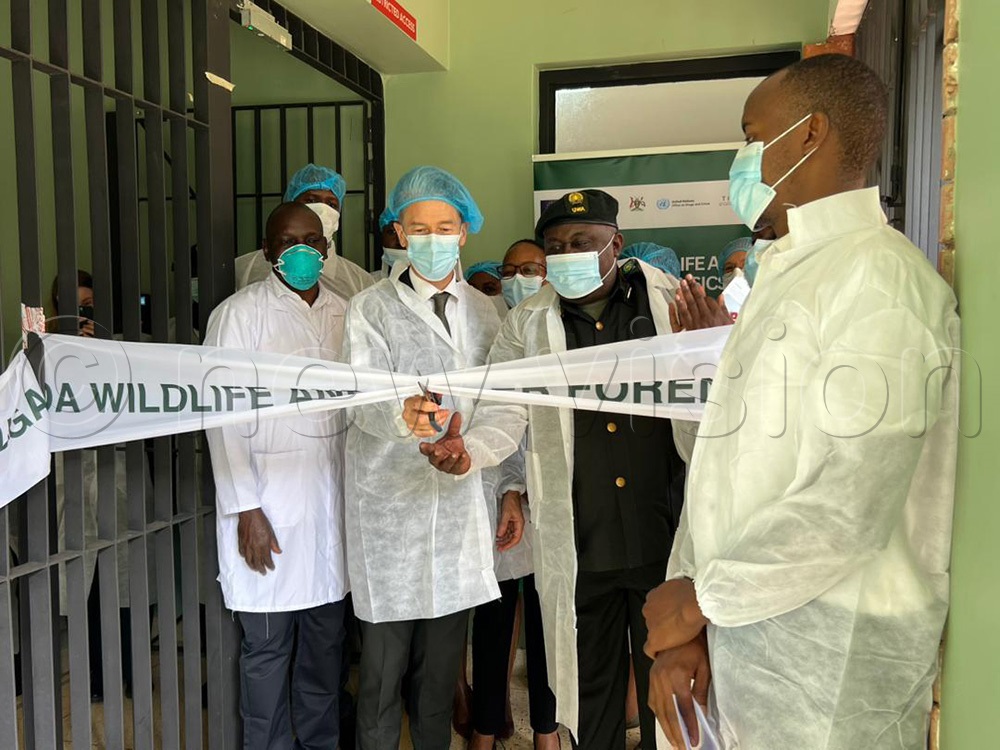
Ambassador Jan Sadek, David Musingo (2nd right) among other officials while opening the wildlife and timber forensic laboratory at Uganda Wildlife Conservation Education Centre (UWEC). (Photo by Julius Luwemba)
The new laboratory was established through collaborative efforts from UWA and the Ministry of Water, with support from the United Nations Office on Drugs and Crime (UNODC) and funding from the European Union, and technical support from TRACE Wildlife Forensics Network, UK.
On behalf of the Uganda Wildlife Authority, David Musingo, the commissioner for community conservation and Ex-situ services said, the laboratory will go a long way in supporting DNA sample preparations and court-admissible evidence against offenders. "By analysing genetic material from plants or animals, to accurately determine their species and sometimes their geographic origin, this lab delivers scientifically robust, court-admissible evidence," Musingo stated.
At the same event, Gladys Kamasanyu, the chief magistrate of the standards, utilities and wildlife court, observed that whereas the seizure of suspected illegal material is often done, the evidence remains susceptible to scientific scrutiny in order to pass the test of reasonable doubt.
"With this new laboratory, science is going to tell us what they (exhibits) are, hence making the law more effective and applicable," she added.
Jan Sadek, the European Union (EU) Ambassador who presided over the launch of the new lab, said the inauguration was a clear signal to Uganda that wildlife and forest crimes are treated as serious organised crime, and that must be investigated, prosecuted and punished.
"Until today, Uganda and the wider region had no dedicated forensic capacity to identify timber species, yet deforestation and the trafficking of protected timber are recognised as specialised forms of organised crime here and worldwide," Sadek stated.
He added, "Together with other forms of wildlife crime, this illegal trade is estimated to cost up to 20 billion euros each year, globally, placing the vice among the most lucrative transnational crimes, alongside drugs, arms and human trafficking."
The EU ambassador also lamented that illegal timber trade destroys biodiversity, accelerates climate change, corruption, threatens security and damages the cultural heritage of communities whose lives are rooted in their forests.
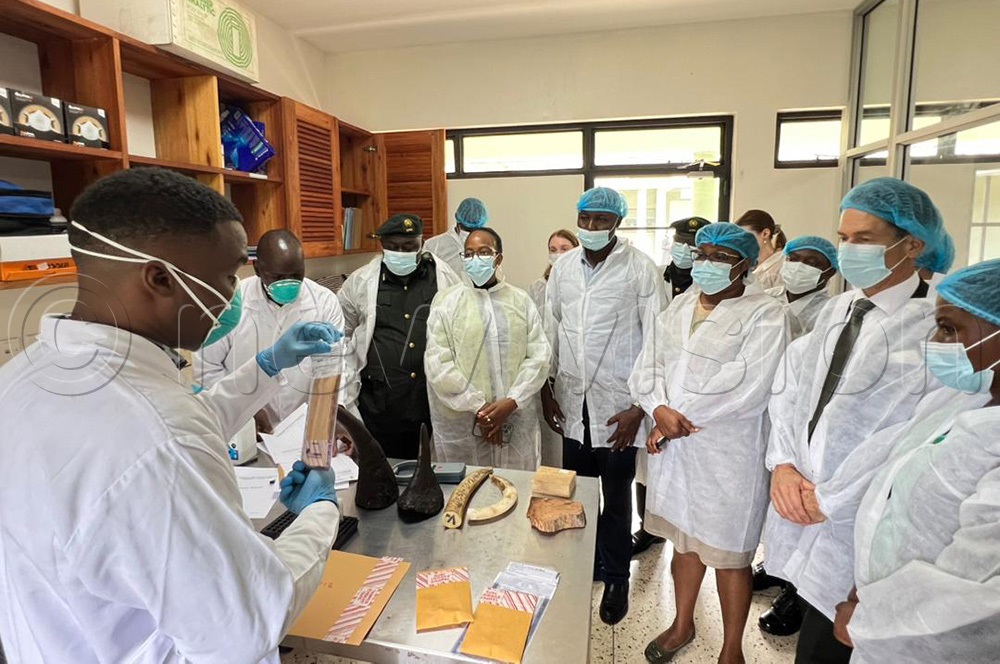
The new laboratory was handed over by the United Nations Office on Drugs and Crime with support from the TRACE Wildlife Forensics Network. (Photo by Julius Luwemba)
"This laboratory is a powerful symbol of partnership, reflecting Uganda's determination to protect its natural heritage and to confront environmental crime through strong institutions and the rule of law, as well as the commitment of the European Union and its member states in promoting sustainable development, conserving biodiversity, tackling climate change and addressing environmental try as a priority in our cooperation," he stated.
Globally, wildlife and forest crime generates up to $28b annually, rivalling the profits of drugs, arms, and human trafficking.