
Uganda developing National Adaptation Plan to bolster climate change resilience
Dr Daniel Nadhomi is the national project coordinator of Strengthening Adaptation Project (SAP) in the ministry's climate change department. He said that as they develop the plan, the aim is to integrate climate adaptation in the relevant government plans, policies and programmes across all the sectors, and from the local communities.
Aisha Sekindi, state minister for Water addressing stakeholders during the 9th Uganda Water and Environment Week (UWEWK) at the water ministry headquarters in Luzira on 24th March 2026. (Photo by Juliet Kasirye)
_________________
The Ugandan government, through the Ministry of Water and Environment, has started developing a National Adaptation Plan (NAP) to help build the country's resilience to climate change.
The strategic framework is aimed at reducing vulnerability to climate change impacts by building adaptive capacity and resilience across all sectors.
Dr Daniel Nadhomi is the national project coordinator of Strengthening Adaptation Project (SAP) in the ministry's climate change department. He said that as they develop the plan, the aim is to integrate climate adaptation in the relevant government plans, policies and programmes across all the sectors, and from the local communities.
"As a country, we have received some funding worth $2.9m (sh10.8b) from the Green Climate Fund. Our first objective is to reduce climate change impact by building adaptive capacity and resilience across all sectors of the economy and communities in our country.
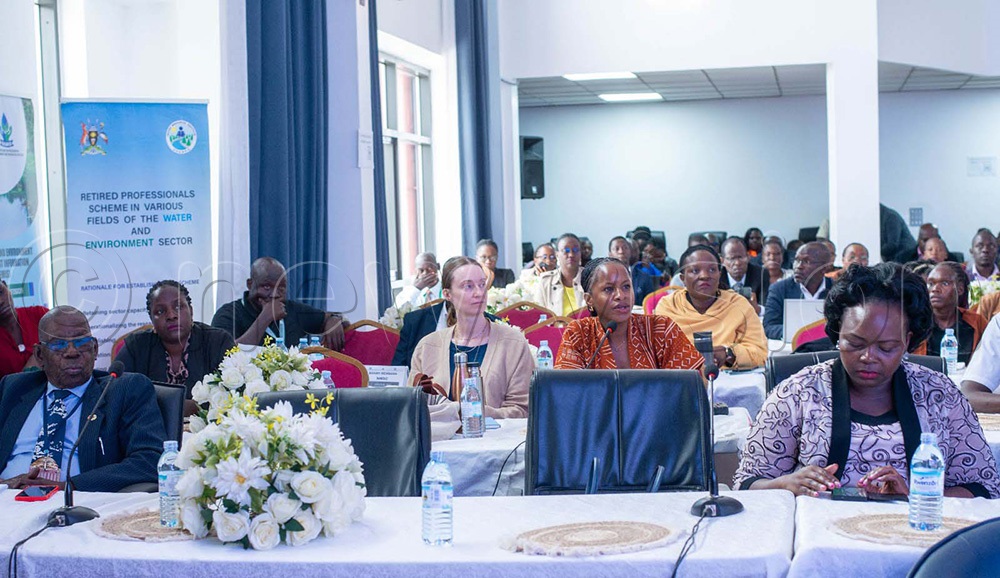
Some of the stakeholders during the 9th Uganda Water and Environment Week (UWEWK) at the water ministry headquarters in Luzira on 24th March 2026. (Photo by Juliet Kasirye)
“NAP will strengthen Uganda’s adaptation planning, build capacity, and also find a mechanism of securing finance and disseminate lessons learnt from the previous process of developing sector NAPs.”
So far, the government has developed sector adaptation plans for health, agriculture and water.
Nadhomi said Uganda has been developing adaptation plans for more than a decade. For example, in 2007, Uganda submitted its National Adaptation Programmes of Action (NAPA), which was an early signal of national commitment to identifying and addressing climate vulnerability.
This year’s UWEWK has been held under the theme: 'Water and Environment for an Inclusive and Prosperous Uganda'.
▪️The role of water and environment in achieving Uganda's 10-fold growth strategy
▪️Investment in science, technology, innovation, and capacity building to enhance progress in water and environment management and development
▪️Ensuring environmentally sustainable and climate resilient economies and communities
▪️Dividing the power and the capacity of women, youth, and children in delivery of water and environment services
'Uganda remains committed'
During the national dialogue to reflect on COP30, which took place in Belem, Brazil in November 2025, climate change negotiators shared key outcomes that the government and stakeholders in the climate space need to put into consideration.
Uganda’s key priorities included strengthening adaptation and resilience, securing climate finance and support for loss and damage, and advancing pathways that respect our national circumstances and development needs.
“I commend President Yoweri Museveni for his steadfast dedication to sustainable environmental management and efforts toward climate action. Government remains committed to climate action that is equitable, inclusive, and development-oriented,” said water state minister Aisha Sekindi.
She said this is the foundation upon which Uganda’s strong progress in climate action, both in international forums such as COP30 and at the national level, is built.
Regarding climate justice, Sekindi said their commitment is to ensure that those who are least responsible for climate change, yet most affected by its impacts, receive the support, protection, and opportunities needed to build resilience.
“Uganda remains very committed to strengthening national systems for climate finance access, monitoring and reporting, and readiness for participation in carbon markets under Article 6 of the Paris Agreement. These systems are essential to unlocking international support, ensuring transparency and accountability, and maximising benefits for communities and the country as a whole,” said the minister.
During the meeting, the ministry's permanent secretary, Dr Alfred Okidi, commended development partners for their invaluable support towards Uganda’s preparation and participation at COP30.
The conference highlighted the need for practical implementation of climate pledges, ensuring that mitigation, adaptation, and finance measures are effectively delivered.
According to Okidi, these pledges represent opportunities for Uganda to harness additional climate financing, technology and capacity building support.
“As we prepare for the Bonn Climate Change Conference, Uganda will focus on ensuring that progress on adaptation indicators, loss and damage financing, and technology transfer translates into practical support for developing countries," he said.
"Our engagement will remain guided by equity, national circumstances, and the need for predictable means of implementation."