
UECCC rolls out clean energy price subsidies in Hoima
The project also intends to increase access to clean energy cooking services by supporting private sector enterprises promoting efficient cooking solutions.
UECCC officials visit exhibition stalls during the rollout in Hoima on Wednesday. (Courtesy photos)
________________
Uganda Energy Credit Capitalisation Company (UECCC) has activated the results-based financing (RBF) price subsidy programme in Hoima City, marking another step-in expanding access to affordable clean energy solutions across the country.
Early this year, the Ministry of Energy and Mineral Development launched the electricity access scale-up project with the aim of increasing electricity access to households, commercial enterprises and public institutions in rural areas through on-grid and off-grid solutions.
The project also intends to increase access to clean energy cooking services by supporting private sector enterprises promoting efficient cooking solutions.
The results-based financing programme is one out of the four programmes being implemented by UECCC under the financial intermediation component of the project.
The programme is expected to provide grants, price subsidies or price cuts through selected companies to Ugandans who will access the discounted products, something that is aimed at addressing the upfront affordability barriers associated with the purchase of clean technologies for lighting, cooking solutions and productive uses of energy.
Speaking during the roll-out in Hoima on Wednesday, Roy Baguma, the UECCC Managing Director, explained that the RBF mechanism focuses on results, ensuring accountability while directly lowering prices for end users.
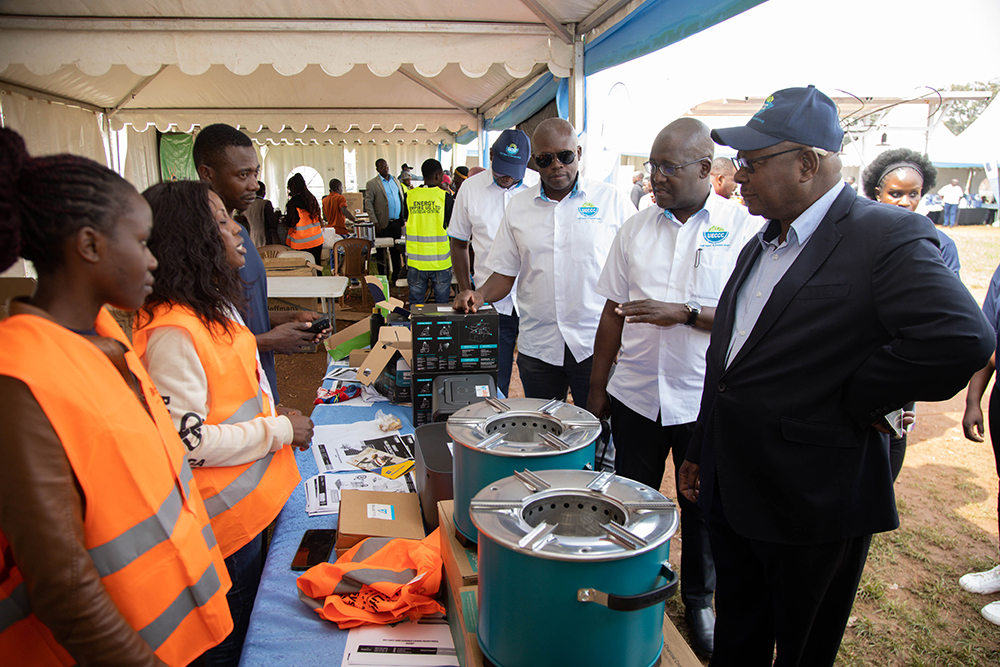
Under the programme, solar lanterns are subsidised by up to 60%, solar home systems by 50% percent while clean cooking solutions subsidies range between 30% and 50%. On the other hand, productive-use energy equipment is subsidised by up to 60%.
“These subsidies enable households, small businesses, and institutions to access solar power, clean cooking solutions, and productive-use energy technologies at significantly reduced prices,” Baguma said.
UECCC has partnered with 67 pre-qualified energy service companies (ESCOs) selected jointly with the World Bank that supply UNBS-certified products and operate across urban, rural, remote, and refugee-hosting areas.
The UECCC board vice chairperson, Dr Kabagambe Kaliisa, reaffirmed the government’s commitment to clean energy access and highlighted the Board’s oversight role in ensuring that UECCC delivers on its mandate.
He noted that the price subsidy programme directly addresses high upfront costs as one of the most persistent barriers to clean energy adoption while strengthening private sector participation in energy delivery.
“Access to this subsidy programme is straightforward. Beneficiaries require only a national identification card and the ability to pay the subsidised price. Products are taken home immediately after purchase, and a list of participating ESCOs is available on the UECCC website,” Kaliisa said.
UECCC has already introduced a digital platform that will be used to track the performance of energy service companies implementing the project.