
Temporary construction yard restored, turned into demonstration farm
The initiative was first driven by the need to address organic waste more sustainably while restoring land disturbed by construction.
CPP employees harvesting vegetables from the demonstration farm that supports both camp meals and local livelihoods. (Courtesy)
_______________
When one visits a demonstration farm at Kabayola village in Ssembabule district, they will not imagine that the ground on which they are standing and the farm is seated was previously a concrete batching and material storage area.
The ground, once covered in hardened concrete residue and compacted surfaces, has undergone systematic reinstatement, including waste clearance, subsoil replacement and topsoil spreading to rebuild soil structure and fertility. Grounds that had become barren due to construction are now restored to productive use.
Today, the rehabilitated ground hosts a demonstration garden supported by manure produced from a food-decomposing machine installed at the camp. The machine converts segregated food waste into organic manure in less than 24 hours, reducing the volume of waste previously transported for disposal.
According to Julius Ssenyonjo, the environmental-lead at the China Petroleum Pipeline Engineering Co Ltd (CPP) Uganda, the initiative was first driven by the need to address organic waste more sustainably while restoring land disturbed by construction.
“We were generating a considerable amount of food waste daily. Instead of sending it out as refuse, we asked how we could manage it better on-site. The composter gives us manure within 24 hours, and that manure is now improving the same land that had been disturbed during construction,” he says.
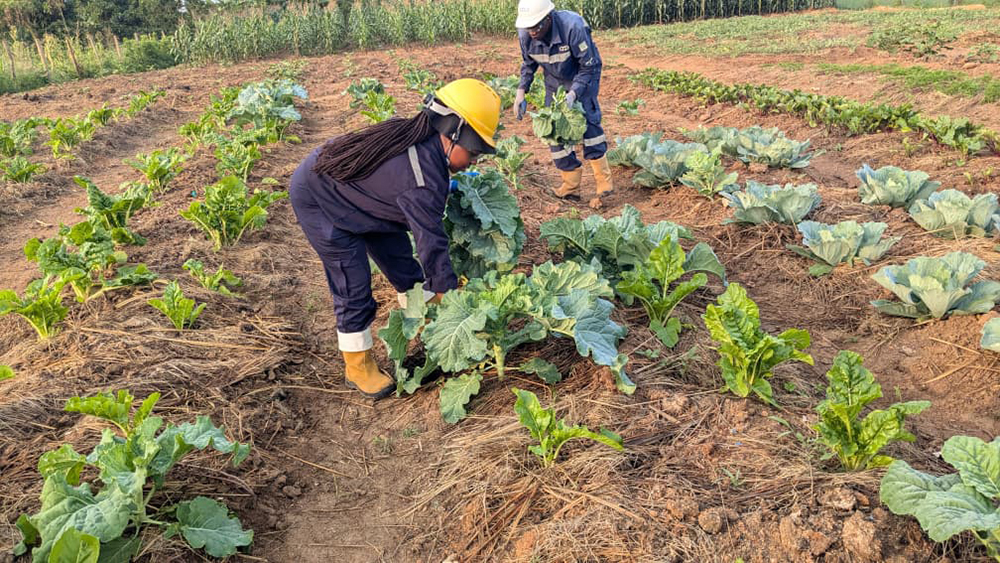
Patience Katusiime, Waste Management coordinator, harvesting vegetables from the demonstration farm. (Courtesy)
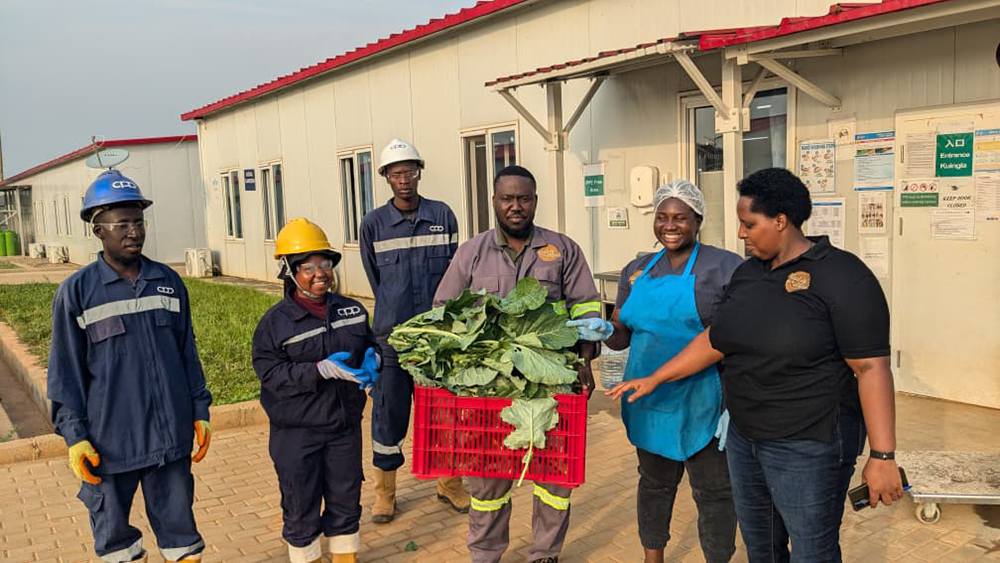
Patience Katusiime, Waste Management Coordinator at CPP, hands over freshly harvested vegetables to Paul Bwete, Camp Manager – Meals on Wheels, at MCPY3 Camp. (Courtesy)
The reinstatement works involved mechanical scarification of compacted surfaces, application of subsoil to restore structure, and spreading of fertile topsoil before planting began. The manure is now applied to crops grown on the demonstration farm and also used in landscaping around the camp to plant grass and flowers.
National content manager at CPP Zhang Haitao told New Vision Online on February 25, 2026, that the initiative also supports national content objectives by creating local employment and knowledge transfer opportunities.
“Restoration is not only about meeting environmental compliance requirements. It is also about leaving behind improved land use and creating opportunities for communities. The demonstration farm allows us to engage local workers and share practical farming knowledge that can be applied beyond the camp,” he added.
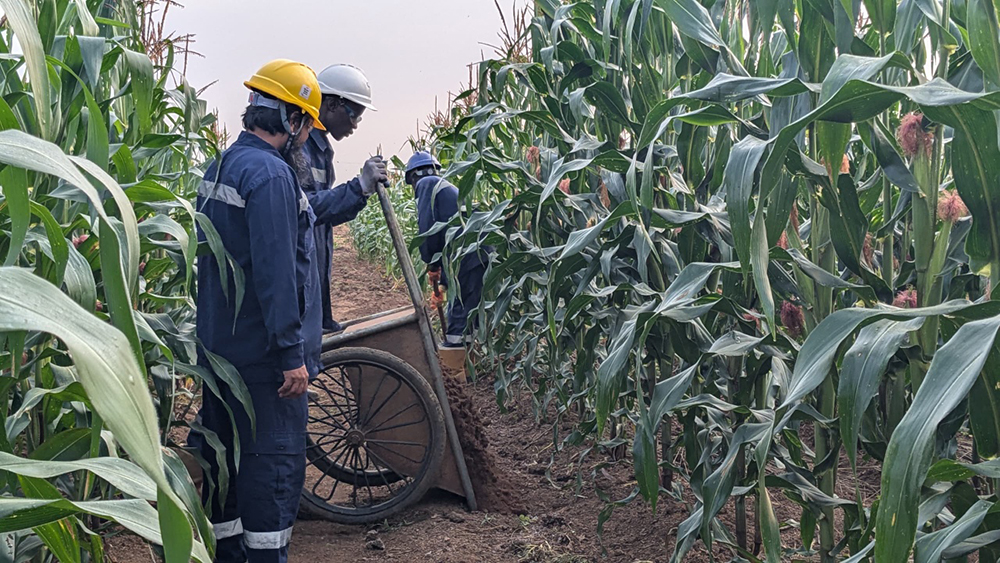
Application of nutrient-rich manure to maize grown on the reinstated batching site. (Courtesy)
Source of employment
Local community members have been employed to work on the farm, handling planting, weeding and harvesting, according to CPP. Part of the produce supplements meals prepared at the camp, while a portion is shared with the workers to support their household nutrition.
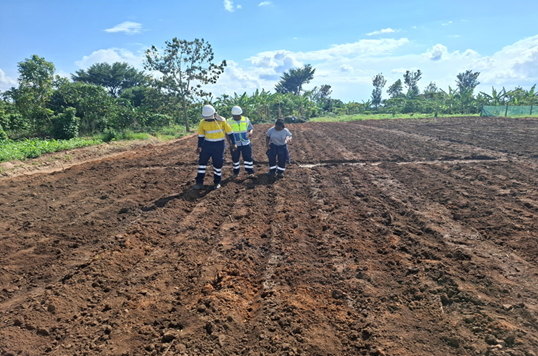
Soil prepared for planting following land restoration and organic soil improvement. (Courtesy)
Tumuhiere Abel, a casual labourer employed at the demonstration farm, said the project has provided both income and learning.
“Before this, I was doing small casual jobs. Here, I have learned about soil preparation, spacing, and how manure improves crops. I can use these methods in my home garden,” he said.
CPP management indicates that the demonstration farm will increasingly serve as a practical learning site where local workers and nearby community members can observe improved farming practices, including compost application, soil restoration techniques and crop management.
Even though modest in scale, the initiative at Kabayola grounds, which initially supported the oil pipeline construction, shows that it is possible to rehabilitate and repurpose temporary construction sites.