
Rwenzori livestock farmers count losses as long dry spell bites
"Cows mean a lot to us; even losing one is a tragedy," Mugamba said.
Basongora pastoralists worried of losing more of their animals as cows struggle to get drinking water at on of the drinking points. (Credit: Samuel Amanyire)
RWENZORI - Livestock farmers in Rwenzori region, especially in Kasese district, are grappling with the devastating effects of climate change, including prolonged dry spells, floods, mudslides and stormy winds, which have wreaked havoc on communities that heavily rely on agriculture and livestock for survival.
The most recent of these effects is the prolonged dry spell that has hit renowned cattle-keeping communities in Basongora, including Nyakatonzi sub-county and Hima town council. The dry spell has left grazing lands barren and water sources depleted.
Muhumuza-Nyakatonzi Cattle Keepers Co-operative Society chairperson Kenneth Mugamba told New Vision Online on February 15, 2026, that his community is now facing two severe dry spells annually, one in each half of the year.
This relentless cycle has claimed the lives of approximately 750 cows due to a lack of water and pasture.
"Cows mean a lot to us; even losing one is a tragedy," Mugamba said.
The impact extends to milk production, which plummets dramatically—from over 1,500 litres to as low as 500 litres across the entire sub-county. This cripples the livelihoods of pastoralists who rely on dairy farming as their primary source of income.
Mugamba added that while the Government constructed three valley dams in 2019 to address water shortages, they often remain empty. The issue lies upstream, where crop farmers divert water for irrigation, blocking the streams that feed the dams.
"We only wait for the rainy season to have water in the dams because upstream, there are about four lower local governments, including Kinyamaseke town council and Nyakiyumbo sub-county, where farmers channel the water into their gardens," he explained.
To resolve this crisis, Mugamba urged the Government and the Kasese district local government to tap water from River Nyamugasana, which flows through the area, to replenish the dams. Without such intervention, he warned, "Those dams will never serve their intended purpose, and that is how we shall continue suffering."
Residents share their struggles
Cattle keeper Godfrey Begumisa said he is desperate for failing to pay school fees for his six children due to reduced milk production.
Patrick Mugerman echoed similar concerns, revealing that dwindling milk yields have left him struggling to repay a shilling 10 million loan. He fears losing his two-acre plot of land to the bank after taking the loan to build a permanent house.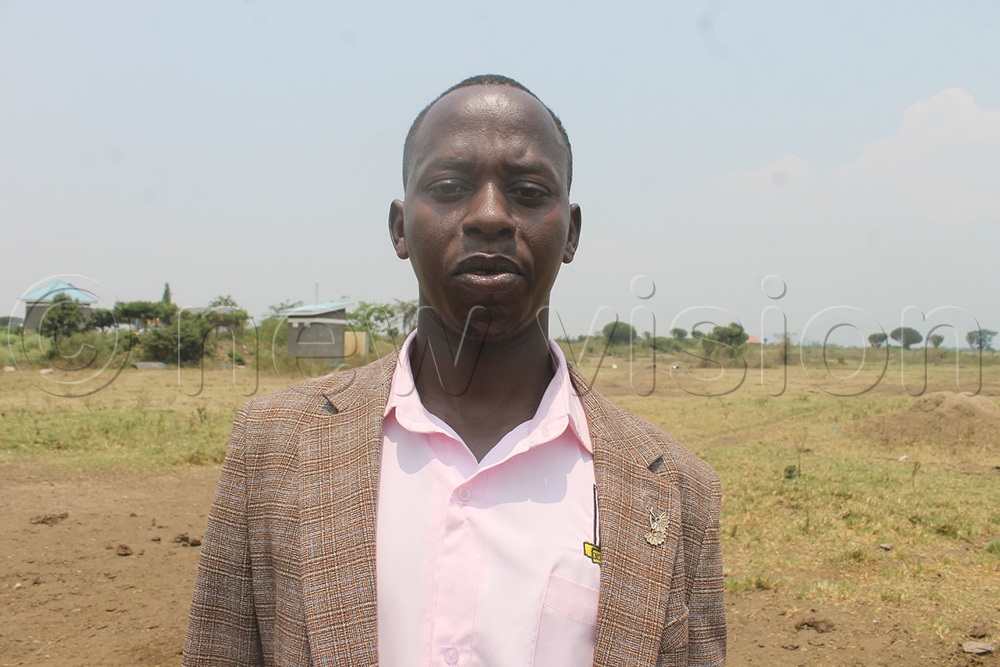
Kenneth Mugamba, the Chairperson Muhumuza Nyakatonzi Cattle Keepers Cooperative Society says that they lose about 750 cows annually due to lack of enough water and pasture. (Credit: Samuel Amanyire)
Nyakatonzi sub-county district councillor Ham Natuhwera estimated a population of 300 cattle keepers rearing about 80,000 cows collectively in the area.
"Imagine losing 30 cows every week! As a local leader, what else can you explain to the people?"
Through the co-operative society, Natuhwera said they have submitted a proposal to the government requesting assistance in tapping water from River Nyamugasana, which is five kilometres from the valley dams, to ensure a steady supply for the livestock.
District authorities respond
Kasese district principal agricultural officer Julius Rukara acknowledged the crippling effects of climate change on the region, saying efforts are underway to mitigate the problem.
With support from the Government, Kasese has started developing mini-irrigation schemes in areas prone to heavy sunshine.
Kasese district LC5 chairperson Eliphazi Muhindi Bukombi said there is an ongoing River Nyamugasani water project valued at over shillings 16 billion, which aims to install approximately 1,500 taps across various lower local governments, including the sub-counties of Nyakatonzi, Kahokya and Lake Katwe and towns like Katwe, Kabatooro and Kinyamaseke.
"We are optimistic that once this project is completed, the water shortage challenge will be history," Muhindi said.