
Northern Uganda beekeepers urged on diversification as climate change hits honey sector
Acaye said many farmers still view honey as the only profitable product from apiary, yet it generates lower returns compared to other bee products.
Norman Omona, the Managing Director of Lagweno Kiboo Bees and Multi-Investment Limited in Kitgum Municipality, said frequent power outages have crippled honey processing operations. (Photos by Christopher Nyeko)
________________
Beekeepers in the Acholi and Lango regions have been urged to diversify beyond honey production and invest in high-value bee products such as venom, propolis, and beeswax as climate change and environmental degradation continue to reduce honey yields.
Speaking during the media launch of the upcoming Gulu Honey Festival at Gulu City Inn Café on May 11, 2026, Gulu district senior entomological officer Alphonse Acaye said many farmers still view honey as the only profitable product from apiary, yet it generates lower returns compared to other bee products.
“A kilogramme of honey currently sells between shillings 6,000 and 10,000 at farm gate prices, while processed and packaged honey can fetch between 25,000 and 30,000 in supermarkets,” Acaye said.
He noted that bee venom and propolis offer significantly higher earnings for farmers.
According to Acaye, a gram of bee venom can sell for between shillings 60,000 and 100,000 and can be harvested twice a month. Propolis, another high-value bee product, earns farmers up to shillings 200,000 per kilogramme, while beeswax sells for between shillings 30,000 and 40,000 per kilogramme.
He added that farmers who process beeswax into value-added products such as candles and body lotions can earn even more income.
“A small candle piece alone can sell at shillings 500,” he said.
Acaye revealed that the district is preparing to train beekeepers on modern bee venom extraction techniques. However, he acknowledged that the high cost of equipment remains a major obstacle, with a complete extraction set costing about shillings five million.
Poor pesticide usage
Climate change, he said, has emerged as one of the biggest threats to the beekeeping sector. Honey harvesting, which previously occurred several times a year, is now limited to only two seasons annually due to declining bee populations and unpredictable weather patterns.
He also blamed improper pesticide use by crop farmers for contaminating nectar sources, warning that poor-quality honey from Uganda is increasingly being rejected on international markets.
“Many farmers spray crops at the wrong time, exposing bees to harmful chemicals. This affects honey quality and export standards,” Acaye explained.
Environmental degradation, particularly deforestation for charcoal burning and agricultural expansion, has further reduced vegetation cover that bees depend on for nectar.
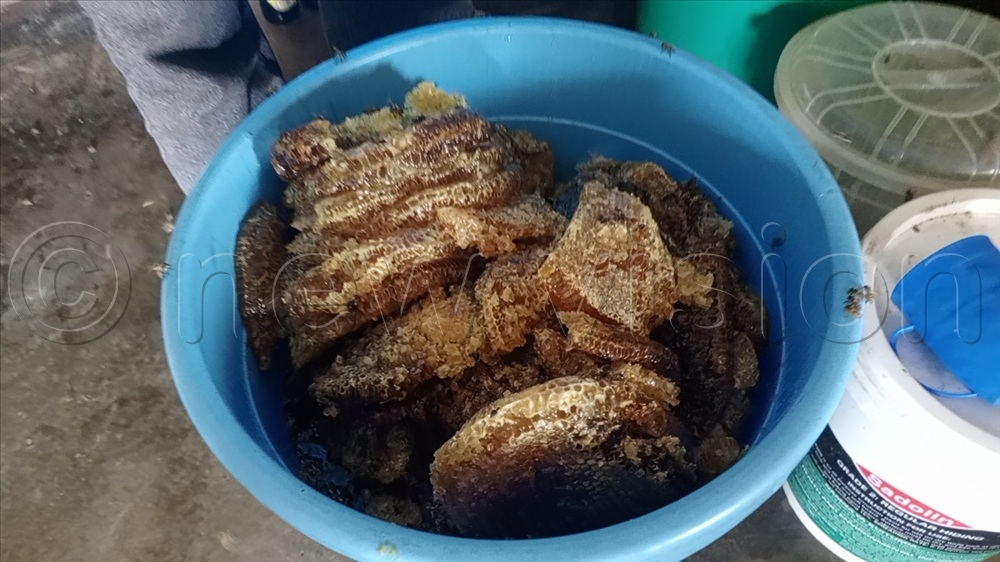
In Gulu district, the sub-counties of Palaro, Omel, Paicho and Pukony remain major beekeeping hubs because of their favourable ecosystem near the Aswa River.
Speaking ahead of the festival launch, Carolyn Aber said the festival will be held under the theme, “Honey for Jobs, Wealth, and Climate Resilience in Northern Uganda.”
The event is expected to attract over 2,500 beekeepers from the Acholi and Lango.
Aber said the festival will provide a platform for farmers to connect with buyers, processors and other actors in the honey value chain, while promoting climate-smart beekeeping and modern production technologies.
“It will also create opportunities for women and youth to explore entrepreneurship within the honey value chain,” she added.
Officials from the Uganda National Bureau of Standards are expected to conduct sessions on honey quality standards, certification, market access and compliance with the European Union Deforestation Regulation.
More challenges
However, stakeholders say infrastructure challenges continue to affect the sector.
Norman Omona said frequent power outages have disrupted honey processing operations.
“I bought a machine for sealing packaged honey bottles, but persistent blackouts have made it difficult to meet customer orders,” Omona said.
Gulu district assistant entomological officer David Okello also raised concerns over poor post-harvest handling practices among local beekeepers.
He said some farmers package honey in used waragi bottles, exposing it to contamination and lowering quality standards.
“Honey is hygroscopic. It absorbs moisture from the environment very easily, and poor packaging compromises its organic properties,” Okello explained.
He also warned that some roadside vendors dilute honey with water, damaging the reputation of locally produced honey.
To address the problem, the district entomological department has intensified farmer sensitisation on quality standards and proper post-harvest handling practices.
Okello welcomed the upcoming festival, saying it would expose farmers to modern technologies and help improve production standards across the region.