
New Namanve fruit factory to boost value addition, cut post-harvest losses
With a processing capacity of five metric tonnes per hour, equivalent to about 120 tonnes daily, the factory is expected to absorb surplus production, particularly during peak harvest seasons when farmers often incur heavy losses due to oversupply.
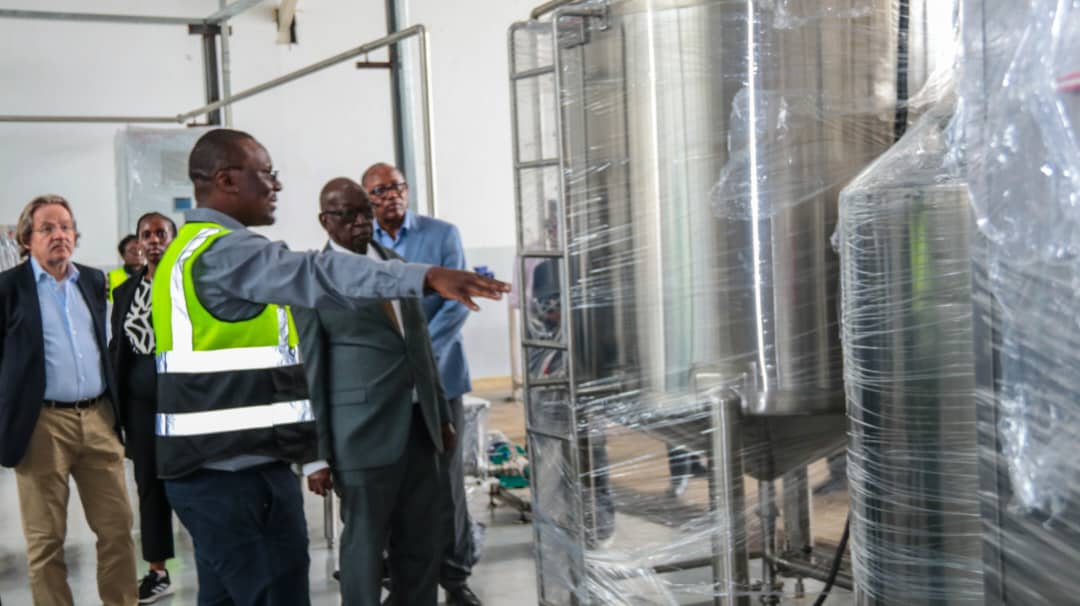
The sh22.5 billion Orana Gate Fruit Factory is expected to be commissioned in May 2026 and is poised to transform how fruits are handled, processed, and marketed across the country. (Courtesy photos)
________________
Uganda is set to boost value addition and reduce post-harvest losses with the establishment of a new fruit processing plant in Namanve Industrial Park.
The sh22.5 billion Orana Gate Fruit Factory is expected to be commissioned in May 2026 and is poised to transform how fruits are handled, processed, and marketed across the country.
Progress on the facility was assessed during a site visit on March 19, 2026, where trade, industry and cooperatives minister Francis Mwebesa and company officials inspected ongoing works ahead of its launch.
For years, Uganda has lost a significant portion of its agricultural output due to poor handling, inadequate storage, and limited processing capacity. Highly perishable fruits such as pineapples, mangoes, and passion fruits have been among the most affected.
The Namanve plant seeks to address this gap by converting fresh produce into shelf-stable products, including pulp, concentrates, juices, jams, and dried fruits. This will not only extend the lifespan of the produce but also open access to regional and international markets.
With a processing capacity of five metric tonnes per hour, equivalent to about 120 tonnes daily, the factory is expected to absorb surplus production, particularly during peak harvest seasons when farmers often incur heavy losses due to oversupply.
“This factory will turn our farmers’ produce into premium, shelf-stable products that can compete globally,” Mwebesa said, noting that the investment aligns with the government’s Buy Uganda Build Uganda policy.
“This is the kind of investment we envisioned when we championed the Buy Uganda Build Uganda Policy. OranaGate will create jobs, grow Uganda’s economy, and provide a dependable market for local farmers. This factory will turn our farmers’ produce into premium, shelf-stable products that can compete globally,” he added.
Beyond reducing waste, the facility is designed to strengthen value addition by shifting Uganda away from exporting raw produce to processed goods with higher market value.
Mwebesa said this transition could significantly boost farmers’ incomes while increasing the country’s export earnings.
The plant will also operate a co-packing model, enabling small and medium-sized enterprises to process and package products under their own brands without investing in expensive equipment. This approach is expected to lower barriers to entry in the food and beverage sector and stimulate entrepreneurship.
“We are creating opportunities for Ugandan entrepreneurs who have innovative ideas but lack the capital for machinery and technical expertise to start their businesses with minimal investment,” said Richard Munyaneza, country director of OranaGate.
The company plans to work closely with cooperative groups and out-growers to strengthen the supply chain. A nucleus farm will be established to train farmers in organic farming practices, improve quality standards, and ensure a steady supply of raw materials.
The facility will also adopt environmentally sustainable practices by recycling fruit waste into compost, creating a circular system that supports farmers while minimising environmental impact.
Mwebesa said investments of this nature are critical to Uganda’s broader industrialisation agenda, particularly in agriculture, which employs the majority of the population. By linking farmers to reliable markets and ensuring consistent demand, the factory is expected to stabilise prices and encourage increased production.
Uganda’s favourable climate allows for the cultivation of a wide variety of tropical fruits, including pineapples, oranges, avocados, and passion fruits. This positions the country strongly for agro-processing and export growth, although the sector still faces challenges such as maintaining quality standards and competing with cheaper imported products.