
Makerere to skill media practitioners on climate change reporting
“Our research contributes to national and international initiatives on climate resilience, forest restoration, climate risk assessment, climate-informed development planning and sustainable cities,” Ssali said.
(L-R) MUK's Prof Groutites Nabanoga, Acting Vice Chancellor Prof Sarah N Ssali and British High Commissioner Lisa Chesney during the launch of a short course on climate change coverage and reporting for media practitioners on Thursday. (Credit: Isaac Nuwagaba)
KAMPALA - Makerere University says it has launched a short course on climate change coverage and reporting for media practitioners with the aim of enhancing their skills in reporting on environmental issues.
The course is designed to equip journalists with the knowledge and tools needed to effectively communicate climate change impacts and solutions to the public.
The initiative is part of the university's efforts to address the pressing issue of climate change, which is having devastating effects on Uganda's agriculture, water resources and human settlements.
Speaking at the launch on March 5, 2026, acting vice-chancellor Prof. Sarah N. Ssali said climate needs protection because it supports agriculture, which accounts for 72% of Uganda's land use and 41% of this land is already degraded.
“Our research contributes to national and international initiatives on climate resilience, forest restoration, climate risk assessment, climate-informed development planning and sustainable cities,” she said.
The course will cover topics such as climate change science, policy frameworks, and communication strategies. It will also provide a platform for media practitioners to share experiences and best practices in climate change reporting.
“Climate change is a critical issue that requires effective communication to raise awareness and drive action,” added Ssali. “This course will help media practitioners to better understand the complexities of climate change and report on it in a way that engages and informs the public.”
Climate change is one of the defining challenges of our time because it impacts agriculture and food systems, forest ecosystems, public health, water resources, energy systems and urban development, she observed.
“Even the education sector is not immune. Increasing climate shocks such as floods, landslides and drought disrupt the learning environment, damage infrastructure and affect the well-being and livelihoods of the communities that our students and staff come from.
The launch of the course comes at a time when Uganda is experiencing increased climate-related disasters, including floods, landslides, and dry spells.
In 2024, Makerere University hosted a workshop on climate adaptation, which highlighted the need for urgent action to address the impacts of climate change on agriculture and livelihoods.
The short course is expected to contribute to the development of a skilled pool of journalists who can effectively report on climate change issues, promoting public awareness and driving action to mitigate its impacts.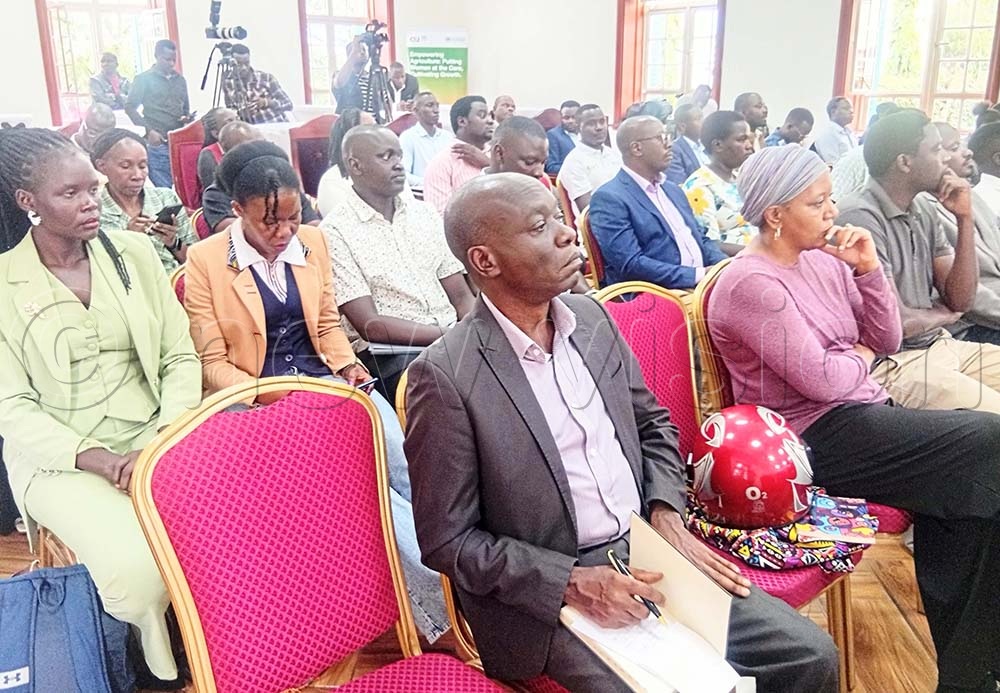
Editors Guild members who attended the launch of short course on climate change coverage and reporting listening. (Credit: Isaac Nuwagaba)
Science, policy and journalism
College of Agricultural and Environmental Sciences (CAES) principal Prof. Gorettie Nabanoga said this initiative shall bring together science, policy and journalism.
“Climate science is complex. Climate financing is technical, and climate policy can be difficult to interpret, but the media translates complexity into public understanding,” she noted.
Responsible climate reporting
British High Commissioner to Uganda Lisa Chesney, while speaking as the chief guest, challenged media practitioners towards championing responsible reporting to empower citizens with knowledge.
“In many ways, journalists are the bridges between science and society. Inspire behavioural change across society, highlight local innovations and solutions and strengthen transparency in climate investments,” Chesney advised.
This is where Journalists should become indispensable partners who can ably explain complex terms in simple ways they understand it, she added.
Chesney pledged to continue supporting the government through the climate-smart jobs programme, which has been supporting this important initiative.
She added that this initiative reflects a shared commitment to building a well-informed society that is capable of responding to the climate challenge.
Support
Editors’ Guild representative Alex Atuhaire said they shall engage all the media houses to strengthen journalists to report accurately and factually on climate change.
“Our editors will be there to offer mentorship and guidance to climate reporting. Climate change reporting has been treated as a hard subject because it carries complex scientific terminologies, which most reporters fail to understand,” Atuhaire said.
Info Nile programme and strategy lead Leonard Namukasa insisted that the Government has been employing unqualified staff in the environment and water ministries who are unable to translate and give relevant data that is factual for presentation.
“Journalists have been quoting old data because some of the ministry staff do not have the capacity to gather and explain relevant and updated content for the media to disseminate, rendering the climate change subject boring to reporters.”