
Kamwokya ghetto residents get hands-on tips on waste management
Kampala generates approximately 2,000 to 2,500 tonnes of waste daily, occasioned by rapid urbanisation and a population of roughly five million people during the day.
A woman walks on the makeshift bridge on the drainage channel where Kamwokya slum dwelers drop waste on May 7, 2026. (Photo by Francis Emorut)
__________________
The residents of the slums of Kamwokya, a suburb in Kampala, have been trained in proper waste management.
The idea has been to demonstrate to this ghetto community how they can, for instance, turn waste into manure and recycle plastics.
Waste management is a daily challenge in many parts of the city, more so in slum settlements.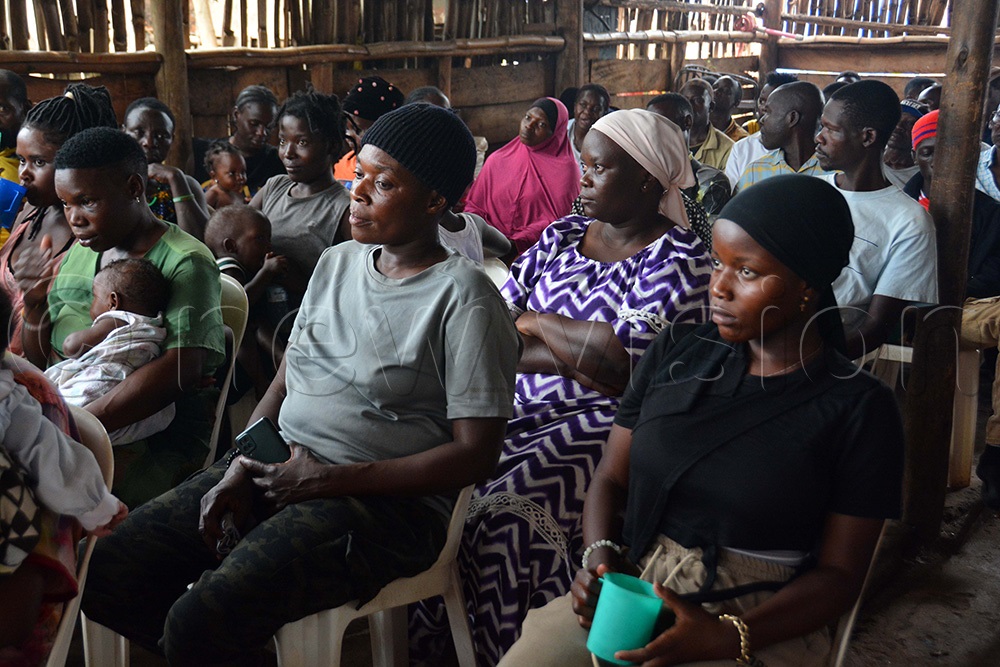
A cross section of participants during the waste management training at Ghetto Research Lab in Kamwokya a Kampala suburb on May 7, 2026. (Photo by Francis Emorut)
Kampala generates approximately 2,000 to 2,500 tonnes of waste daily, occasioned by rapid urbanisation and a population of roughly five million people during the day.
Only about 1,200 to 1,500 tonnes of this waste is collected daily. With nearly half of it uncollected, illegal dumping and clogged drainage channels remain a hazardous reality, as over 80 per cent of the waste is organic.
Slum dwellers say they grapple with poor waste disposal, which not only puts their health at risk but also strains the environment with pollutants.
So-called flying toilets (plastic bags used to collect human faeces) are common in such settlements due to inadequate toilet facilities.
In Kamwokya, Thursday's training spearheaded by Green Africa Youth Organisation (GAYO) Uganda in partnership with Youth Climate Council Uganda, was aimed at helping turn this around.

The program manager of Green Africa Youth Organisation Jemimah Kasibbo speaking during training on waste management at Ghetto Research Lab in Kamwokya, a Kampala suburb on May 7, 2026. (Photo by Francis Emorut)
Held at Ghetto Research Lab, it attracted youths, women, the elderly, waste workers, youth leaders, and community leaders.
"The engagement aims to strengthen the capacity, safety, and economic inclusion of waste workers through practical training focused on waste segregation, material identification, waste value chains, occupational safety, income improvement, and market access," said Jemimah Kasibbo, the programmes manager at GAYO.
Her organisation works to advance an inclusive circular economy and zero-waste systems that recognise waste workers as critical contributors to sustainable waste management and environmental protection.
Their training involved participatory discussions and hands-on learning sessions.
The trainees, including Suzan Nabakooza, were taken, among other things, through practical steps of how to process waste into manure.
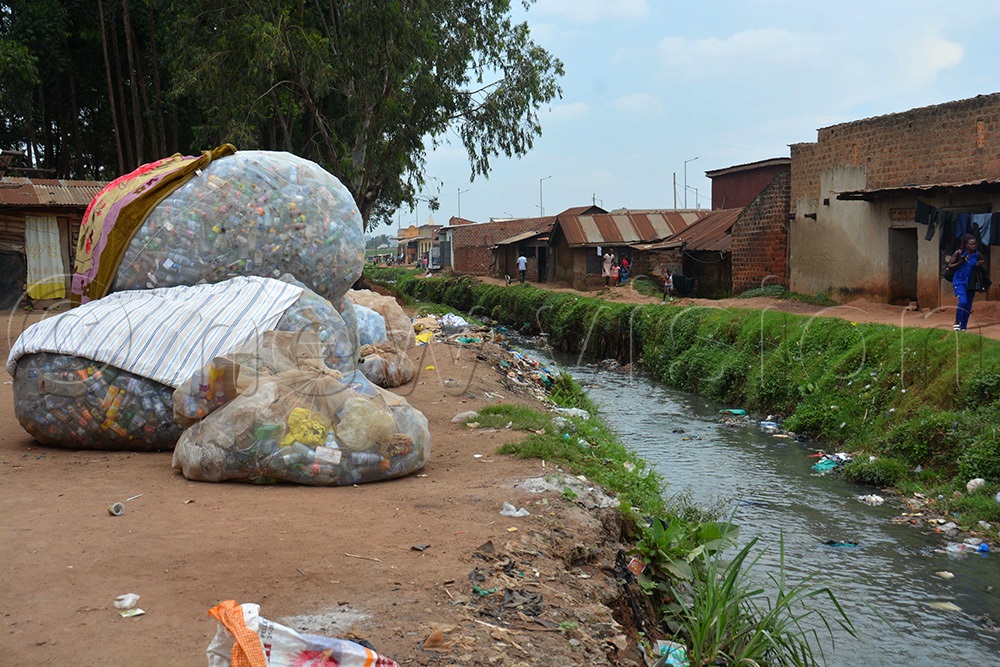
Heaps of plastic bottles placed near the drainage channel in a Kamwokya slum. (Photo by Francis Emorut)
The workshop explored pathways for improving waste recovery systems, strengthening youth organisations, waste workers, and supporting more sustainable and dignified livelihood opportunities.
It also created space for discussions around formalisation, collective action, and integration of waste workers into structured circular economy systems.
"GAYO Uganda remains committed to promoting community-led climate action solutions that strengthen livelihoods, reduce environmental pollution, and create sustainable green jobs across Uganda," said Robert Senono, the organisation's communication officer.