
Improving livelihoods while restoring Uganda’s highlands
RESILIENT COMMUNITIES Nyambigha and many other communities are steadily transforming into self-reliant, organised and resilient societies.By addressing challenges at household, community, environment.
Farmers have been trained in sustainable land management practices to control soil erosion
When the CommonGround Project first arrived in Nyambigha community in Karugutu sub-county, Ntoroko district, in Uganda’s Rwenzori region in 2023, it found an isolated and weary population. The only access route was a narrow, bushy footpath, impassable to vehicles and dangerous during the rains. Farming was rudimentary, harvests were meagre, and households struggled to meet their basic food needs, let alone supply markets. Sanitation was poor due to the lack of latrines and clean water.
Women and children walked several kilometres to fetch water from unsafe sources. According to local leader Joseph Busesi, children often missed or arrived late for school, while women spent long hours at water points, sometimes fuelling suspicion and domestic violence. The community was largely unorganised and depended on government to solve its problems.
TAKING RESPONSIBILITY
The arrival of CommonGround marked a turning point. Community members began to realise that they could take ownership of their own development, restoring hope and confidence. The four-year project (2022– 2026), funded by the Embassy of the Kingdom of the Netherlands in Uganda, is led by Wageningen University & Research and implemented by Integrated Seed and Sector Development Uganda (ISSD Uganda) with partners across the Rwenzori, Kigezi and Elgon highlands.
It aims to strengthen the resilience of 150,000 smallholder farmer households and restore healthy agro-ecosystems through sustainable farming, watershed restoration and improved market access. The project began by mobilising communities through awareness meetings to analyse social, environmental and economic challenges. Using the Participatory Integrated Planning (PIP) approach, households and communities envisioned realistic futures, developed action plans and began implementing locally driven solutions.
To date, 65,301 households (29,585 men and 35,716 women) have developed PIPs, supported by 15,178 trained PIP facilitators and 702 crop management trainers. A total of 117 community action plans have been created, fostering ownership, collaboration and proactive leadership. To reach the next generation, 59 schools have been supported to deliver environmental education using the PIP curriculum. In Nyambigha, communities identified their key challenges as poor road access, lack of clean water, weak farming systems, erosion, limited markets and, above all, poor collaboration.
IMPROVING MARKET ACCESS
Once priorities were clear, Nyambigha residents acted together, starting with road construction. Eva Masika recalls how community members mobilised hoes, pickaxes and spades to open a 2km road linking Nyambigha to the Bundibugyo– Fort Portal road. “Every Thursday was set aside for community work. Working together opened our community to the rest of the world,” she said. Parish chief Afswa Kengonzi noted that the road now serves over 1,124 people across two parishes.
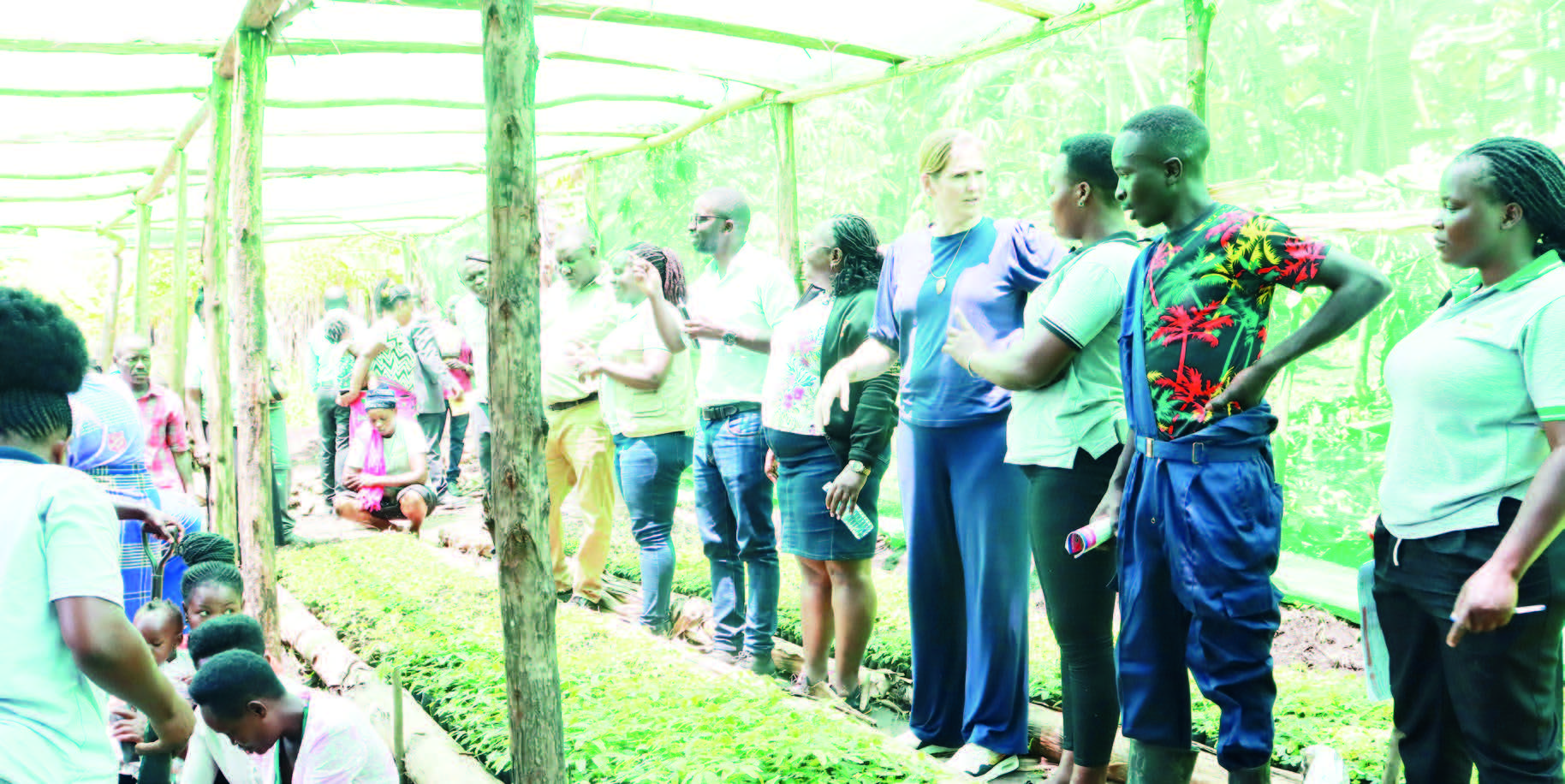
Communities have been supported to establish tree nursery beds to ease access to seedlings
Traders can easily buy cocoa, beans and coffee, and the improved access has attracted services, including a new clinic. Across the three regions, 97km of roads have been constructed out of the 140km prioritised, benefiting at least 14,000 people. In some areas, heavy machinery was provided through collaboration with key stakeholders.
In Kyatwa community, Bunyangabu district, a new 3km road has halved transport costs. Banana farmer Patrick Ishoza recalls paying up to sh20,000 per trip during the rainy season. “Now costs are down to sh10,000, and vehicles can reach us easily,” he said.
IMPROVING FARMING SYSTEMS
According to Karugutu subcounty agricultural officer, Matayo Kighuliro, farming systems were previously poor, with severe soil erosion leaving hillsides unproductive. Limited transport also prevented extension workers from reaching farmers. Through CommonGround, farmers have been trained in good agronomic practices, including soil conservation trenches, composting, banana desuckering and rejuvenating old coffee. “Production has improved, erosion is controlled and soil fertility is returning,” Kighuliro said
The project has supported 65,301 households to establish Integrated Plot Plans (IPPs) to optimise land productivity sustainably. To support adoption, 702 community-based integrated farming trainers have been trained, with around six per community. To improve nutrition, households in Nyambigha were encouraged to establish kitchen gardens. Each household now grows vegetables for consumption and sale, strengthening both nutrition and incomes.
DEFORESTATION EFFORTS
Ntoroko district environment officer, Herbert Kamuhanda said deforestation had led to landslides, flooding and erosion, compounded by limited access to indigenous tree seedlings.
Community-managed tree nurseries, supported by the project are reversing this trend. In Ntoroko alone, 11 nursery beds have produced 38,000 trees planted on farms and restoration sites. Overall, the project has established 98 nurseries, propagating over 1.1 million indigenous seedlings, with nearly half a million already planted. Communities have received tools, seedlings and grasses to strengthen nursery management.
LAND RESTORATION
Restoration of degraded land has been a major priority. In Bukalasi sub-county, Bududa district, residents have planted over 6,112 trees, alongside trenches and grasses that stabilise soil and provide fodder. Similar efforts are under way in Nyambigha, where grasses are also used for mulching. In Nyakitokori community, Kabale district, residents are restoring the degraded Ryabinegu and Rwebinegu hills. Severe erosion had forced farmers to abandon upper slopes, but coordinated restoration has transformed the landscape.
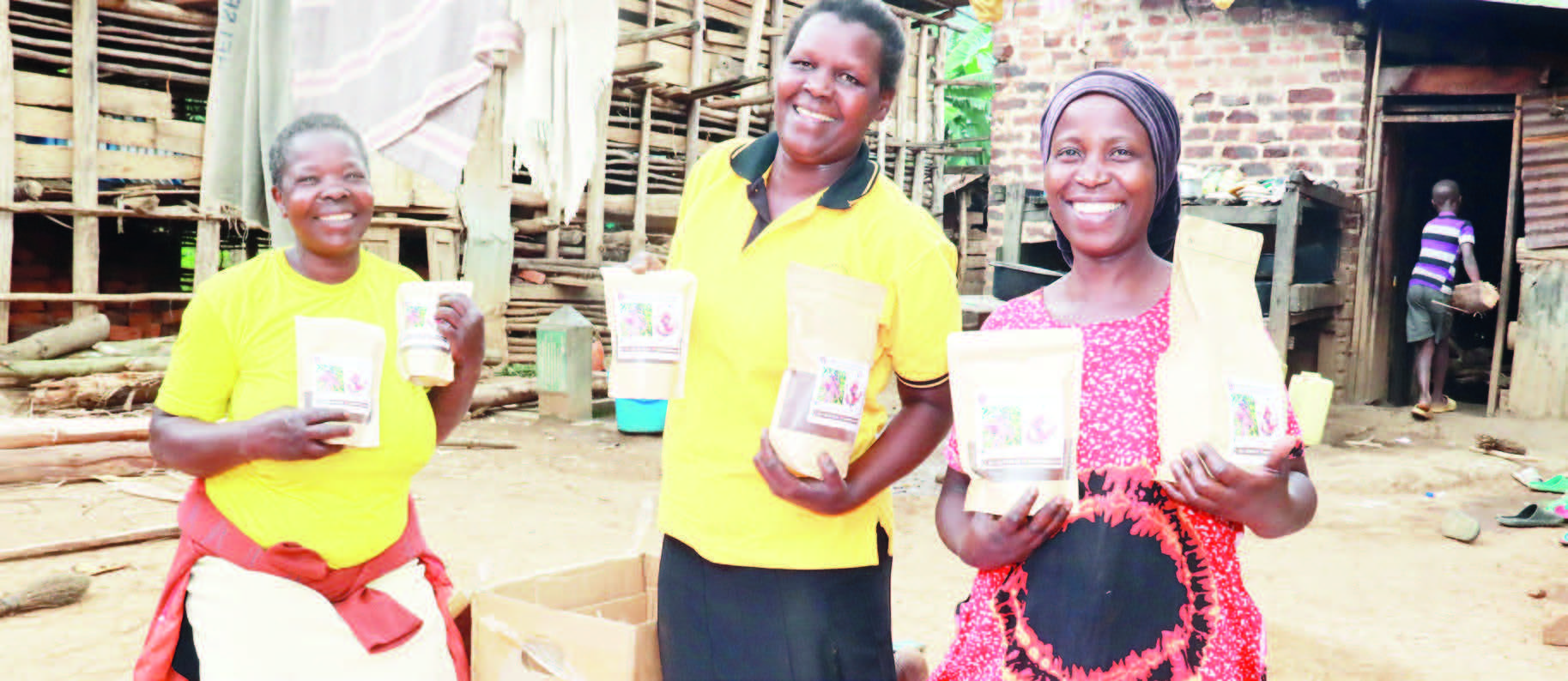
Bukalasi Cooperative Group now adds value to coffee, thanks to trainings from CommonGround Project
With project support, communities constructed at least 60 retention ditches per hill, significantly reducing runoff and capturing up to 2,160 cubic metres of water. More than 11,249 tree seedlings have been transplanted onto these sites.
In total, 528 restoration sites have been selected, supported by 22 sub-watershed committees with clear leadership and action plans. Some 7,725 hectares are now under conservation practices, with an additional 3,090 hectares of steep slopes stabilised against erosion.
ACCESS TO CLEAN WATER
Clean water was another pressing need in Nyambigha. The project provided three 10,000-litre water tanks, now serving over 110 households. According to Kamuhanda, children now attend school on time and domestic conflicts linked to water collection have reduced. Across project areas, 360 community investments have been made, including water systems and market structures, all based on priorities identified through community PIPs.
ENTREPRENEURSHIP, CAPITAL
Limited markets and access to finance remain major constraints. The project, therefore, supports Village Savings and Loan Associations (VSLAs), incomegenerating groups and farmer organisations to become sustainable and market-oriented.
In Nyambigha, three farmer groups received in-kind support worth sh1m each to invest in livestock and poultry. They were also supported to form VSLAs, receiving kits and training in governance, accountability and record-keeping.
Across the project, 150 farmer groups are developing business plans, while 57 have received targeted training in production management and financial literacy. Market linkages with input and output actors address challenges such as counterfeit inputs and poor supply chains. Through partnerships with financial institutions, Shs750 million has been mobilised.
This has enabled 159 farmers to access sh189.6m for on-farm investments, while strengthening cooperative capacity. A notable success is the Abiniki Bomugusha Kwetungura Group in Kabale district, formed by 15 women in 2023 to process fermented sorghum, which fetches more than triple the price of raw grain. With project support, the group improved business planning, recordkeeping and access to finance, positioning it for growth.