
How NAROVAC could turn the tide in Uganda’s tick crisis
Developed by the National Agricultural Research Organisation in partnership with Makerere University, the vaccine targets a crisis estimated to cost the economy about shillings four trillion each year—roughly two per cent of GDP.
President Yoweri Museveni framed the innovation as a scientific breakthrough that flips the conventional model of tick control. (Credit: Miriam Namutbei)
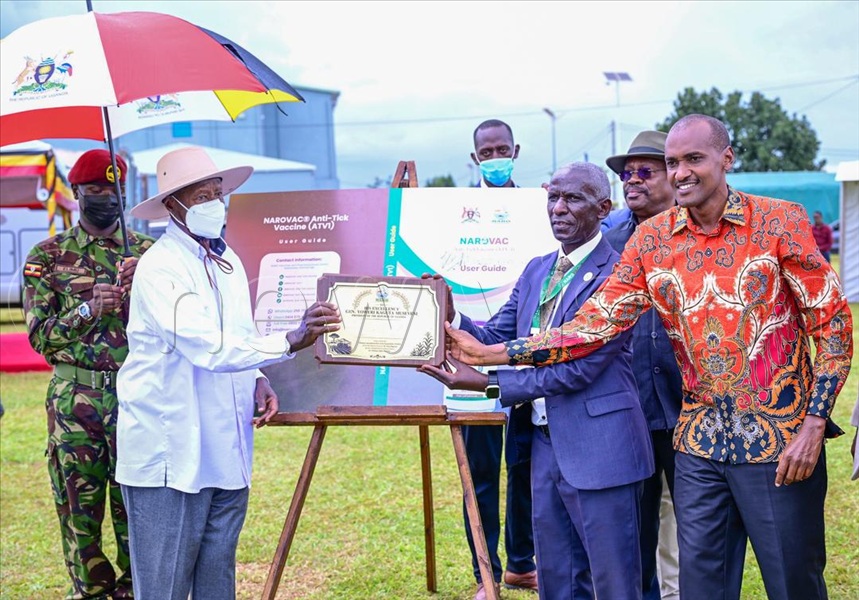
WAKISO - President Yoweri Museveni on April 30, 2026, launched Uganda’s first locally developed anti-tick vaccine, NAROVAC, in Wakiso district, a breakthrough expected to cut billions in annual livestock losses blamed on tick-borne diseases.
Developed by the National Agricultural Research Organisation in partnership with Makerere University, the vaccine targets a crisis estimated to cost the economy about shillings four trillion each year—roughly two per cent of GDP.
Speaking at the launch at Nakyesasa in Namulonge in Wakiso, Museveni described ticks as a persistent constraint in cattle-keeping areas such as Sheema, Kajara, and Kashari, where farmers continue to incur heavy losses despite the absence of tsetse flies.
The launch of NAROVAC signals a shift toward science-led solutions in agriculture and positions Uganda as a player in the emerging “pathogen economy”—where countries develop their own vaccines and pharmaceuticals. (All Photos by Miriam Namutebi)

Museveni heard that the vaccine has demonstrated efficacy against the three most prevalent tick species in the country—the brown ear tick, the African blue tick, and the bont tick—raising hopes of broad-based impact across Uganda’s cattle corridor.
He framed the innovation as a scientific breakthrough that flips the conventional model of tick control.
“The cow now kills the tick,” he said, underscoring the vaccine’s mechanism, which enables cattle to develop immunity that disrupts tick feeding and reproduction.
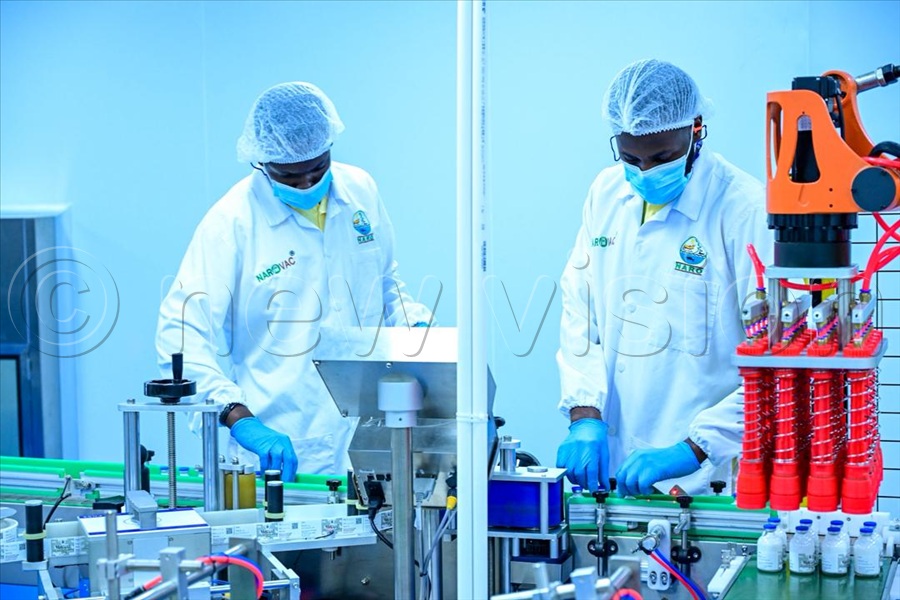
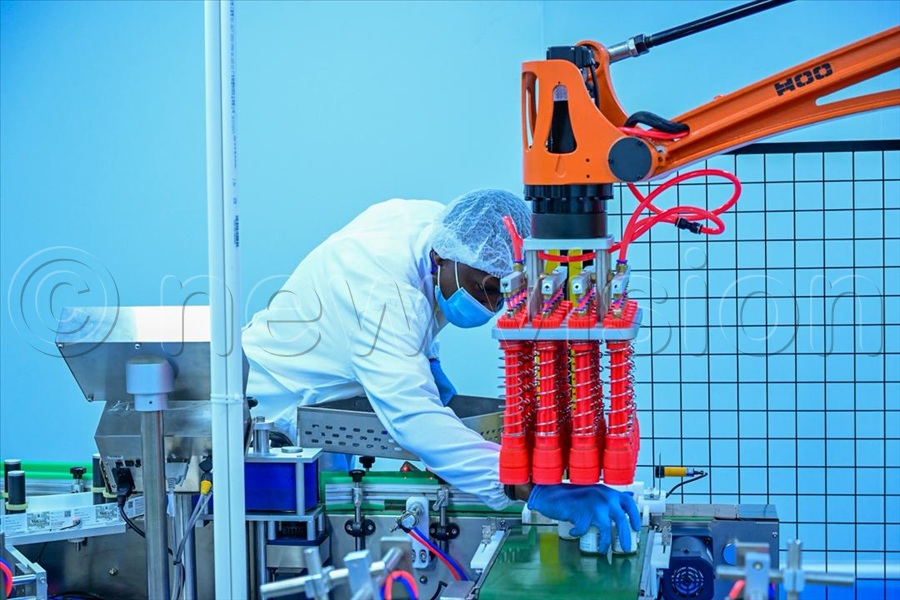
During the event, Museveni also launched a new production facility. The facility at Nakyesasa in Namulonge is capable of making at least three million vaccines every month and 36 million annually.
Museveni heard that the vaccine has demonstrated efficacy against the three most prevalent tick species in the country—the brown ear tick, the African blue tick, and the bont tick—raising hopes of broad-based impact across Uganda’s cattle corridor.
Museveni was also briefed by scientists from NARO that the cost of producing a single dose stands at shillings 5,000, with a retail price of about 10,000.
Research on NAROVAC dates back to 2013, when scientists identified antigens from local tick species and refined the formulation through years of laboratory work and field testing.
Museveni was also briefed by scientists from NARO that the cost of producing a single dose stands at shillings 5,000, with a retail price of about 10,000.
“It means a farmer with 10 cows requires spending roughly sh100,000 every six months, while one with 1,000 cattle requires about sh10 million over the same period. For farmers, we now have a solution—for all ticks. I congratulate the science community for this,” Museveni said.
Research on NAROVAC dates back to 2013, when scientists identified antigens from local tick species and refined the formulation through years of laboratory work and field testing.

Strong results
The vaccine has demonstrated strong results, with efficacy rated at 93.2 per cent against the three most economically significant tick species.
Field trials conducted across more than 60 districts showed a significant reduction in infestations and tick-borne diseases.
“This is what farmers have been waiting for… what Africans and beyond have been waiting for,” NARO director general Dr Yona Baguma said.
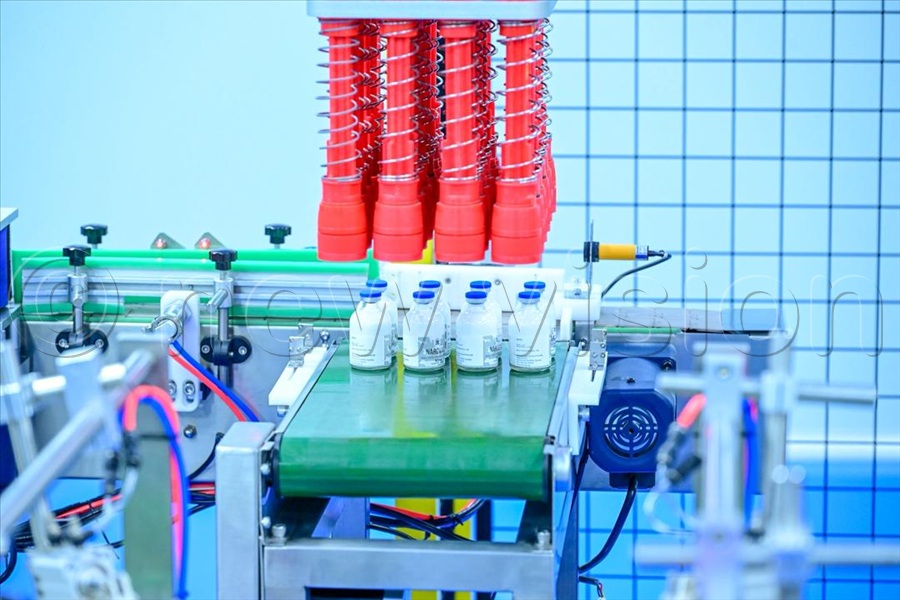
He described the launch as a landmark moment not just for Uganda but for Africa.
Baguma noted that the facility can protect Uganda’s estimated 16 million cattle, while opening new export opportunities.
“Africa imports 99 per cent of livestock vaccines. We must produce our own technologies,” he added.
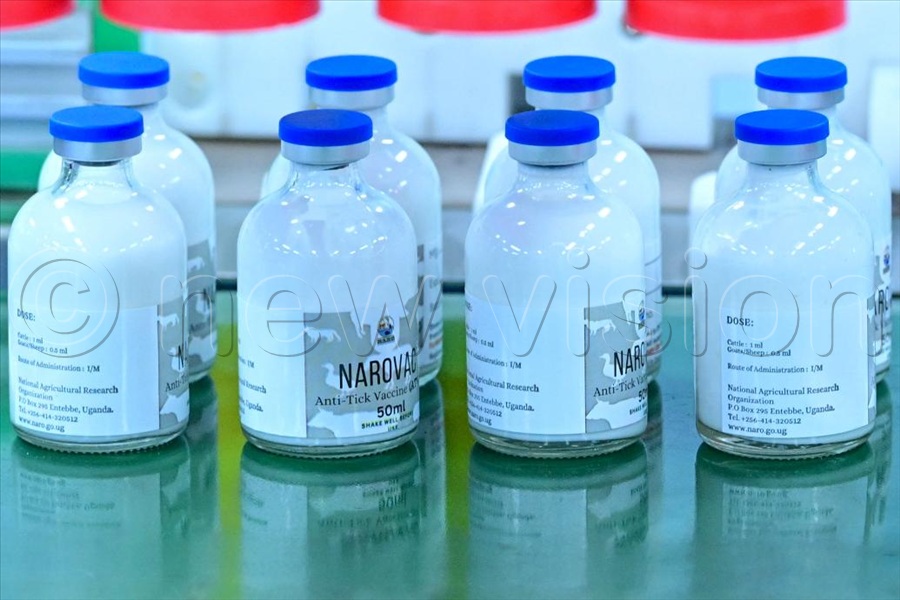
The vaccine—branded NAROVAC-ATV1—is administered in three initial doses and provides protection for up to a year, with boosters in subsequent years. It is suitable for cattle from as young as one month old.

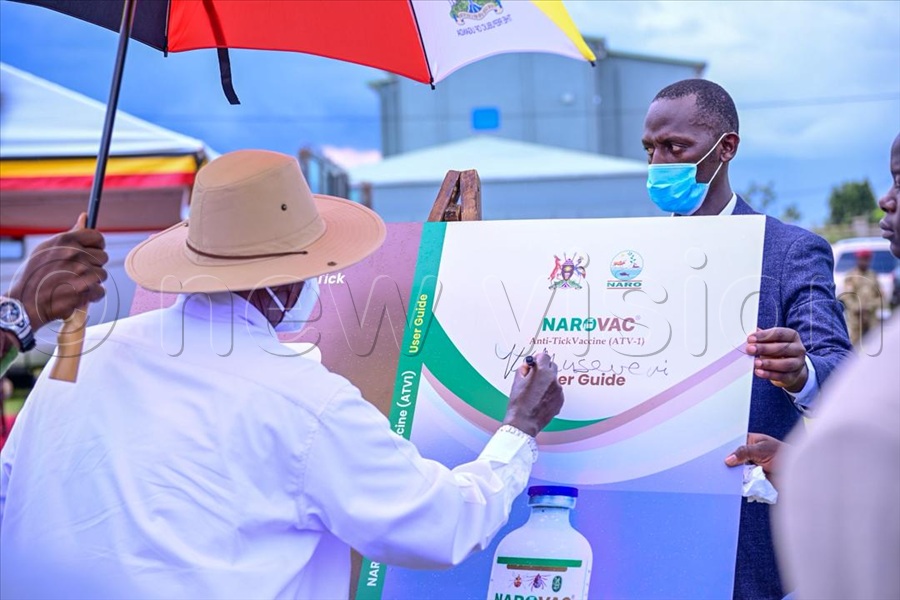
National Drug Authority executive director Dr David Nahamya confirmed that the facility meets regulatory standards, noting that the authority provided technical oversight throughout development.
Economic ripple effects
Beyond disease control, the project is expected to drive broader economic gains. The plant has already created hundreds of jobs and is positioning Uganda as a regional hub for veterinary vaccine production.
Demand is already emerging from neighbouring countries, according to NARO officials.
Agriculture minister Frank Tumwebaze welcomed the milestone, noting that the project dates back to 2022 when scientists first presented the proposal.


Animal industry state minister Bright Rwamirama said sustained government investment in livestock is already paying off, pointing to growth in dairy farming and rising livestock numbers.
Security Minister Jim Muhwezi described the vaccine as critical to national stability.
“By protecting livestock, we are safeguarding food security and the livelihoods of millions of Ugandans,” he said.
Unlike chemical acaricides, which kill ticks externally, NAROVAC works from within the animal by triggering an immune response that disrupts the tick’s ability to feed and reproduce.


This reduces reliance on chemical spraying, lowers environmental risks, and addresses the growing problem of acaricide resistance.
Early trials in areas such as Maruzi and Nabuin have shown strong protection, with farmers reporting fewer ticks and lower treatment costs.
The launch of NAROVAC signals a shift toward science-led solutions in agriculture and positions Uganda as a player in the emerging “pathogen economy”—where countries develop their own vaccines and pharmaceuticals.