
Agric. & Environment
Drought-hit Terego East MP Babanga commends approval of irrigation loan
Parliament on Wednesday this week approved a government request to borrow up to €168.9 million (sh710 billion) from the United Kingdom Export Finance (UKEF) and Citi Bank to finance Phase II of the Solar Powered Irrigation Systems Project aimed at boosting coffee production and strengthening climate resilience.
Wilfred Babanga Erima, the MP Terego East constituency. (Courtesy)
By: Robert Adiga, Journalist @New Vision
_________________
TEREGO — The Terego East Member of Parliament, Wilfred Erima Babanga, has hailed the timeliness and importance of the loan that parliament approved this week to finance Phase II of the Solar-Powered Irrigation Systems Project aimed at boosting coffee production and strengthening climate resilience.
According to Babanga, this funding will greatly benefit the people in his constituency.
Parliament on Wednesday this week approved a government request to borrow up to €168.9 million (sh710 billion) from the United Kingdom Export Finance (UKEF) and Citi Bank to finance Phase II of the Solar Powered Irrigation Systems Project aimed at boosting coffee production and strengthening climate resilience.
The loan approved during a sitting chaired by Speaker Jacob Marksons Oboth will bolster the project whose irrigation systems will cover about 4,768 acres and directly benefit an estimated 2,562 households.
Parliament suspended Rule 162(2), (3) and (4) of its Rules of Procedure to allow consideration of the request without scrutiny by the Committee on National Economy and relevant sectoral committees, which have not yet been constituted.
The suspension of the rules was prompted by the impending expiry of the financing terms on June 13, 2026.
Tabling the motion, finance minister, Henry Musasizi said the project will establish 427 solar-powered irrigation systems in coffee-growing areas across the country to cushion farmers against prolonged dry spells and climate change.
The minister noted that the project had initially targeted 700 irrigation sites but was scaled down to 427 to fit within the available fiscal space.
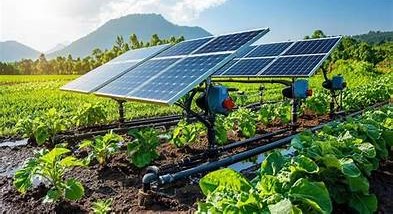
Solar Powered Irrigation System.
Parliament suspended Rule 162(2), (3) and (4) of its Rules of Procedure to allow consideration of the request without scrutiny by the Committee on National Economy and relevant sectoral committees, which have not yet been constituted.
The suspension of the rules was prompted by the impending expiry of the financing terms on June 13, 2026.
Tabling the motion, finance minister, Henry Musasizi said the project will establish 427 solar-powered irrigation systems in coffee-growing areas across the country to cushion farmers against prolonged dry spells and climate change.
The minister noted that the project had initially targeted 700 irrigation sites but was scaled down to 427 to fit within the available fiscal space.
He said the project will cover 126 districts and is expected to increase coffee yields through improved access to water for irrigation.
Babanga said Terego, being one of the districts relying solely on the natural rains, has greatly suffered this year due to a prolonged dry spell that has caused a devastating impact on the farmers’ crops.
Babanga, who confirmed that the district will benefit from three solar-powered irrigation systems, is optimistic that this will go a long way in transforming the income levels of the benefiting households.
“I have just been traversing the constituency all the way from Odupi, through to Uriama and Omugo sub-counties and what I have seen there really confirms the importance of the loan we have just approved for irrigation and what I saw today underscored the importance of irrigation not relying on rain fed agriculture because majority of the crops have dried up and the loan has provided Terego with three irrigation projects, and for me that makes it a very good thing,” said Babanga.
Coffee remains Uganda’s leading foreign exchange earners, generating nearly $1 billion (sh3.7 trillion) from exports of 6.06 million bags between March 2023 and February 2024, while directly supporting about 1.8 million Ugandans.
Statistics from the Ministry of Finance, Planning and Economic Development show that Uganda has only 23,595 hectares under irrigation out of an estimated potential of 3.03 million hectares nationwide.
Government projects that coffee yields could rise from an average of 1.3 kilogrammes of dried cherries per tree to 6.5 kilogrammes under irrigation.
The Minister of Agriculture, Animal Industry and Fisheries, Frank Tumwebaze, said the weather pattern in Uganda has changed and, therefore, there was need for irrigation.
Babanga said Terego, being one of the districts relying solely on the natural rains, has greatly suffered this year due to a prolonged dry spell that has caused a devastating impact on the farmers’ crops.
Babanga, who confirmed that the district will benefit from three solar-powered irrigation systems, is optimistic that this will go a long way in transforming the income levels of the benefiting households.
“I have just been traversing the constituency all the way from Odupi, through to Uriama and Omugo sub-counties and what I have seen there really confirms the importance of the loan we have just approved for irrigation and what I saw today underscored the importance of irrigation not relying on rain fed agriculture because majority of the crops have dried up and the loan has provided Terego with three irrigation projects, and for me that makes it a very good thing,” said Babanga.
Coffee remains Uganda’s leading foreign exchange earners, generating nearly $1 billion (sh3.7 trillion) from exports of 6.06 million bags between March 2023 and February 2024, while directly supporting about 1.8 million Ugandans.
Statistics from the Ministry of Finance, Planning and Economic Development show that Uganda has only 23,595 hectares under irrigation out of an estimated potential of 3.03 million hectares nationwide.
Government projects that coffee yields could rise from an average of 1.3 kilogrammes of dried cherries per tree to 6.5 kilogrammes under irrigation.
The Minister of Agriculture, Animal Industry and Fisheries, Frank Tumwebaze, said the weather pattern in Uganda has changed and, therefore, there was need for irrigation.