
Call for national cleanliness law as Fort Portal rallies for collective action
The exercise brought together city leaders, religious leaders, security personnel, school children, environmental activists and residents, all united in the effort to restore cleanliness in Uganda’s only tourism city.
People cleaning the city during the cleaning exercise. (Photo by Jonan Tusingwire)
_________________
Leaders in Fort Portal have called on the government to introduce a cleanliness bylaw aimed at compelling residents to maintain hygiene and proper waste management in the city and surrounding communities.
The call was made on April 22, 2026, during a large-scale clean-up exercise conducted across the city and along the banks of the River Mpanga, as Uganda joined the rest of the world in commemorating World Earth Day.
The exercise brought together city leaders, religious leaders, security personnel, school children, environmental activists and residents, all united in the effort to restore cleanliness in Uganda’s only tourism city.
Participants collected plastic waste, unclogged drainage channels and removed garbage that had accumulated along the river banks, where pollution has increasingly threatened water flow and public health. River Mpanga remains a vital water source for Fort Portal and surrounding districts, but has for years suffered from plastic pollution and encroachment.
Speaking during the exercise, leaders urged the government to put in place enforceable regulations that would require every Ugandan to take responsibility for keeping towns and cities clean.
They noted that despite continued clean-up campaigns, poor waste disposal habits and the absence of strict laws continue to undermine efforts to preserve urban cleanliness and protect water sources.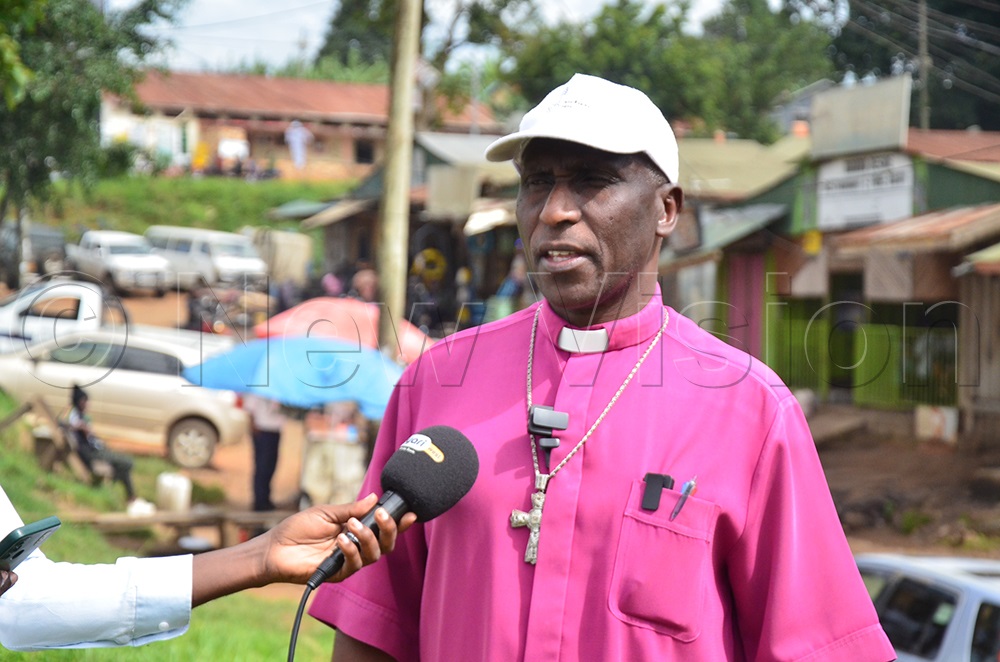
Bishop Reuben Kisembo, the bishop of Ruwenzori Diocese. (Photo by Jonan Tusingwire)
Bishop Reuben Kisembo, the bishop of Ruwenzori Diocese, urged residents to take personal responsibility for the cleanliness of the city and its environment.
“We should all participate in cleaning the city. There should also be a bylaw so that people can take part in cleaning the city,” Bishop Kisembo said.
He further emphasised the need to protect River Mpanga from pollution, calling for the immediate removal of plastic bottles and other waste that has been dumped into the river.
The clean-up exercise attracted city leaders, religious leaders, school children, security personnel and residents, who joined hands to collect plastic waste, clear drainage channels and restore cleanliness in the city.
Leaders noted that the increasing amount of plastic waste in the river and around the city threatens public health, the environment and the image of Fort Portal as a tourism city.
They now want the government to put in place a cleanliness bylaw that will compel every resident to take part in sanitation activities and ensure proper disposal of waste.
The mayor-elect of Fort Portal, Rev. Willy Kintu Muhanga, said the city leadership is committed to introducing local regulations that will ensure every resident plays a role in keeping the city clean. He emphasised that cleanliness defines Fort Portal’s image as a tourist city and a healthy place to live.
Muhanga expressed disappointment over the attitude of some members of the public who saw litter but chose not to participate in cleaning it up.
“Today we were cleaning our town as we celebrated World Earth Day, but while doing so, the way people conducted themselves hurt me. They would see garbage and instead tell us to pick it up instead of doing it themselves,” Rev. Muhanga said.
He emphasised that maintaining cleanliness should not be left to a few individuals or leaders alone, but should be a collective responsibility of all residents.
Rev. Muhanga added that the city leadership is committed to ensuring that Fort Portal remains clean and attractive.
“When I get to office, our goal is to make sure the whole of this city is clean. Anything that brings garbage into town will not be allowed,” he said.
The clean-up also focused on restoring the banks of River Mpanga, which residents say have increasingly turned into a dumping site for plastics and other waste materials.
Environmental stakeholders warned that continued pollution of the river not only affects the ecosystem but also raises the cost of water treatment and increases the risk of waterborne diseases.
Officials from Tooro Kingdom and environmental partners who took part in the event also appealed to the government to include environmental conservation activities on school calendars so that children grow up appreciating the importance of sanitation and protecting nature.
Harriet Nyakake, the kingdom's deputy prime minister, called for environmental awareness to be introduced early in schools so that children grow up understanding the importance of protecting the environment.
“Days like these of World Earth Day should be put on the school calendar so that our children grow up knowing how to save the environment and how important it is to do so,” she said.
She also urged the public to stop littering the streets and instead take responsibility for the garbage they generate.
“If you love garbage so much, stay with it in your house and do not move with it on the streets,” Nyakake said.
She noted that Fort Portal’s status as a tourism city means cleanliness must remain a priority, as litter and poor waste management create a negative impression for visitors.
“Our city is a tourism city, which means that when you throw garbage everywhere, it gives a bad image to our city,” she added.