
African pastoralist women back modern practices, demand policy support
“As we move towards modern pastoralism, we need to advocate for land rights,” Longole said, adding that it was also important to ensure natural resource management, rangeland restoration and understanding policy influence on pastoralism.
Women pastoralists admire goats kept at Katnela farm in Kayunga district. (Photos by Olandason Wanyama)
________________
African women herders have pledged to embrace modern pastoralism, saying it will offer a range of opportunities to meet the needs of pastoralists and communities across the continent.
However, they called on respective African governments to support research that will help them better understand and advance pastoralist-driven innovation.
Speaking during a debrief following a learning exchange at Kaynela Farm in Kayunga district on March 20, 2026, the executive director of Ateker Cultural Centre, a local non-governmental organisation in Karamoja, Hannah Longole, told the herders that more needs to be done to improve the livelihoods of pastoralists.
“We need to continue to engage the women pastoralists in various parts of Africa for change,” she noted, adding that the past five days and even before we have tried to understand what can be done to change their lives.
Longole said there was a need to safeguard and share the positive values of pastoralists and indigenous communities. She appealed to the women pastoralists to ensure sustainable development is promoted and made accessible to policymakers in various governments for support.
“As we move towards modern pastoralism, we need to advocate for land rights,” Longole said, adding that it was also important to ensure natural resource management, rangeland restoration and understanding policy influence on pastoralism.
Margie Lolem, a community development officer in Moroto district, told the women pastoralists that modernity should grow from traditional methods of livestock rearing.
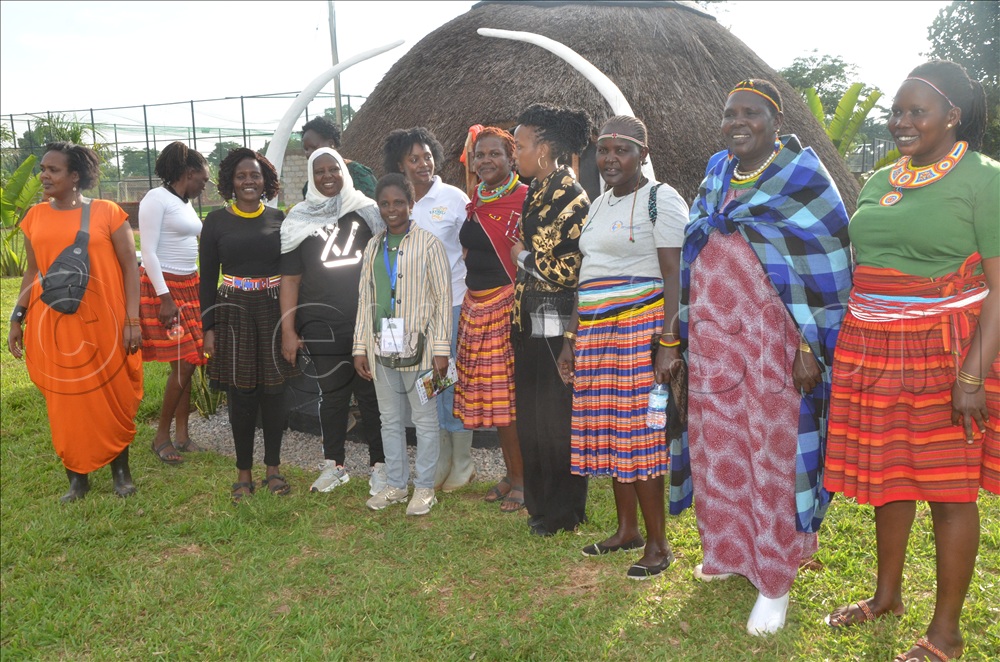
A section of women herders pose for a photo on a front of Ankole traditional hut at Kaynela farm.
“Because of many challenges faced by the pastoralists like climate change, shortage of grazing land,” she said, adding that herders should reduce the size of their herds.
Lolem further said the initiative will also help reduce conflicts among herders and mitigate the effects of climate change.
Citing Karamoja, she said herders are increasingly engaging in livestock trade and the sale of dairy products such as milk, ghee and hides, an indication that they are embracing modern practices.
Lolem advised the women pastoralists to adopt modern technologies in livestock management, including contemporary veterinary services and improved animal husbandry practices.
“For the beginning, we can combine the modernity and the traditional system of looking after animals,” she stated, adding that some herders in parts of Western Kenya and Uganda have already embraced modern pastoralism.
Djoudi Isaa Demo from Benin, West Africa, advised pastoralist women to raise their voices, noting that awareness is key in the transition towards modern practices.
“We have a huge job to create awareness because Africa has a very big number of pastoralists," she said, adding that the women pastoralist charter remains important in advancing modernisation.
At Kaynela Farm, the African women pastoralists were taken through how the farm was established a decade ago. The visit also provided an opportunity to appreciate the efforts of a female farmer and entrepreneur.
Peace Kayesu said she invested in sustainable farming with a vision of celebrating culture, adding that she has progressively transformed the family farm into a space for culinary enthusiasts. Others include agro-tourism advocates and cultural enthusiasts.
She further said the 214-acre farm showcases diversity in the country, with strong ties to livestock management and pastoralist culture.
The delegates later visited fish farming ponds, an aviary, goat rearing units, and cattle farms featuring both local Ankole and Friesian breeds.
Other areas visited included pineapple and orange gardens, banana and apple plantations, as well as cultural tourism sites from Karamoja and western Uganda.
However, Kayesu advised pastoralist women to embrace modern pastoralism, noting the need to move away from purely traditional systems.
“We have to ensure in this era we regulate the mobility of livestock to avoid conflict,” she said, adding that in many areas grazing land has been reduced due to farming and development.
Kayesu further said that changes in land tenure systems now require livestock to be confined.