
President Museveni rallies Kiruhura, Kazo to embrace profitable dairy farming
President Museveni, accompanied by his daughter, Pastor Patience Rwabwogo, praised the community, which he said has gradually shifted from nomadic livestock rearing to commercial dairy farming, but insisted that greater transformation is still possible.
President Museveni, who is also the NRM presidential candidate, waves to his supporters as he arrives at Nyakasharara play grounds in Kiruhura district to address his campaign rally on Friday. PPU Photo
KIRUHURA - President Yoweri Museveni has urged residents of Kiruhura and Kazo districts to fully exploit their vast land for commercial dairy farming. President Museveni, who is also the NRM presidential candidate addressing his supporters during a campaign rally at Nyakasharara play grounds in Kiruhura district on Friday. (PPU Photos) Bishop of North Ankole Diocese Alfred Muhoozi and other clergy leading prayers during President Museveni's campaign rally at Nyakasharara play grounds in Kiruhura district on Friday.
The cattle corridor, he said, has the potential to become Uganda’s largest hub of milk-based wealth creation if farmers abandon free-range grazing and adopt intensive production systems.
Addressing thousands of supporters at Nyakasharara playground in Kiruhura District on Friday, 28th November, President Museveni, accompanied by his daughter, Pastor Patience Rwabwogo, praised the community, which he said has gradually shifted from nomadic livestock rearing to commercial dairy farming, but insisted that greater transformation is still possible.
“People of Kiruhura and Kazo, and the entire cattle corridor, thank you for heeding our advice on better practices working, and grazing cows for wealth creation.
Free-range grazing makes the land underutilised. On one square mile, you manage about 130 cows. But if you adopt zero grazing, you can keep thousands of cows on the same land,” the President said, according to a release from the Presidential Press Unit.
President Museveni illustrated his message with video footage of success stories of farmers who have built thriving enterprises on small pieces of land by adopting modern practices.
One such farmer is Joseph Ijala, a former taxi driver who now runs an integrated farm on 2.5 acres. Ijala started with poultry and expanded into dairy farming. He keeps 10,000-layer chickens, producing 310 trays of eggs per day and earning more than Shs 3 million daily.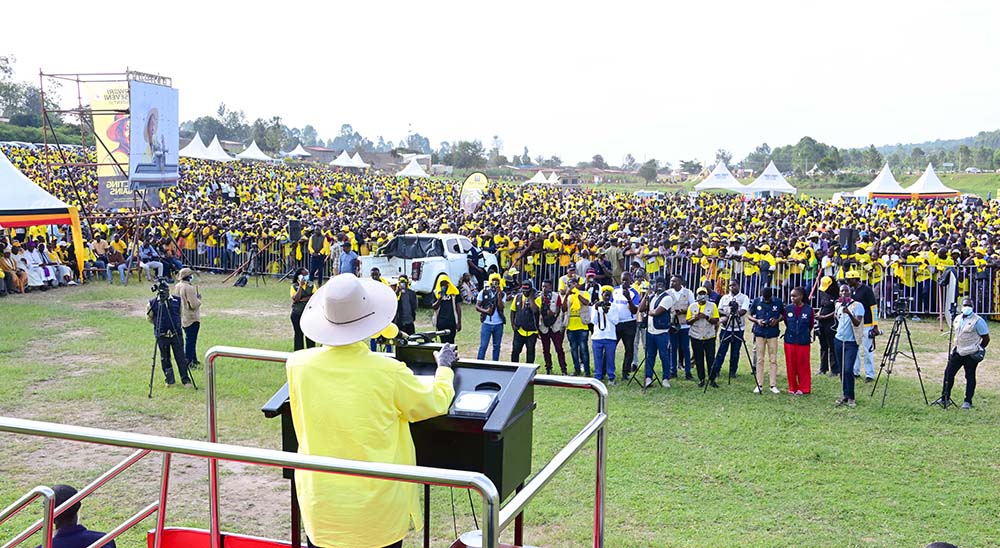
On just 1.5 acres of land, Ijala also practices zero-grazing dairy farming with eight cows, producing a substantial amount of milk daily. Combined, he earns about Shs 6.8 million per month from eggs and milk.
President Museveni said Ijala’s example demonstrates how zero grazing drastically increases productivity.
“Ijala keeps eight cows on one acre. If that were a square mile, he would keep over 4,000 cows,” he said.
Another example is Richard Nyakaana, a farmer in Kabarole whose Kana Farm sits on only 1.2 acres. Nyakaana runs a range of enterprises, including layer poultry, zero grazing, feed processing, and manure production. With only six milking cows, he produces 120 litres of milk per day, earning Shs 110,000 daily, amounting to Shs 20 million annually in profit.
“You people in the cattle corridor have a lot of land. Use that land profitably,” President Museveni urged.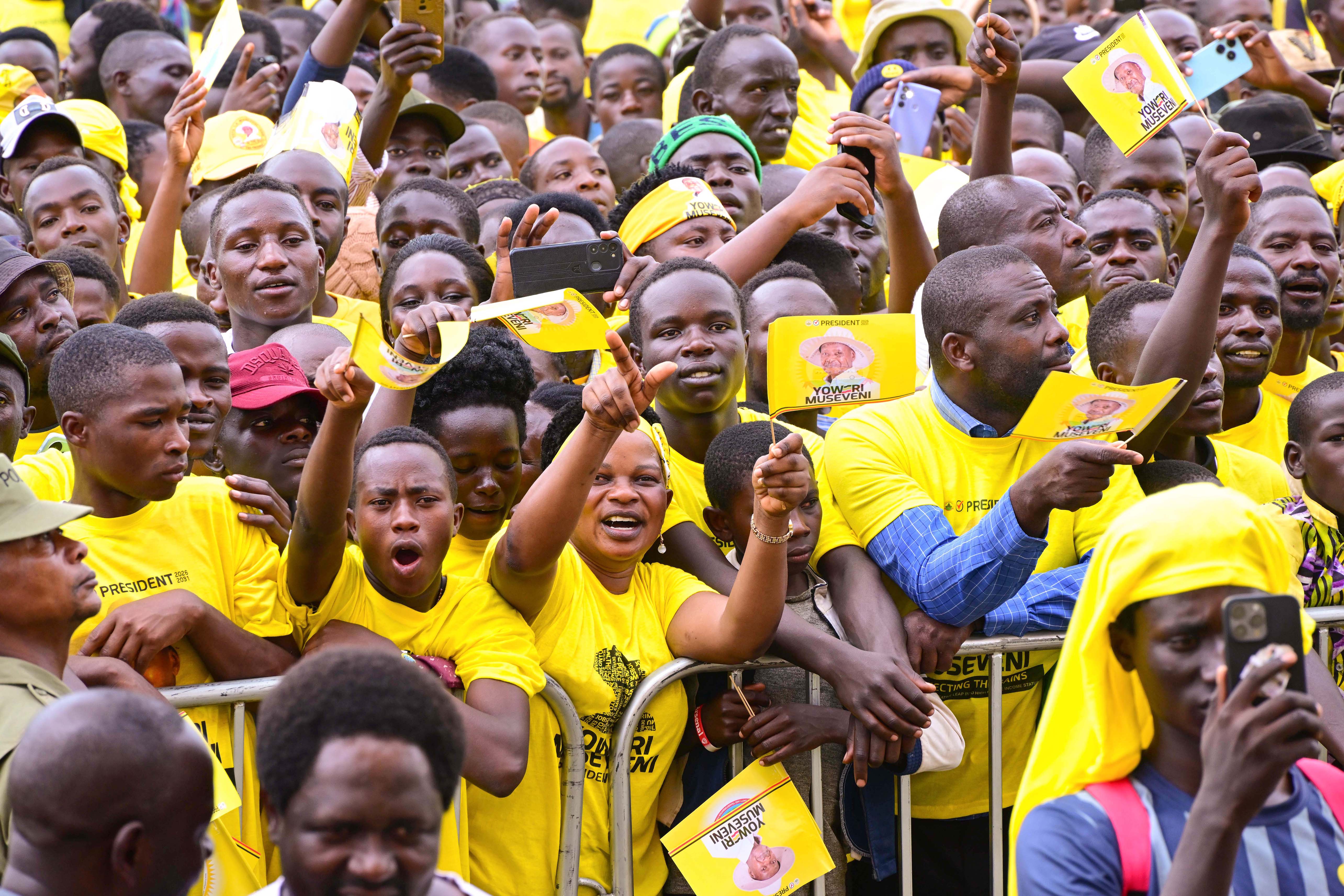
He also cited examples from other regions, such as Joseph Basangwa of Kamuli, a commercial poultry farmer producing about 200 trays of eggs daily and earning an estimated Shs 20 million per day, translating into billions annually. Basangwa employs more than 300 workers.
“People say jobs-jobs-jobs - but where do jobs come from? Agriculture, factories, services, and ICT—not the government,” President Museveni noted.
President Museveni also cited the case of George Matongo, a dairy farmer from Ngoma in Nakaseke, as a symbol of the transformative power of commercial agriculture. Matongo, who reportedly never attained formal education and lives far from infrastructure such as tarmac roads or electricity, produces over 900 litres of milk per day and earns an estimated Shs 21 million monthly.
“Matongo is extremely prosperous, yet he lives far from a tarmac road or electricity.
Meanwhile, people are living next to smooth tarmac roads, but poverty is the order of the day.” Museveni stated.
The President said Matongo’s success underscores his long-held message that wealth is created by individuals, not by the government, and that the presence of roads or electricity alone cannot guarantee household income.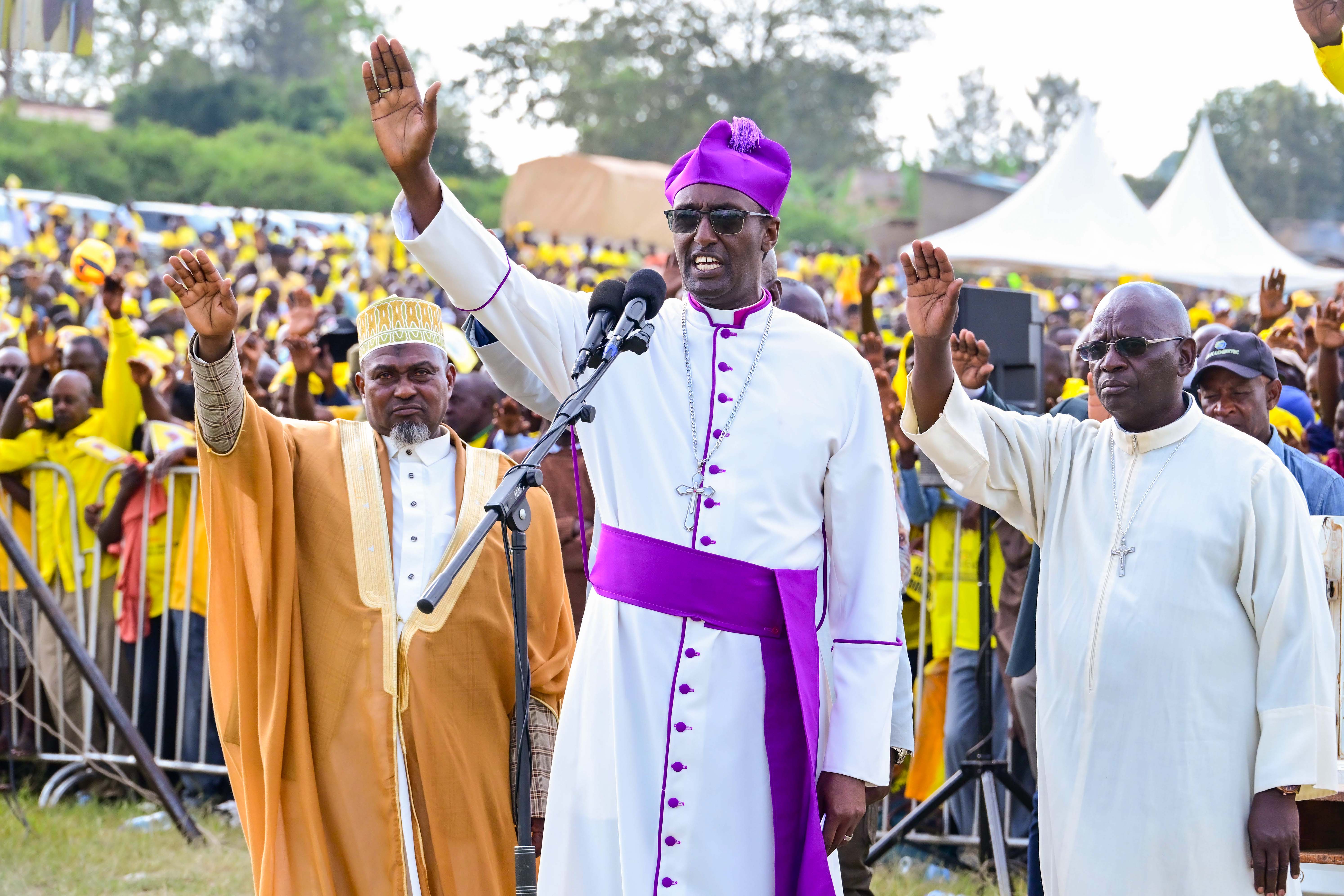
“When I came to Rwakitura many years ago, I followed the pasture and invested in farming. People laughed at me. But by the time the tarmac road and electricity arrived, I was already rich,” he said.
President Museveni reminded the gathering that upon taking power in the mid-1980s, the new government prioritised mobilising citizens to embrace the money economy.
“In the 1996 manifesto, we introduced the four-acre model,” he said. “We told people: one acre for coffee, one for fruits, one for family food crops, and one for zero grazing. Then use the backyard for poultry, piggery, or fish farming.”
Kiruhura District is one of Uganda’s leading milk producers, supported by cattle-keeping communities and emerging processing facilities.
The President urged farmers to push for even higher productivity.
“Learn to plant grass to support or zero grazing and avoid free-range grazing. You have the land; use it,” he said.
He hailed farmers who embraced this model early on, including those in Nyabushozi, Kiruhura, and Ssembabule.
He stressed that while the government continues to deliver security and development, families must take responsibility for creating wealth within their households.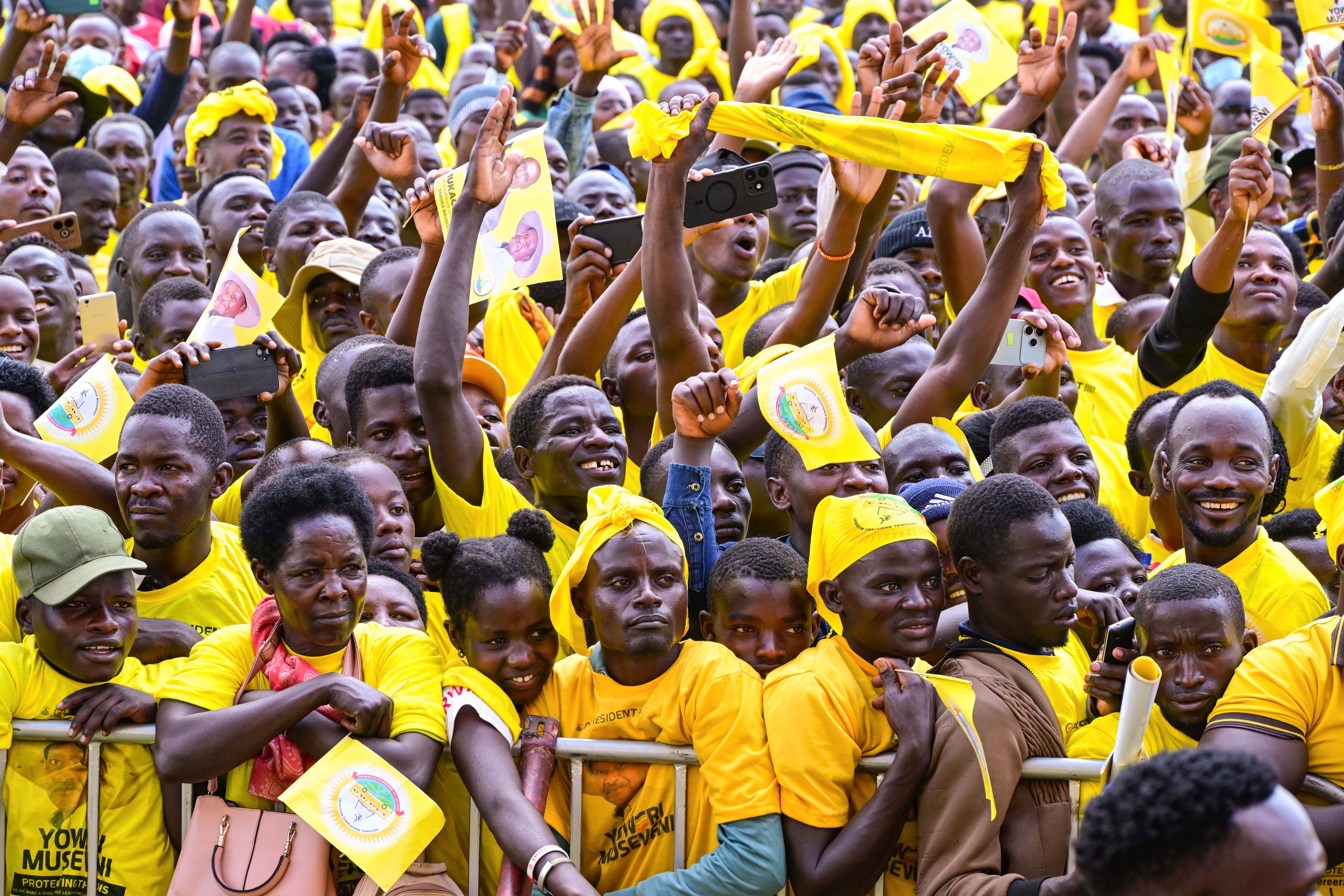
Some of the NRM supporters in Kiruhura district listening to President Museveni's address during a campaign rally at Nyakasharara play grounds in Kiruhura district on Friday.
“Development is for all of us, but wealth is yours as a family,” he repeated.
He highlighted the massive growth of industrial parks, including the Sino-Mbale Industrial Park with over 75 factories, and the Namanve Industrial Park with over 270 factories.
These, he said, employ far more Ugandans than government institutions, which have only 480,000 jobs for a population nearing 50 million.
Performance report
While reviewing social services, President Museveni noted that the Kiruhura district has 74 government primary schools and 165 private primary schools. For secondary education, the district has seven government secondary schools and 11 private secondary schools.
He said the proliferation of private schools in Kiruhura reflects improved household incomes in the region.
“It shows wealth among the people, because they can afford school fees in private schools,” he noted.
On health services, President Museveni observed that Kiruhura’s 14 sub-counties have one Health Centre IV and 13 Health Centre IIIs. However, Akayanja Sub-County currently has no health facility.
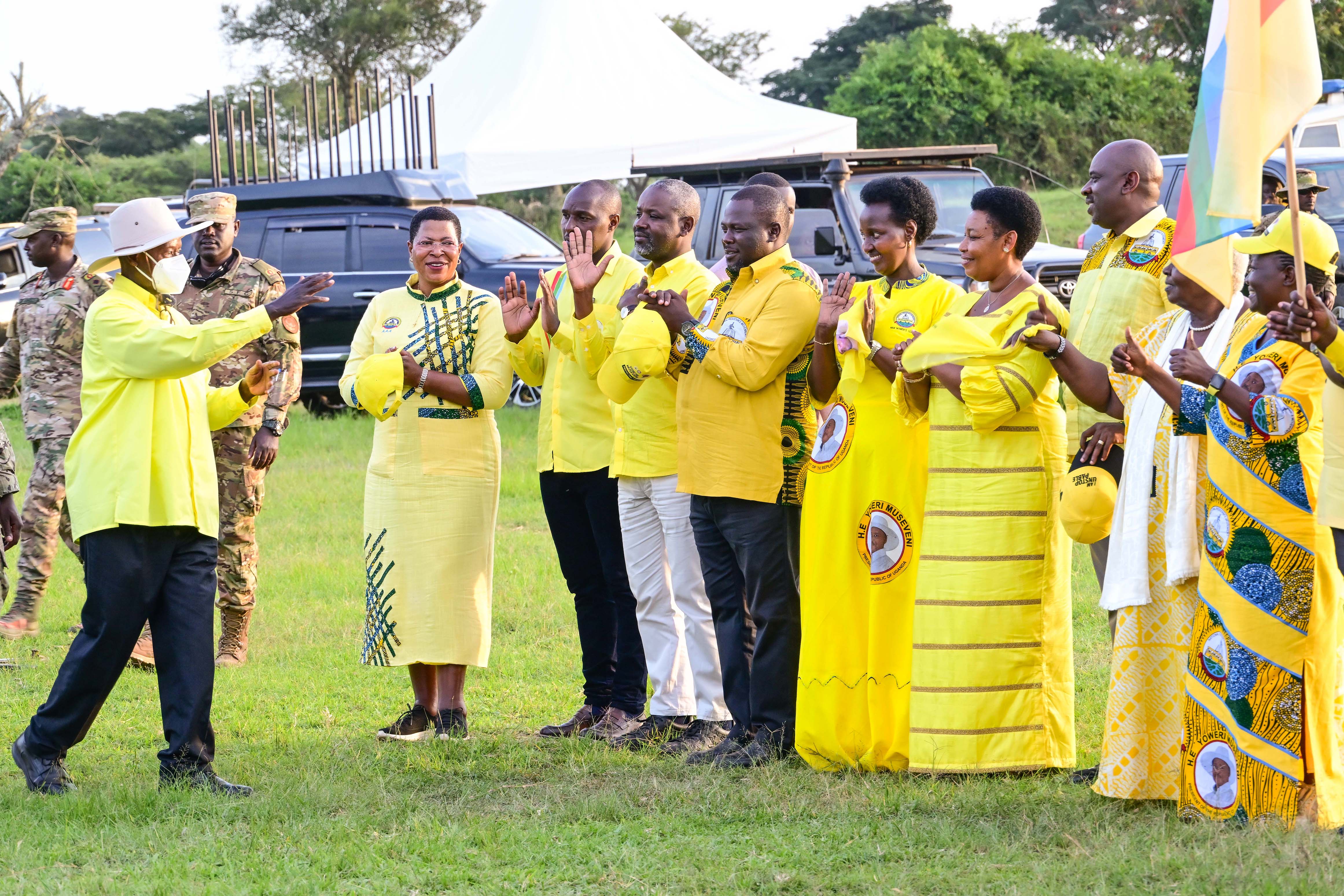
President Museveni greets some of the senior government and NRM party officials during his campaign rally at Nyakasharara play grounds in Kiruhura district on Friday.
The President assured the residents that the government plans to construct a new HCIII there.
He also pledged to improve the road network connecting districts in the greater Ankole region.
Earlier, Speaker of Parliament and NRM Second National Vice Chairperson, Anita Annet Among, welcomed President Museveni to Kiruhura and thanked residents for supporting the ruling party.
“We want to thank you, the people of Kiruhura, for bringing up a son—President Museveni—who has taken Uganda from despair to hope,” she said.
“Your son has brought peace to Uganda. The Bible says: ‘We shall know them by their deeds,’ and we have seen President Museveni’s deeds.”
Speaker Among credited the President for introducing free education, saying it enabled many Ugandans, including herself, to rise to positions of responsibility.
“All we can do is continue praying for you and thanking you for respecting the people of Kiruhura by coming to ask them for their vote,” she said.
Diginitaries at the rally included cabinet ministers, Members of Parliament, NRM leaders and party flag bearers.